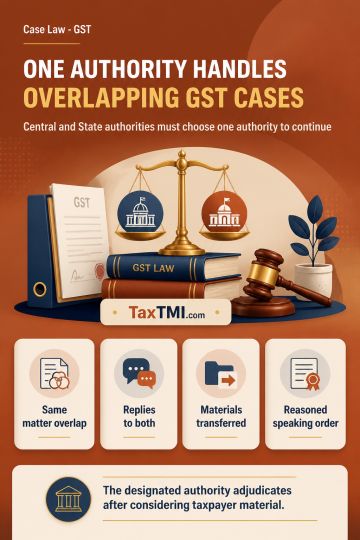
Overlapping GST proceedings require Central and State authorities to designate one competent authority for coordinated adjudication of the same matter...
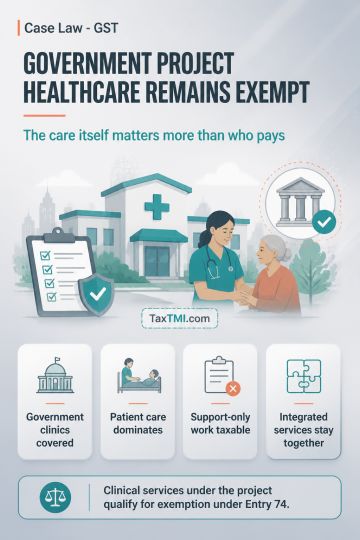
Composite healthcare supplies retain exemption when patient care is the contract's essential character, despite payment through an implementing agency...
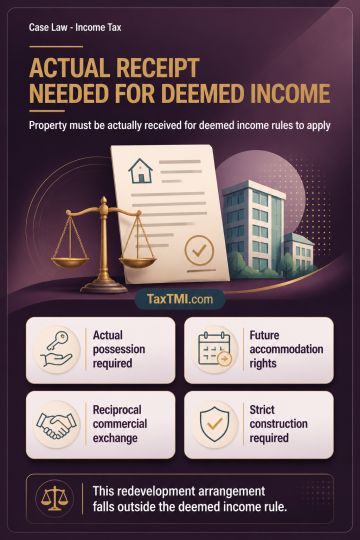
Receipt of immovable property requires actual possession or enjoyment; redevelopment allotments exchanged for tenancy rights fall outside deemed incom...
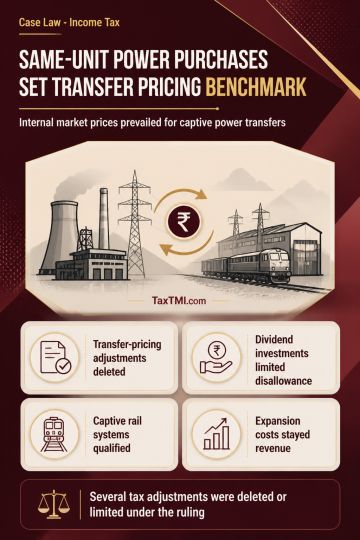
Internal comparable pricing for captive power transfers was accepted where the same consuming units bought electricity from State distribution companies in the same market and period, resulting in deletion of transfer-pricing adjustments. Exempt-income disallowance was confined to dividend-yielding investments, and MAT adjustments required an independent determination of expenditure from the accounts. Expansion-related operating costs remained revenue expenditure unless directly attributable to acquiring or installing capital assets. Captive rail systems qualified as infrastructure facilities for section 80-IA, while common costs required expenditure-based allocation supported by a nexus. Incentives linked to capital investment and expansion were treated as capital receipts and excluded from book profit. The notes also address investment allowance, additional depreciation, bad debts, leave encashment, and specified MAT adjustments.
Internal comparable pricing for captive power transfers was accepted where the same consuming units bought electricity from State distribution companies in the same market and period, resulting in deletion of transfer-pricing adjustments. Exempt-income disallowance was confined to dividend-yielding investments, and MAT adjustments required an independent determination of expenditure from the accounts. Expansion-related operating costs remained revenue expenditure unless directly attributable to acquiring or installing capital assets. Captive rail systems qualified as infrastructure facilities for section 80-IA, while common costs required expenditure-based allocation supported by a nexus. Incentives linked to capital investment and expansion were treated as capital receipts and excluded from book profit. The notes also address investment allowance, additional depreciation, bad debts, leave encashment, and specified MAT adjustments.
Note: It is a system-generated summary and is for quick reference only.
 TaxTMI
 of 4784






 Join Channel


 TaxTMI
