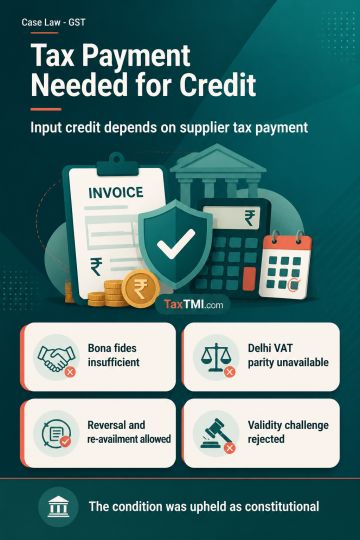
Input tax credit conditions remain constitutionally valid, with eligible recipient claims considered under GST circulars and retrospective filing dead...
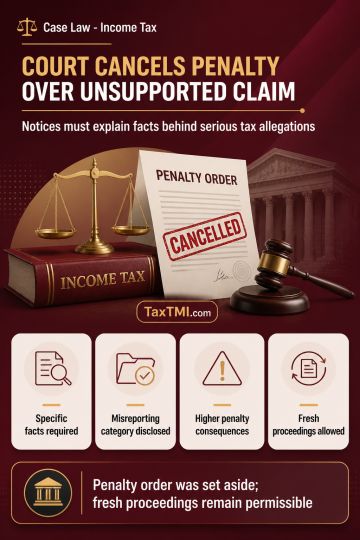
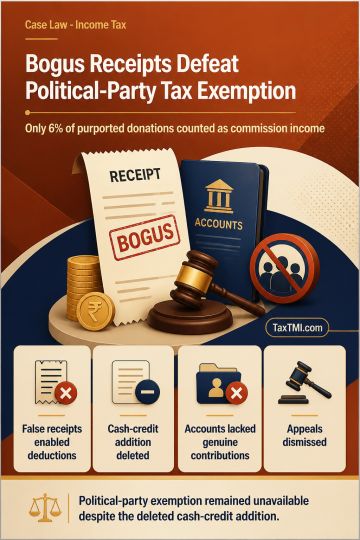
Bogus donation receipts justified commission income assessment and defeated political-party tax exemption for inaccurate accounts and reporting failur...
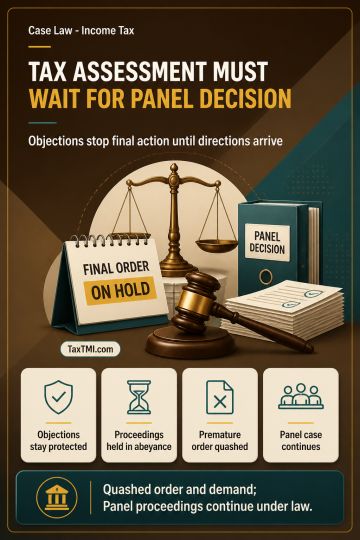
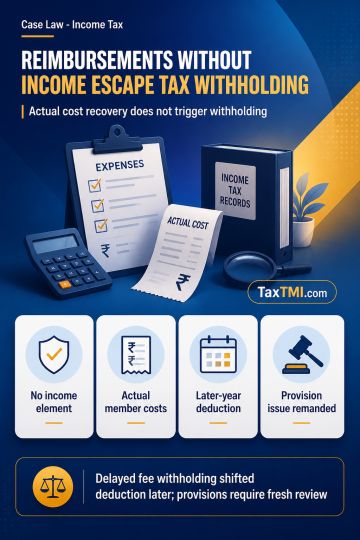
Pure reimbursement without income element escapes tax withholding, while delayed withholding and unsupported provisions face deferred or renewed scrut...
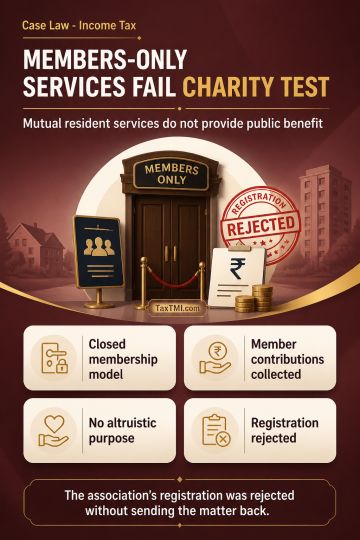
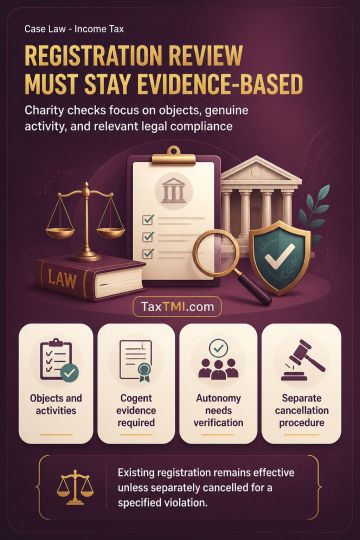
Public benefit requirement defeats charitable registration where residents' association services are reciprocal, member-only facilities governed by mu...
Exempt-income expenditure disallowance is confined to investments that actually generated exempt income, while supported business expenses remain dedu...
Section 127C(5) requires the Settlement Commission to provide a...
Opportunity to respond to jurisdictional reports is mandatory before customs settlement duty enhancement; connected applications require consistent adjudication.
Contents
Summary
Note
Bookmark
Share
✓ Copied successfully !
Print
Print Options
For full text, please login
Login to TaxTMI
Verification Pending
The Email Id has not been verified. Click on the link we have sent on
Section 127C(5) requires the Settlement Commission to provide a settlement applicant an opportunity to address a jurisdictional Commissioner's report before relying on it to enhance customs duty liability. Non-supply of the report breached that statutory requirement and principles of natural justice, requiring the settlement order to be quashed and remanded for fresh consideration. Separate settlement applications arising from the same seized imported goods were intrinsically connected and required a consistent approach. The differing treatment of the Revenue report lacked a discernible basis; therefore, the related subsequent order was also quashed and remanded, with all merits left open.
Section 127C(5) requires the Settlement Commission to provide a settlement applicant an opportunity to address a jurisdictional Commissioner's report before relying on it to enhance customs duty liability. Non-supply of the report breached that statutory requirement and principles of natural justice, requiring the settlement order to be quashed and remanded for fresh consideration. Separate settlement applications arising from the same seized imported goods were intrinsically connected and required a consistent approach. The differing treatment of the Revenue report lacked a discernible basis; therefore, the related subsequent order was also quashed and remanded, with all merits left open.
Note: It is a system-generated summary and is for quick reference only.
 TaxTMI
 of 4780









 Join Channel



 TaxTMI