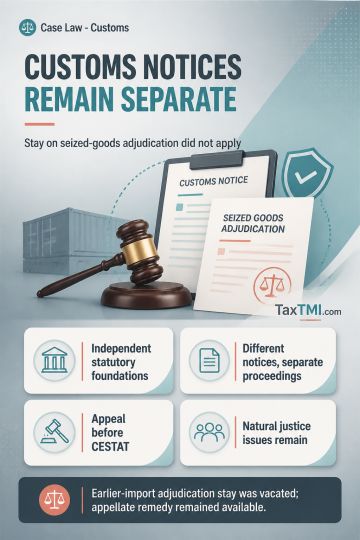
Independent show-cause notices remain separate proceedings, while customs adjudication challenges should ordinarily follow the statutory appellate rem...
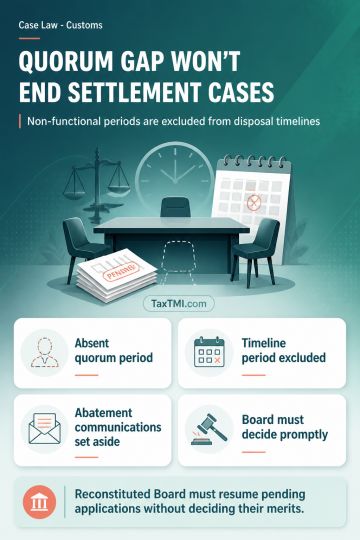
Institutional incapacity in customs settlement proceedings excludes non-functional quorum periods from statutory disposal timelines, preventing automa...
Interactive touchscreen panels with integrated computing functions fall under automatic data-processing machines rather than display monitors for cust...
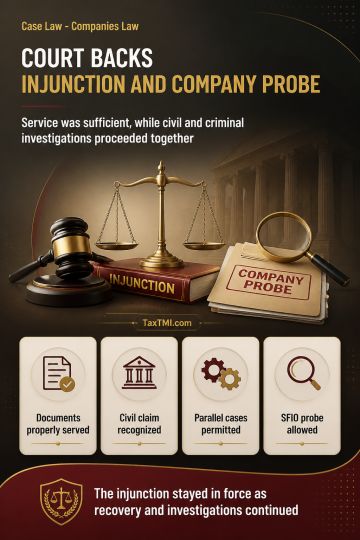
Ex parte injunction service requirements were substantially met, while civil recovery and SFIO investigation into provident fund defalcation continued...
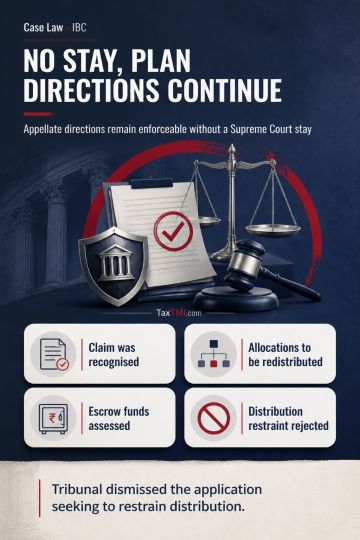
Enforcement of resolution-plan directions continues without a Supreme Court stay, preventing suspension of redistribution and escrowed-fund distributi...
Third-party ownership claims over attached property require Special Court adjudication where purchasers lack registered sale deeds and bona fides rema...
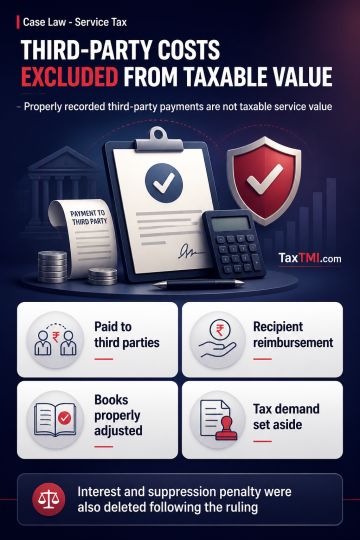
Pure-agent reimbursements in clearing and forwarding services are excluded from taxable value when qualifying third-party payments are properly record...
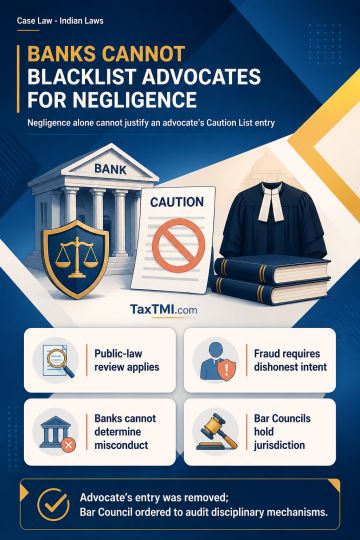
Article 226 scrutiny extends to private bodies performing public functions where their actions have a public law character and affect legally protected rights. A banking-sector Caution List maintained under RBI guidelines could therefore be challenged when it affected an advocate's reputation, engagements and right to practise. Fraud requires dishonest intent or deliberate facilitation; alleged negligence in a title-verification opinion, without fraud, collusion or criminality, cannot justify listing. Statutory disciplinary jurisdiction over advocates' professional conduct rests exclusively with Bar Councils, so banks cannot use the Caution List to determine misconduct. The advocate's entry was removed, and the Bar Council of India was directed to audit disciplinary mechanisms.
Article 226 scrutiny extends to private bodies performing public functions where their actions have a public law character and affect legally protected rights. A banking-sector Caution List maintained under RBI guidelines could therefore be challenged when it affected an advocate's reputation, engagements and right to practise. Fraud requires dishonest intent or deliberate facilitation; alleged negligence in a title-verification opinion, without fraud, collusion or criminality, cannot justify listing. Statutory disciplinary jurisdiction over advocates' professional conduct rests exclusively with Bar Councils, so banks cannot use the Caution List to determine misconduct. The advocate's entry was removed, and the Bar Council of India was directed to audit disciplinary mechanisms.
Note: It is a system-generated summary and is for quick reference only.
 TaxTMI
 of 4782










 Join Channel


 TaxTMI
