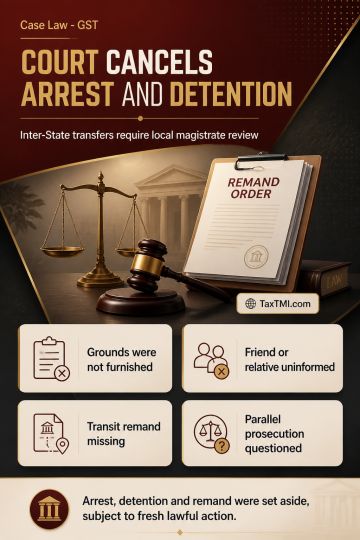
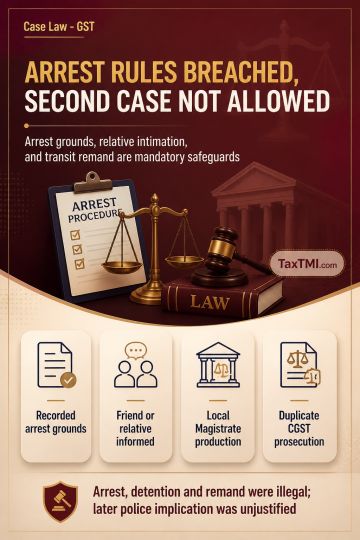
Arrest safeguards and transit remand requirements invalidated detention following inter-State transfer without communicated grounds or magistrate auth...
Arrest safeguards require disclosed grounds, relative intimation and transit remand, while duplicate prosecution under the CGST framework is unsustain...
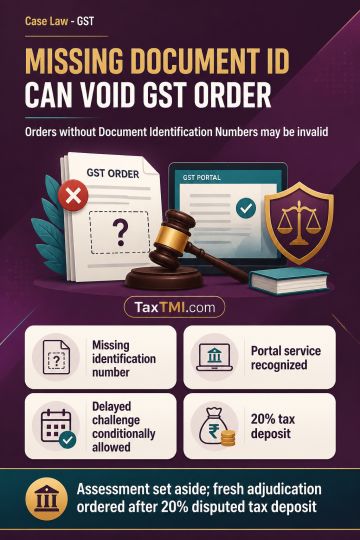
Document Identification Number defects can invalidate GST assessments, with delayed challenges entertained conditionally where patent irregularities e...
Windmill commissioning evidence supported higher depreciation where grid connection and electricity generation proved operational use before the relev...
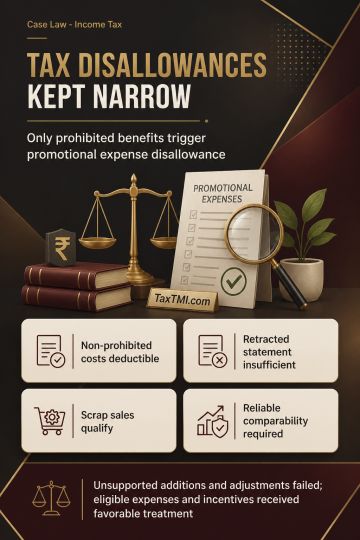
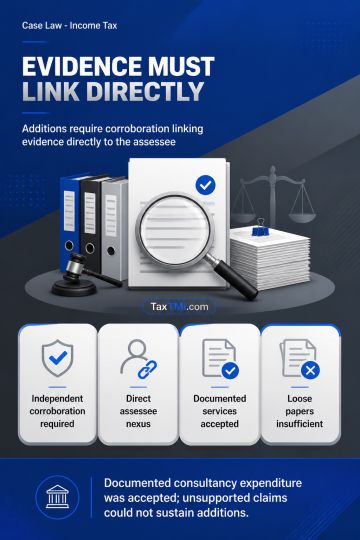
Pharmaceutical promotion and transfer-pricing comparability principles limited disallowances, while uncorroborated search allegations and unsupported ...
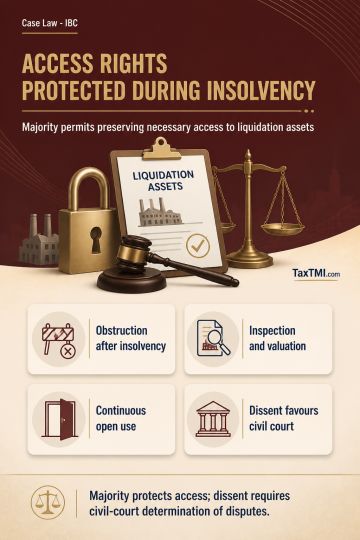
Section 60(5)(c) jurisdiction is examined in relation to a liquidator's request to protect access to a liquidation-estate asset across adjoining third-party land. The majority view treats obstruction arising after commencement of insolvency as sufficiently connected with liquidation where it impairs inspection, valuation and sale, and permits protection of a pre-existing right without creating a new one. It further addresses prescriptive easements, requiring continuous, open and peaceable use for the statutory period; recorded access and satellite imagery are discussed as supporting evidence. The dissent considers a disputed easement, including its route, dimensions and adverse use, unsuitable for summary insolvency jurisdiction and requiring civil-court determination.
Section 60(5)(c) jurisdiction is examined in relation to a liquidator's request to protect access to a liquidation-estate asset across adjoining third-party land. The majority view treats obstruction arising after commencement of insolvency as sufficiently connected with liquidation where it impairs inspection, valuation and sale, and permits protection of a pre-existing right without creating a new one. It further addresses prescriptive easements, requiring continuous, open and peaceable use for the statutory period; recorded access and satellite imagery are discussed as supporting evidence. The dissent considers a disputed easement, including its route, dimensions and adverse use, unsuitable for summary insolvency jurisdiction and requiring civil-court determination.
Note: It is a system-generated summary and is for quick reference only.
 TaxTMI
 of 4782







 Join Channel


 TaxTMI
