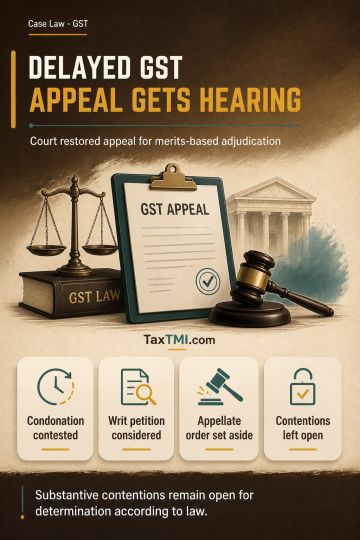
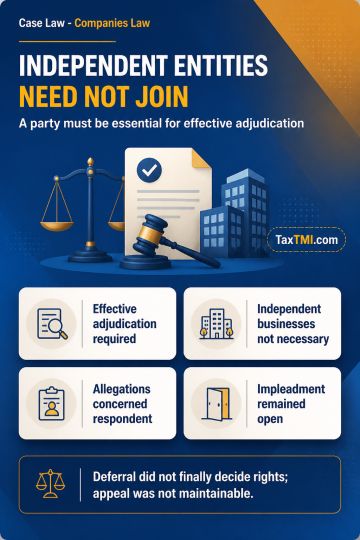
Necessary-party requirements limit impleadment of independent entities, while deferred consideration does not create an appealable adverse determinati...
Food supplement classification requires common parlance and authoritative tests, preventing treatment as proprietary Ayurvedic medicines without suppo...
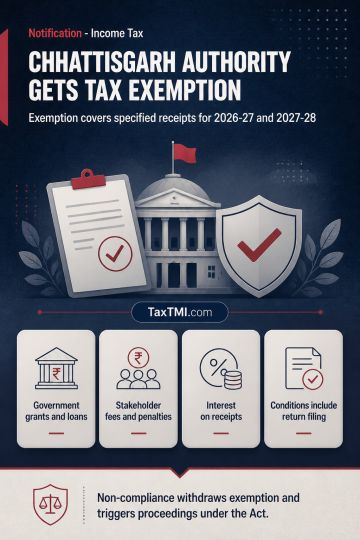
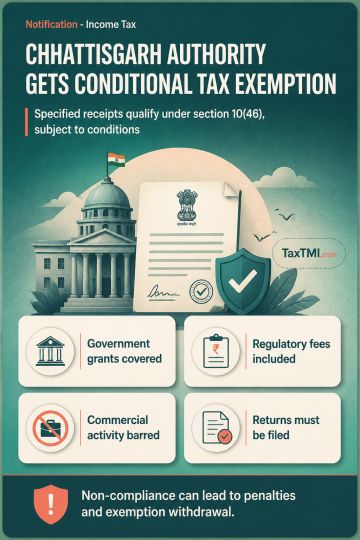
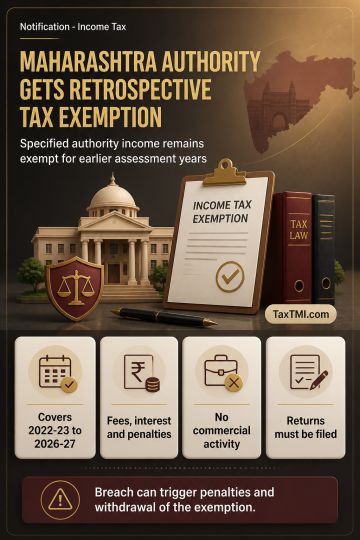
Specified regulatory authority income receives conditional tax exemption, subject to non-commercial activity, unchanged income character, and return f...
Tax exemption for regulatory authority income applies retrospectively, subject to non-commercial activity, unchanged income sources, and return-filing...
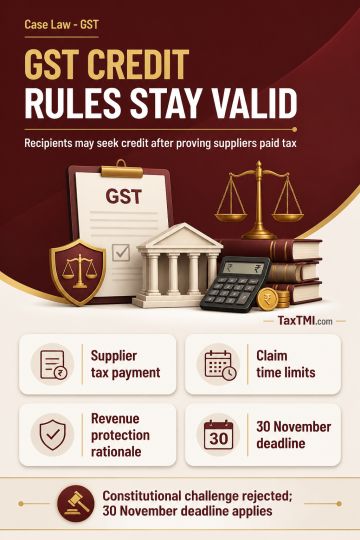
Input tax credit conditions remain constitutionally valid, with eligible recipient claims considered under GST circulars and retrospective filing dead...
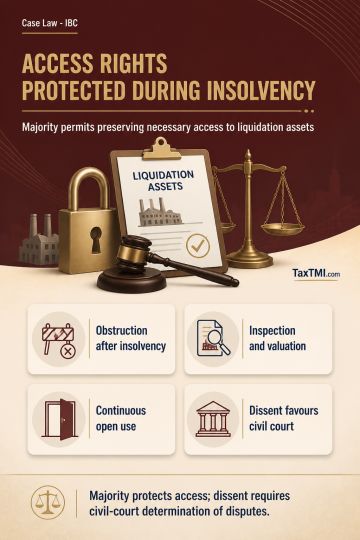
Section 60(5)(c) jurisdiction is examined in relation to a liquidator's request to protect access to a liquidation-estate asset across adjoining third-party land. The majority view treats obstruction arising after commencement of insolvency as sufficiently connected with liquidation where it impairs inspection, valuation and sale, and permits protection of a pre-existing right without creating a new one. It further addresses prescriptive easements, requiring continuous, open and peaceable use for the statutory period; recorded access and satellite imagery are discussed as supporting evidence. The dissent considers a disputed easement, including its route, dimensions and adverse use, unsuitable for summary insolvency jurisdiction and requiring civil-court determination.
Section 60(5)(c) jurisdiction is examined in relation to a liquidator's request to protect access to a liquidation-estate asset across adjoining third-party land. The majority view treats obstruction arising after commencement of insolvency as sufficiently connected with liquidation where it impairs inspection, valuation and sale, and permits protection of a pre-existing right without creating a new one. It further addresses prescriptive easements, requiring continuous, open and peaceable use for the statutory period; recorded access and satellite imagery are discussed as supporting evidence. The dissent considers a disputed easement, including its route, dimensions and adverse use, unsuitable for summary insolvency jurisdiction and requiring civil-court determination.
Note: It is a system-generated summary and is for quick reference only.
 TaxTMI
 of 4782






 Join Channel


 TaxTMI