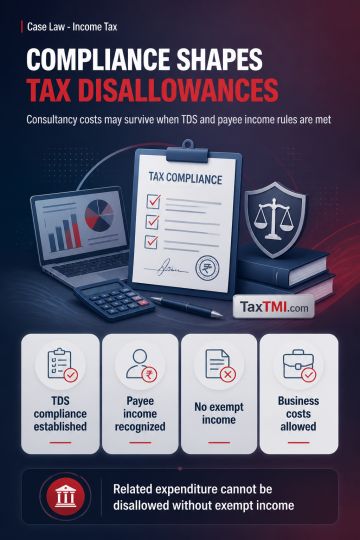
Tax deduction compliance and payee income recognition govern consultancy disallowance, while no exempt income prevents related expenditure disallowanc...
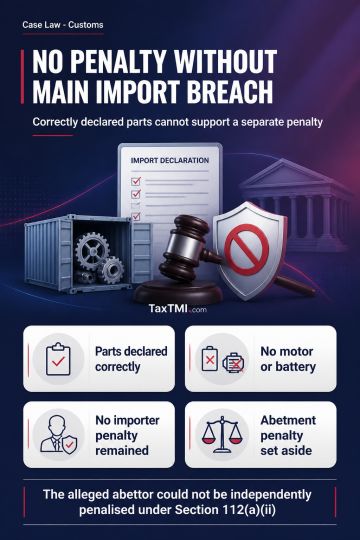
Derivative abetment liability fails when correctly declared imported components establish no underlying improper importation by the principal importer...
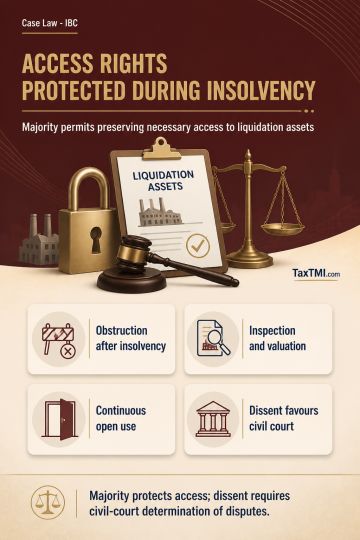
Section 60(5)(c) jurisdiction is examined in relation to a liquidator's request to protect access to a liquidation-estate asset across adjoining third-party land. The majority view treats obstruction arising after commencement of insolvency as sufficiently connected with liquidation where it impairs inspection, valuation and sale, and permits protection of a pre-existing right without creating a new one. It further addresses prescriptive easements, requiring continuous, open and peaceable use for the statutory period; recorded access and satellite imagery are discussed as supporting evidence. The dissent considers a disputed easement, including its route, dimensions and adverse use, unsuitable for summary insolvency jurisdiction and requiring civil-court determination.
Section 60(5)(c) jurisdiction is examined in relation to a liquidator's request to protect access to a liquidation-estate asset across adjoining third-party land. The majority view treats obstruction arising after commencement of insolvency as sufficiently connected with liquidation where it impairs inspection, valuation and sale, and permits protection of a pre-existing right without creating a new one. It further addresses prescriptive easements, requiring continuous, open and peaceable use for the statutory period; recorded access and satellite imagery are discussed as supporting evidence. The dissent considers a disputed easement, including its route, dimensions and adverse use, unsuitable for summary insolvency jurisdiction and requiring civil-court determination.
Note: It is a system-generated summary and is for quick reference only.
 TaxTMI
 of 4780














 Join Channel


 TaxTMI
