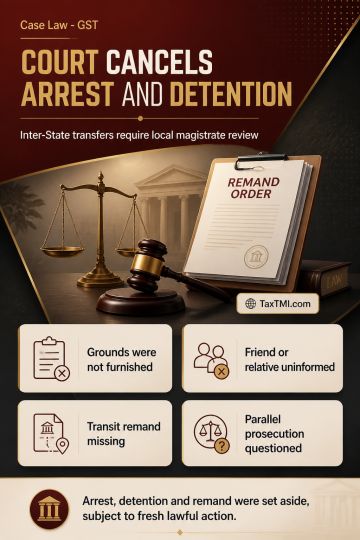
Arrest safeguards and transit remand requirements invalidated detention following inter-State transfer without communicated grounds or magistrate auth...
Arrest safeguards require disclosed grounds, relative intimation and transit remand, while duplicate prosecution under the CGST framework is unsustain...
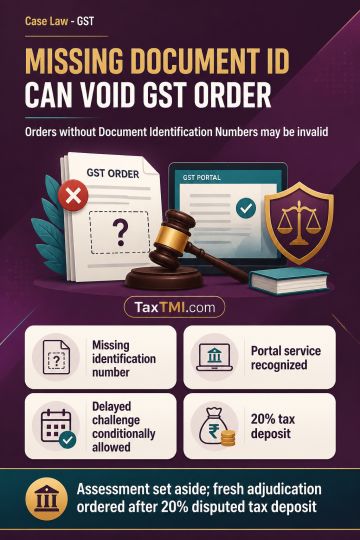
Document Identification Number defects can invalidate GST assessments, with delayed challenges entertained conditionally where patent irregularities e...
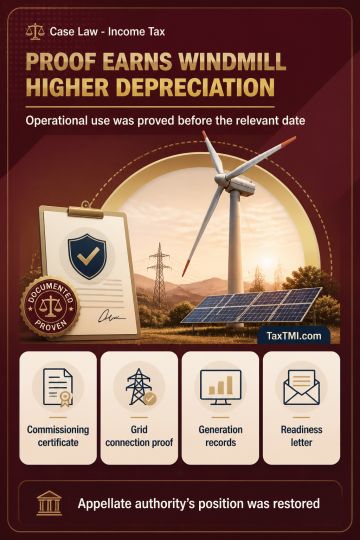
Windmill commissioning evidence supported higher depreciation where grid connection and electricity generation proved operational use before the relev...
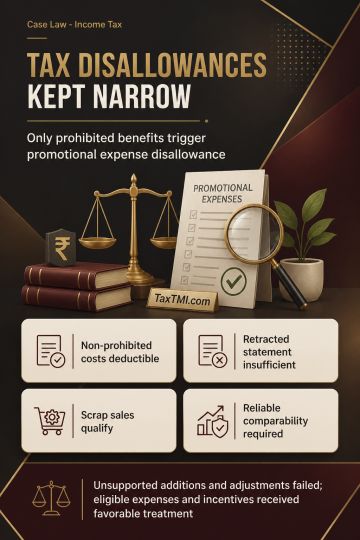
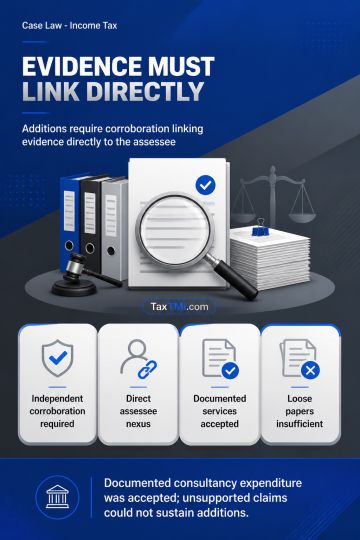
Pharmaceutical promotion and transfer-pricing comparability principles limited disallowances, while uncorroborated search allegations and unsupported ...
Protective assessment cannot be used to tax identical receipts...
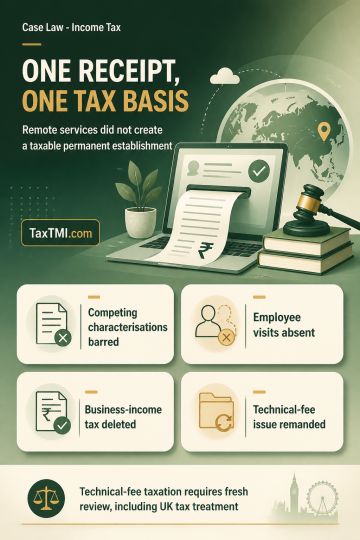
Protective assessment cannot duplicate identical receipts under competing characterisations; remote services did not establish a taxable permanent establishment.
Contents
Summary
Note
Bookmark
Share
✓ Copied successfully !
Print
Print Options
For full text, please login
Login to TaxTMI
Verification Pending
The Email Id has not been verified. Click on the link we have sent on
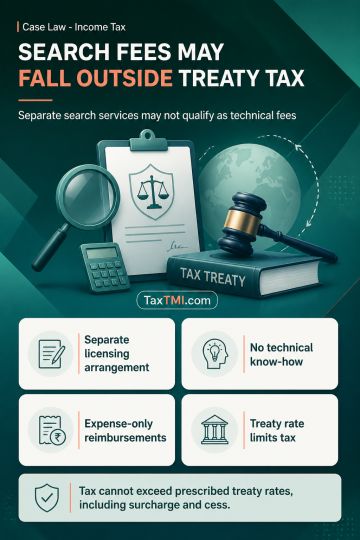
Protective assessment cannot be used to tax identical receipts in the same taxpayer's hands under alternative characterisations as business income and fees for technical services; the Revenue must adopt one assessment method. The notes state that remotely rendered services, without employee visits to India, did not create a permanent establishment under the India-UK DTAA, so business-income taxation under section 44DA was deleted. For fees for technical services, the post-2020 contractual arrangements require fresh examination of whether the services made technical knowledge or capability available to the Indian recipient; specialised services alone are insufficient. The fees-for-technical-services issue was remanded for verification, including UK tax treatment.
Protective assessment cannot be used to tax identical receipts in the same taxpayer's hands under alternative characterisations as business income and fees for technical services; the Revenue must adopt one assessment method. The notes state that remotely rendered services, without employee visits to India, did not create a permanent establishment under the India-UK DTAA, so business-income taxation under section 44DA was deleted. For fees for technical services, the post-2020 contractual arrangements require fresh examination of whether the services made technical knowledge or capability available to the Indian recipient; specialised services alone are insufficient. The fees-for-technical-services issue was remanded for verification, including UK tax treatment.
Note: It is a system-generated summary and is for quick reference only.
 TaxTMI
 of 4780










 Join Channel


 TaxTMI
