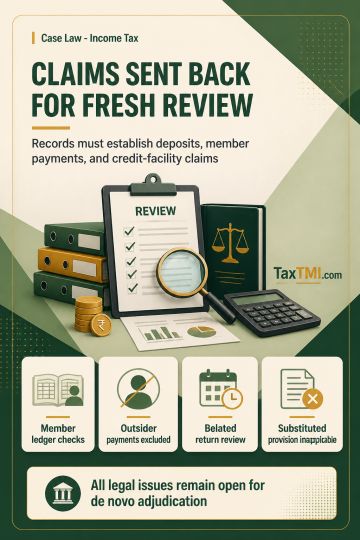
Cooperative society deposits, member-interest TDS exemption and credit-facility deduction claims require verification through records and supporting e...
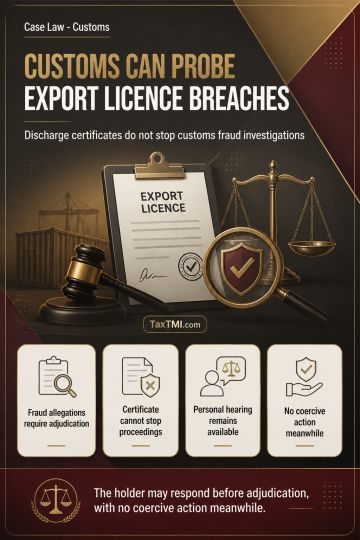
Customs jurisdiction over EPCG condition breaches survives export-obligation discharge certificates, requiring alleged fraud and misdeclaration to be ...
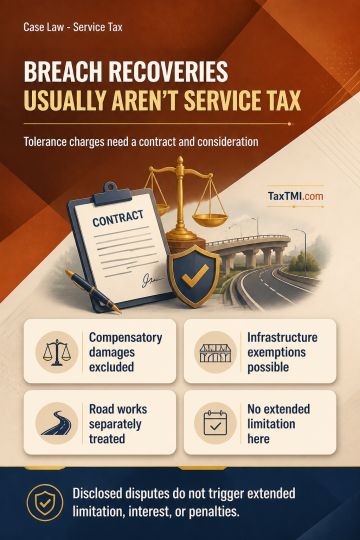
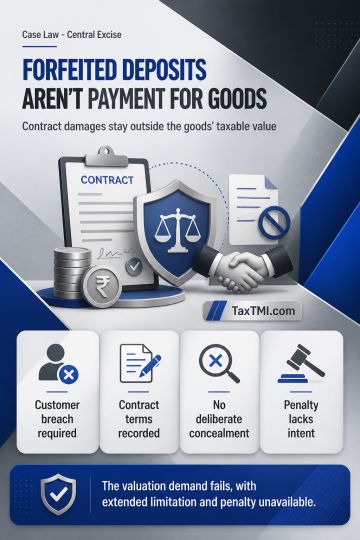
Contractual tolerance requires consideration; breach recoveries, qualifying public infrastructure services and road works escape service tax liability...
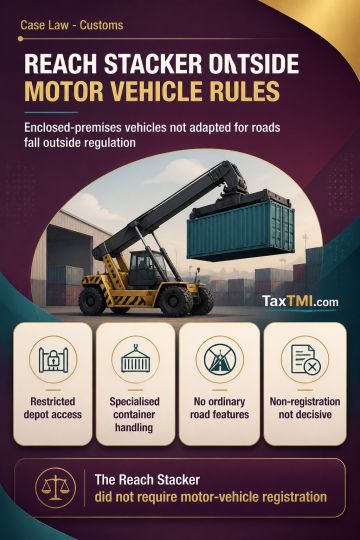
A Reach Stacker used exclusively for container handling within a restricted Inland Container Depot is described as falling outside the Motor Vehicles Act, 1988 definition of a motor vehicle because it is a special vehicle adapted only for enclosed premises. The text distinguishes road rollers, which are built for road use, and applies the test of whether a vehicle is adapted for use on roads. Restricted depot roads were not a public place because the public had no right of access. The Reach Stacker's specialised design, excess weight, dismantled transportation, lack of ordinary road-safety features and confined utility supported the exclusion. Non-registration alone was not determinative, but followed from its non-motor-vehicle status.
A Reach Stacker used exclusively for container handling within a restricted Inland Container Depot is described as falling outside the Motor Vehicles Act, 1988 definition of a motor vehicle because it is a special vehicle adapted only for enclosed premises. The text distinguishes road rollers, which are built for road use, and applies the test of whether a vehicle is adapted for use on roads. Restricted depot roads were not a public place because the public had no right of access. The Reach Stacker's specialised design, excess weight, dismantled transportation, lack of ordinary road-safety features and confined utility supported the exclusion. Non-registration alone was not determinative, but followed from its non-motor-vehicle status.
Note: It is a system-generated summary and is for quick reference only.
 TaxTMI
 of 4782



 Join Channel


 TaxTMI