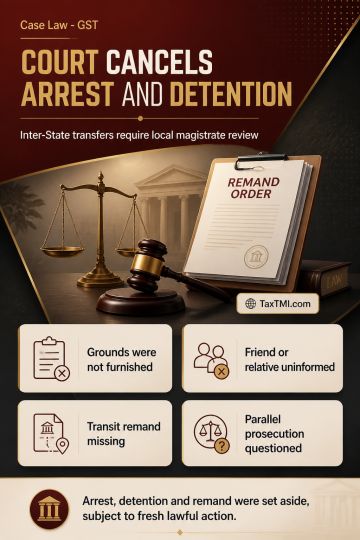
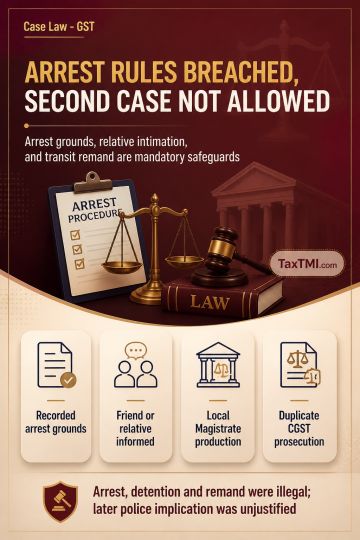
Arrest safeguards and transit remand requirements invalidated detention following inter-State transfer without communicated grounds or magistrate auth...
Arrest safeguards require disclosed grounds, relative intimation and transit remand, while duplicate prosecution under the CGST framework is unsustain...
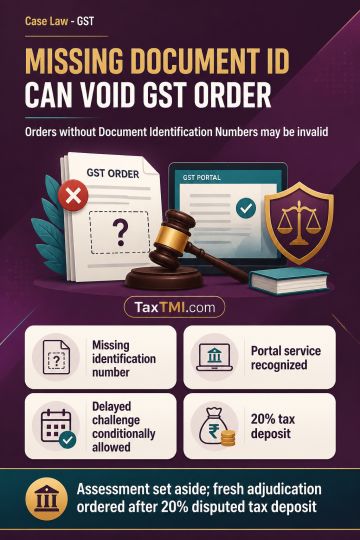
Document Identification Number defects can invalidate GST assessments, with delayed challenges entertained conditionally where patent irregularities e...
Windmill commissioning evidence supported higher depreciation where grid connection and electricity generation proved operational use before the relev...
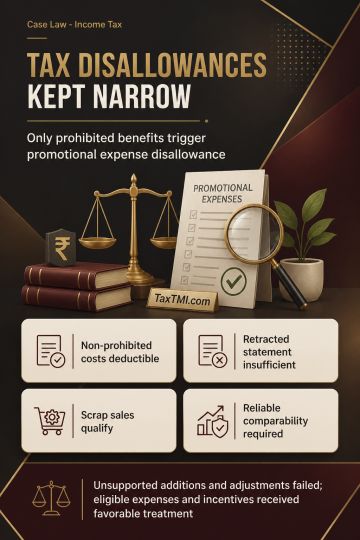
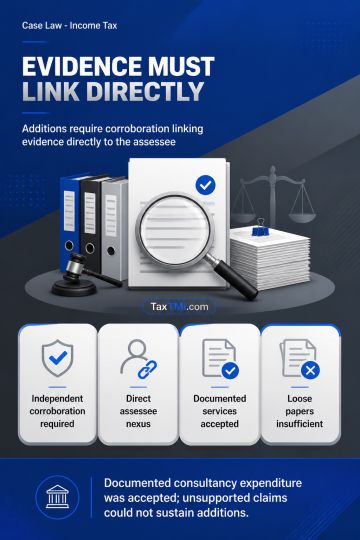
Pharmaceutical promotion and transfer-pricing comparability principles limited disallowances, while uncorroborated search allegations and unsupported ...
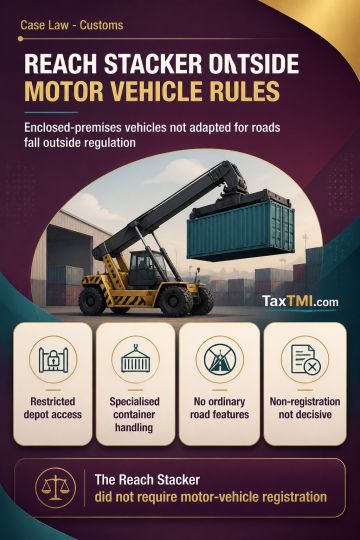
A Reach Stacker used exclusively for container handling within a restricted Inland Container Depot is described as falling outside the Motor Vehicles Act, 1988 definition of a motor vehicle because it is a special vehicle adapted only for enclosed premises. The text distinguishes road rollers, which are built for road use, and applies the test of whether a vehicle is adapted for use on roads. Restricted depot roads were not a public place because the public had no right of access. The Reach Stacker's specialised design, excess weight, dismantled transportation, lack of ordinary road-safety features and confined utility supported the exclusion. Non-registration alone was not determinative, but followed from its non-motor-vehicle status.
A Reach Stacker used exclusively for container handling within a restricted Inland Container Depot is described as falling outside the Motor Vehicles Act, 1988 definition of a motor vehicle because it is a special vehicle adapted only for enclosed premises. The text distinguishes road rollers, which are built for road use, and applies the test of whether a vehicle is adapted for use on roads. Restricted depot roads were not a public place because the public had no right of access. The Reach Stacker's specialised design, excess weight, dismantled transportation, lack of ordinary road-safety features and confined utility supported the exclusion. Non-registration alone was not determinative, but followed from its non-motor-vehicle status.
Note: It is a system-generated summary and is for quick reference only.
 TaxTMI
 of 4782









 Join Channel


 TaxTMI
