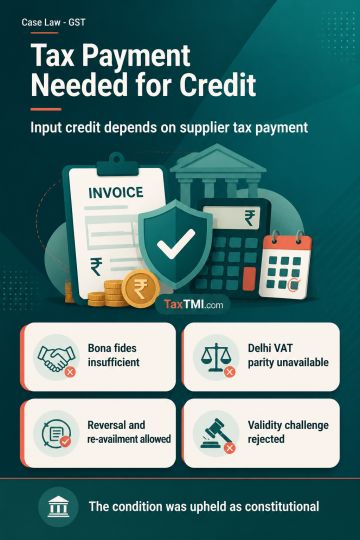
Input tax credit conditions remain constitutionally valid, with eligible recipient claims considered under GST circulars and retrospective filing dead...
Bogus donation receipts justified commission income assessment and defeated political-party tax exemption for inaccurate accounts and reporting failur...
Pure reimbursement without income element escapes tax withholding, while delayed withholding and unsupported provisions face deferred or renewed scrut...
Public benefit requirement defeats charitable registration where residents' association services are reciprocal, member-only facilities governed by mu...
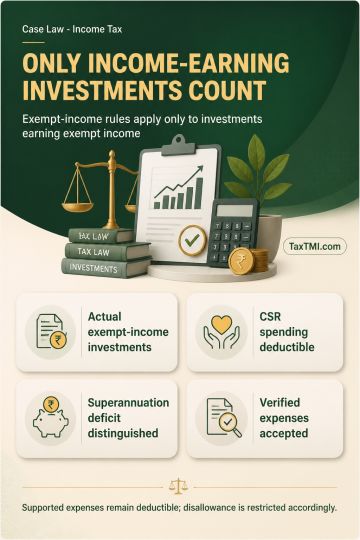
Exempt-income expenditure disallowance is confined to investments that actually generated exempt income, while supported business expenses remain dedu...
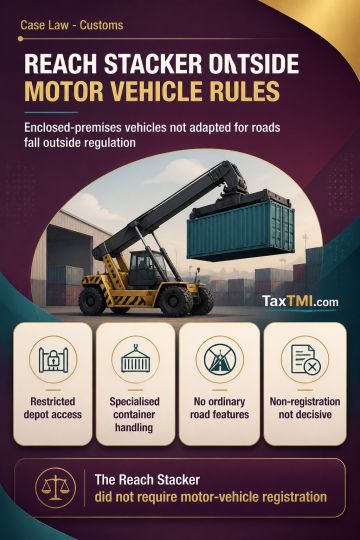
A Reach Stacker used exclusively for container handling within a restricted Inland Container Depot is described as falling outside the Motor Vehicles Act, 1988 definition of a motor vehicle because it is a special vehicle adapted only for enclosed premises. The text distinguishes road rollers, which are built for road use, and applies the test of whether a vehicle is adapted for use on roads. Restricted depot roads were not a public place because the public had no right of access. The Reach Stacker's specialised design, excess weight, dismantled transportation, lack of ordinary road-safety features and confined utility supported the exclusion. Non-registration alone was not determinative, but followed from its non-motor-vehicle status.
A Reach Stacker used exclusively for container handling within a restricted Inland Container Depot is described as falling outside the Motor Vehicles Act, 1988 definition of a motor vehicle because it is a special vehicle adapted only for enclosed premises. The text distinguishes road rollers, which are built for road use, and applies the test of whether a vehicle is adapted for use on roads. Restricted depot roads were not a public place because the public had no right of access. The Reach Stacker's specialised design, excess weight, dismantled transportation, lack of ordinary road-safety features and confined utility supported the exclusion. Non-registration alone was not determinative, but followed from its non-motor-vehicle status.
Note: It is a system-generated summary and is for quick reference only.
 TaxTMI
 of 4782
















 Join Channel


 TaxTMI