Cooperative society deposits, member-interest TDS exemption and credit-facility deduction claims require verification through records and supporting e...
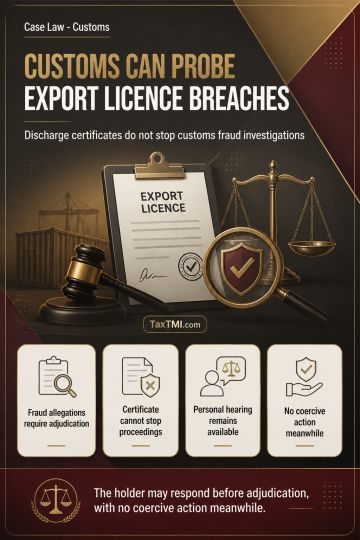
Customs jurisdiction over EPCG condition breaches survives export-obligation discharge certificates, requiring alleged fraud and misdeclaration to be ...
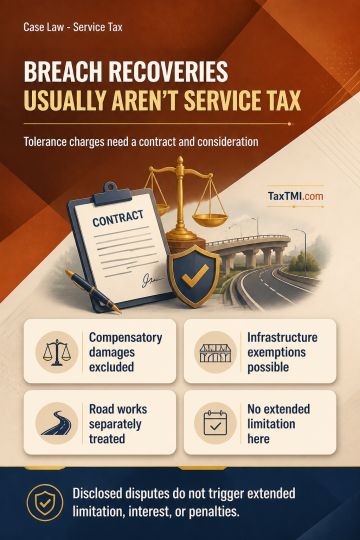
Contractual tolerance requires consideration; breach recoveries, qualifying public infrastructure services and road works escape service tax liability...
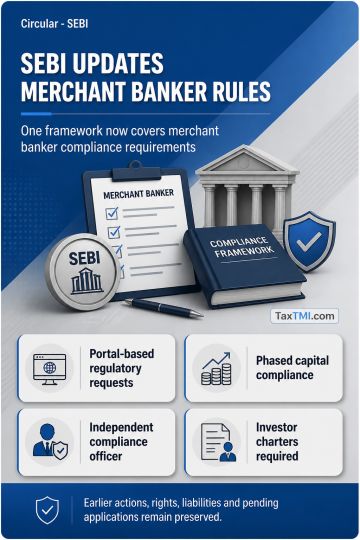
The Master Circular consolidates and updates the regulatory framework for SEBI-registered merchant bankers, rescinding listed earlier circulars while preserving prior actions, rights, liabilities, penalties and pending applications. It requires portal-based registration and regulatory requests, prior approval for changes in control, and fresh registration for specified business transfers. It prescribes phased capital adequacy and liquid net worth compliance, professional certification, an independent compliance officer, and relevant experience for principal officers. Merchant bankers must submit half-yearly compliance reports, disclose issue track records and investor complaints, maintain investor charters, protect critical data, restrict outsourcing of core activities, manage conflicts of interest, and segregate non-SEBI-regulated activities through separate business units.
The Master Circular consolidates and updates the regulatory framework for SEBI-registered merchant bankers, rescinding listed earlier circulars while preserving prior actions, rights, liabilities, penalties and pending applications. It requires portal-based registration and regulatory requests, prior approval for changes in control, and fresh registration for specified business transfers. It prescribes phased capital adequacy and liquid net worth compliance, professional certification, an independent compliance officer, and relevant experience for principal officers. Merchant bankers must submit half-yearly compliance reports, disclose issue track records and investor complaints, maintain investor charters, protect critical data, restrict outsourcing of core activities, manage conflicts of interest, and segregate non-SEBI-regulated activities through separate business units.
Note: It is a system-generated summary and is for quick reference only.
 TaxTMI
 of 4782






 Join Channel


 TaxTMI