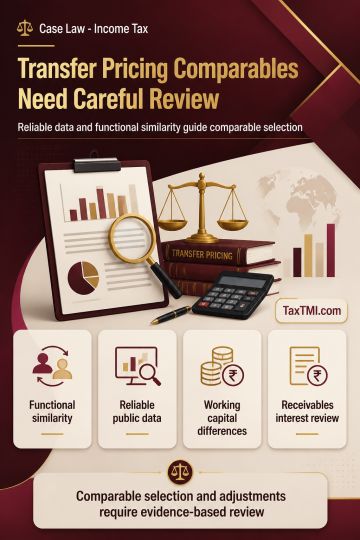
Transfer pricing comparability requires functional alignment, reliable financial data, and careful review of working capital and receivables adjustmen...
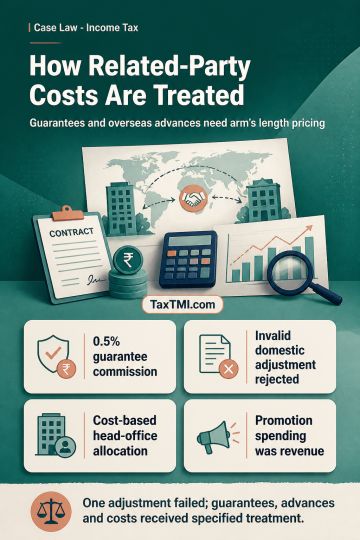
Transfer pricing rules require benchmarking corporate guarantees and associated-enterprise advances, while invalid domestic-transaction adjustments ca...
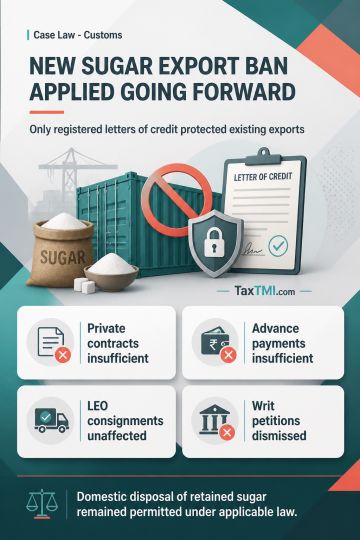
Prospective sugar export prohibition required registered letters of credit; private contracts and export quotas created no enforceable continuation ri...
Retroactive interim-moratorium exclusion permits protective asset disclosure and preservation measures against personal guarantors pending arbitration...
Uncorroborated statements of a co-noticee cannot by themselves...
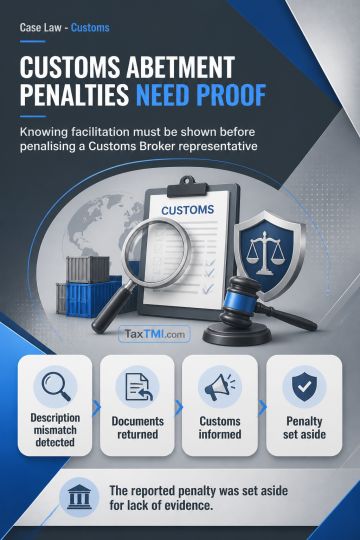
Cross-examination rights and corroborated evidence limit customs penalties for misdeclaration in genuine import transactions involving documented clearance filings.
Contents
Summary
Note
Bookmark
Share
✓ Copied successfully !
Print
Print Options
For full text, please login
Login to TaxTMI
Verification Pending
The Email Id has not been verified. Click on the link we have sent on
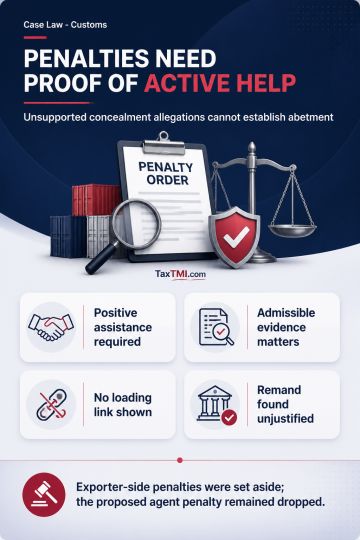
Uncorroborated statements of a co-noticee cannot by themselves support customs penalties for misdeclaration where cross-examination is denied without reasonable cause and no independent evidence establishes the person's knowledge or involvement. The notes emphasise that an importer's documents may be relied upon for filing clearance documents, while doubts over description or classification may require sampling and reclassification action. They also distinguish false-declaration penalties from genuine import transactions: the provision addressing false customs declarations does not apply merely because goods were allegedly misdeclared where actual import occurred and its statutory ingredients are not established. On these principles, the penalties discussed were treated as unsustainable.
Uncorroborated statements of a co-noticee cannot by themselves support customs penalties for misdeclaration where cross-examination is denied without reasonable cause and no independent evidence establishes the person's knowledge or involvement. The notes emphasise that an importer's documents may be relied upon for filing clearance documents, while doubts over description or classification may require sampling and reclassification action. They also distinguish false-declaration penalties from genuine import transactions: the provision addressing false customs declarations does not apply merely because goods were allegedly misdeclared where actual import occurred and its statutory ingredients are not established. On these principles, the penalties discussed were treated as unsustainable.
Note: It is a system-generated summary and is for quick reference only.
 TaxTMI
 of 4782








 Join Channel



 TaxTMI