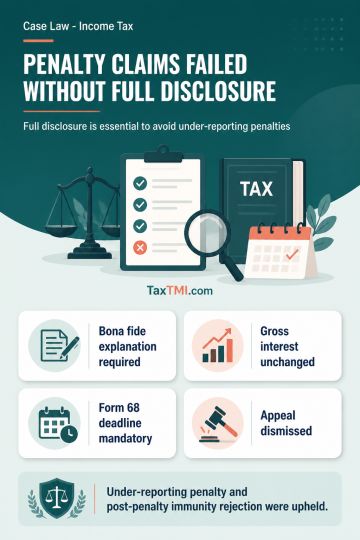
Bona fide disclosure requirements govern under-reporting penalties, and post-penalty immunity applications cannot secure available statutory protectio...
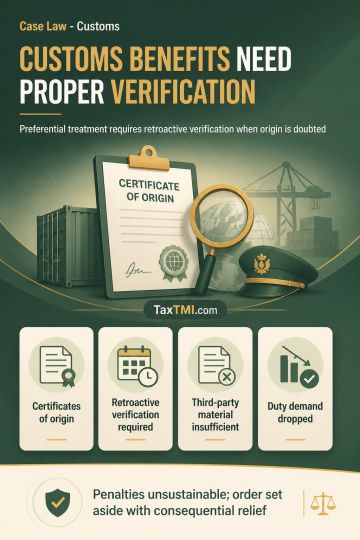
Certificate-of-origin verification procedure governs preferential customs benefits; denial without retroactive verification was set aside with consequ...
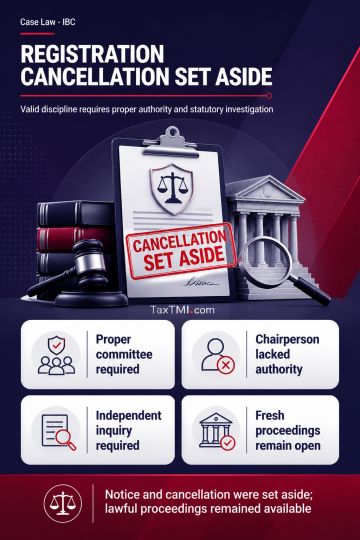
Disciplinary Committee jurisdiction and mandatory investigation requirements invalidated cancellation of an insolvency professional's registration and...
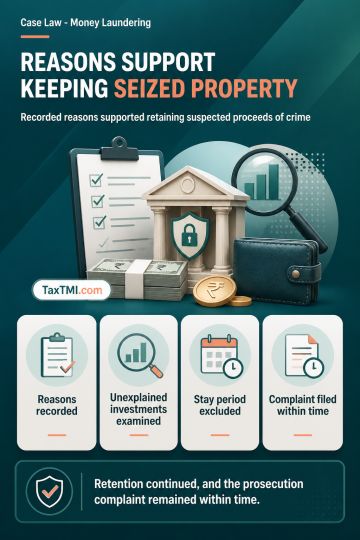
Retention of seized property survives where recorded reasons support proceeds of crime, while stayed investigation periods are excluded from limitatio...
Uncorroborated statements of a co-noticee cannot by themselves...
Cross-examination rights and corroborated evidence limit customs penalties for misdeclaration in genuine import transactions involving documented clearance filings.
Contents
Summary
Note
Bookmark
Share
✓ Copied successfully !
Print
Print Options
For full text, please login
Login to TaxTMI
Verification Pending
The Email Id has not been verified. Click on the link we have sent on
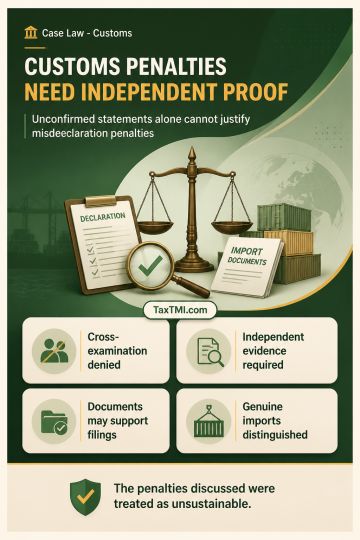
Uncorroborated statements of a co-noticee cannot by themselves support customs penalties for misdeclaration where cross-examination is denied without reasonable cause and no independent evidence establishes the person's knowledge or involvement. The notes emphasise that an importer's documents may be relied upon for filing clearance documents, while doubts over description or classification may require sampling and reclassification action. They also distinguish false-declaration penalties from genuine import transactions: the provision addressing false customs declarations does not apply merely because goods were allegedly misdeclared where actual import occurred and its statutory ingredients are not established. On these principles, the penalties discussed were treated as unsustainable.
Uncorroborated statements of a co-noticee cannot by themselves support customs penalties for misdeclaration where cross-examination is denied without reasonable cause and no independent evidence establishes the person's knowledge or involvement. The notes emphasise that an importer's documents may be relied upon for filing clearance documents, while doubts over description or classification may require sampling and reclassification action. They also distinguish false-declaration penalties from genuine import transactions: the provision addressing false customs declarations does not apply merely because goods were allegedly misdeclared where actual import occurred and its statutory ingredients are not established. On these principles, the penalties discussed were treated as unsustainable.
Note: It is a system-generated summary and is for quick reference only.
 TaxTMI
 of 4792










 Join Channel


 TaxTMI
