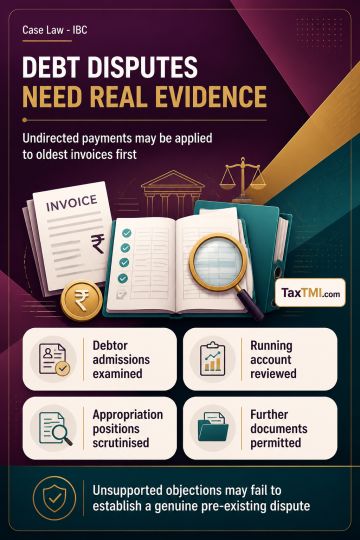
Pre-existing operational debt disputes require genuine evidence, while undirected running-account payments may be appropriated on a first-in-first-out...
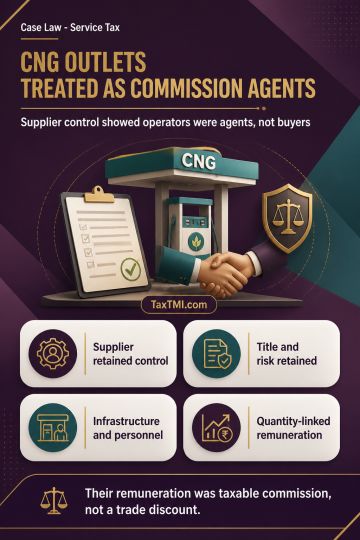
Agency in CNG distribution makes outlet operators commission agents, rendering taxable Business Auxiliary Service rather than purchasing goods for res...
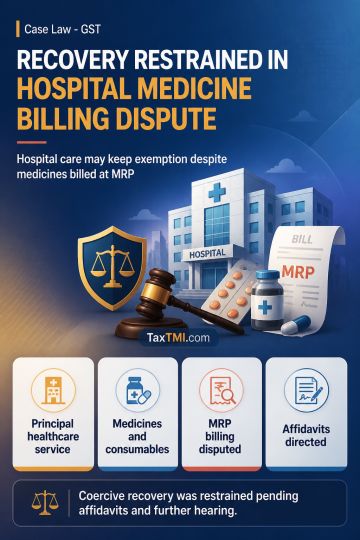
Composite inpatient healthcare supply may retain exemption despite MRP medicine billing, while separate taxable sale characterisation remains disputed...
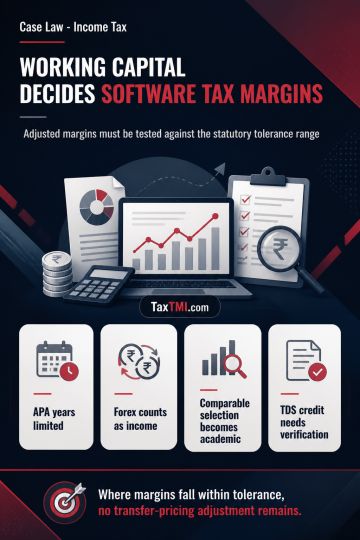
Working-capital adjustment determines whether software-services transfer-pricing margins fall within the statutory tolerance range, eliminating any ad...
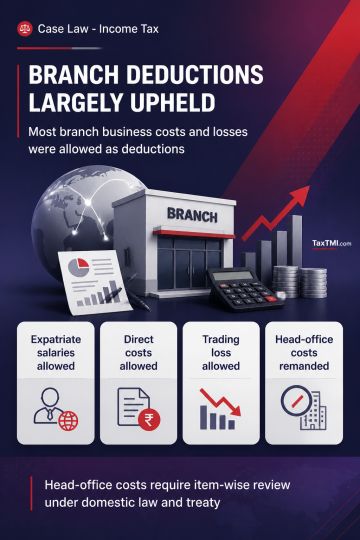
Permanent establishment deductions upheld for expatriate salaries, direct costs and trading losses, while head-office costs require fresh classificati...
Page of 4782
Press 'Enter' after typing page number.
601 to 620 of 95636 Results
❮
❯
❯❯
0 / 200
Expand Note
Add to Folder
No Folders have been created
+
Are you sure you want to delete "My most important" ?
Uncorroborated statements of a co-noticee cannot by themselves...
Cross-examination rights and corroborated evidence limit customs penalties for misdeclaration in genuine import transactions involving documented clearance filings.
Contents
Summary
Note
Bookmark
Share
✓ Copied successfully !
Print
Print Options
For full text, please login
Login to TaxTMI
Verification Pending
The Email Id has not been verified. Click on the link we have sent on
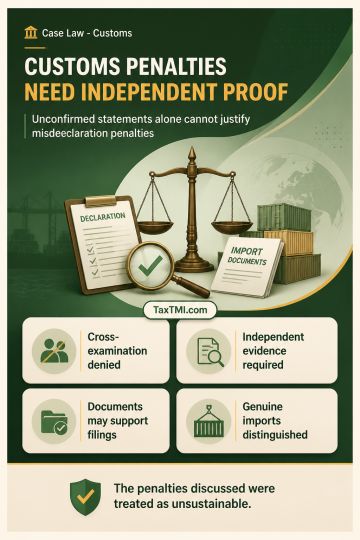
Uncorroborated statements of a co-noticee cannot by themselves support customs penalties for misdeclaration where cross-examination is denied without reasonable cause and no independent evidence establishes the person's knowledge or involvement. The notes emphasise that an importer's documents may be relied upon for filing clearance documents, while doubts over description or classification may require sampling and reclassification action. They also distinguish false-declaration penalties from genuine import transactions: the provision addressing false customs declarations does not apply merely because goods were allegedly misdeclared where actual import occurred and its statutory ingredients are not established. On these principles, the penalties discussed were treated as unsustainable.
Uncorroborated statements of a co-noticee cannot by themselves support customs penalties for misdeclaration where cross-examination is denied without reasonable cause and no independent evidence establishes the person's knowledge or involvement. The notes emphasise that an importer's documents may be relied upon for filing clearance documents, while doubts over description or classification may require sampling and reclassification action. They also distinguish false-declaration penalties from genuine import transactions: the provision addressing false customs declarations does not apply merely because goods were allegedly misdeclared where actual import occurred and its statutory ingredients are not established. On these principles, the penalties discussed were treated as unsustainable.
Note: It is a system-generated summary and is for quick reference only.
 TaxTMI
 of 4782






 Join Channel


 TaxTMI