Authentication of paper assessment orders upheld, while qualifying repairs, consumables and vendor advance write-offs remain deductible business claim...
Transaction value cannot be rejected solely on non-statutory valuation guidelines without corroborative evidence supporting reassessment of final cust...
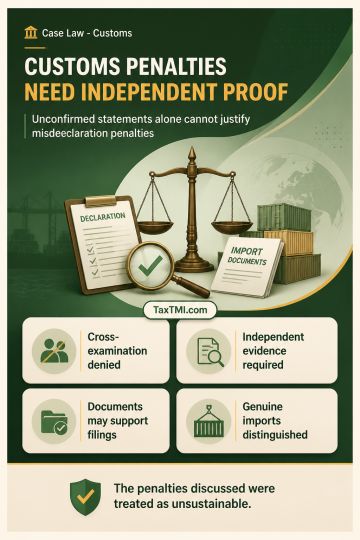
Cross-examination rights and corroborated evidence limit customs penalties for misdeclaration in genuine import transactions involving documented clea...
Page of 4780
Press 'Enter' after typing page number.
261 to 280 of 95596 Results
❮
❯
❯❯
0 / 200
Expand Note
Add to Folder
No Folders have been created
+
Are you sure you want to delete "My most important" ?
Necessary-party principles in oppression and mismanagement...
Necessary-party requirements limit impleadment of independent entities, while deferred consideration does not create an appealable adverse determination.
Contents
Summary
Note
Bookmark
Share
✓ Copied successfully !
Print
Print Options
For full text, please login
Login to TaxTMI
Verification Pending
The Email Id has not been verified. Click on the link we have sent on
Necessary-party principles in oppression and mismanagement proceedings require impleadment only where an entity's presence is needed for effective adjudication. Independent businesses alleged to have benefited from diversion of company funds or business were not treated as necessary parties merely to support the petitioner's allegations, particularly where the principal allegations concerned an existing respondent. Deferral of the impleadment application for possible consideration at final hearing did not finally determine the dispute or adversely affect rights. The discussion states that an appeal against such deferral is not maintainable, while leaving impleadment open if later required for effective adjudication.
Necessary-party principles in oppression and mismanagement proceedings require impleadment only where an entity's presence is needed for effective adjudication. Independent businesses alleged to have benefited from diversion of company funds or business were not treated as necessary parties merely to support the petitioner's allegations, particularly where the principal allegations concerned an existing respondent. Deferral of the impleadment application for possible consideration at final hearing did not finally determine the dispute or adversely affect rights. The discussion states that an appeal against such deferral is not maintainable, while leaving impleadment open if later required for effective adjudication.
Note: It is a system-generated summary and is for quick reference only.
 TaxTMI
 of 4780

















 Join Channel



 TaxTMI