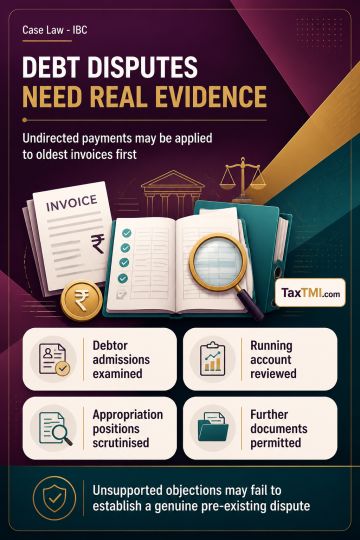
Pre-existing operational debt disputes require genuine evidence, while undirected running-account payments may be appropriated on a first-in-first-out...
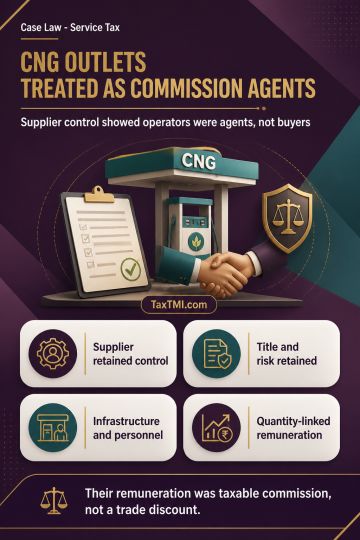
Agency in CNG distribution makes outlet operators commission agents, rendering taxable Business Auxiliary Service rather than purchasing goods for res...
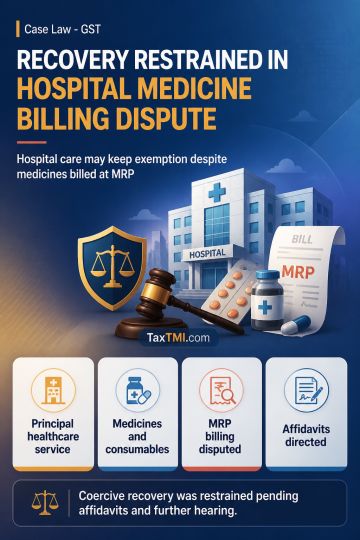
Composite inpatient healthcare supply may retain exemption despite MRP medicine billing, while separate taxable sale characterisation remains disputed...
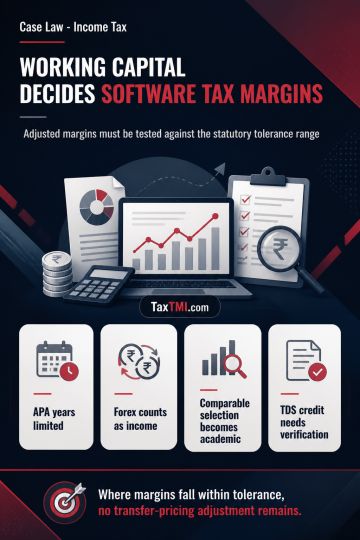
Working-capital adjustment determines whether software-services transfer-pricing margins fall within the statutory tolerance range, eliminating any ad...
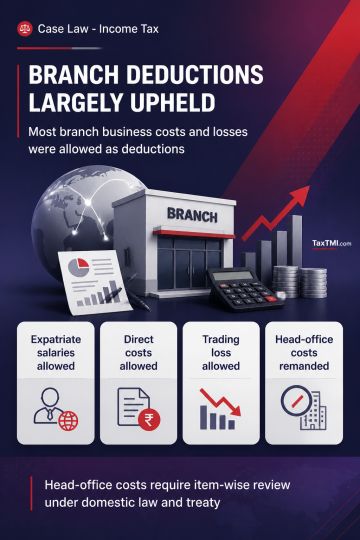
Permanent establishment deductions upheld for expatriate salaries, direct costs and trading losses, while head-office costs require fresh classificati...
Page of 4782
Press 'Enter' after typing page number.
601 to 620 of 95636 Results
❮
❯
❯❯
0 / 200
Expand Note
Add to Folder
No Folders have been created
+
Are you sure you want to delete "My most important" ?
Food supplements cannot be classified as proprietary Ayurvedic...
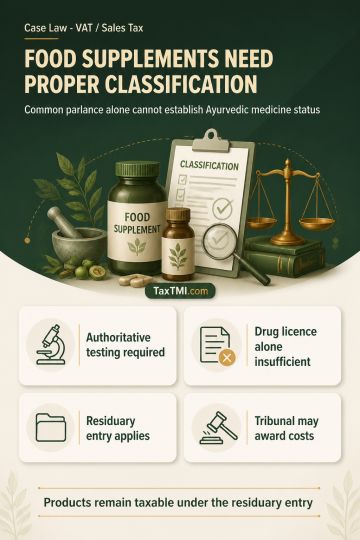
Food supplement classification requires common parlance and authoritative tests, preventing treatment as proprietary Ayurvedic medicines without supporting evidence.
Contents
Summary
Note
Bookmark
Share
✓ Copied successfully !
Print
Print Options
For full text, please login
Login to TaxTMI
Verification Pending
The Email Id has not been verified. Click on the link we have sent on
Food supplements cannot be classified as proprietary Ayurvedic medicines solely by common parlance or a manufacturer's drug licence. Classification requires both common parlance and authoritative tests, including evidence that the products are intended for diagnosis, treatment or cure. Products purchased under CST registration and sold unchanged as food supplements, without the dealer holding a drug-sale licence, remain taxable under the residuary entry. Chapter IV-A of the Drugs and Cosmetics Act continues to regulate Ayurvedic, Siddha and Unani drugs; exclusion from Chapter IV does not remove sale-licensing requirements. The Tribunal may award costs in tax appeals, as compensatory costs for vexatious litigation are an inherent power not barred by the Act.
Food supplements cannot be classified as proprietary Ayurvedic medicines solely by common parlance or a manufacturer's drug licence. Classification requires both common parlance and authoritative tests, including evidence that the products are intended for diagnosis, treatment or cure. Products purchased under CST registration and sold unchanged as food supplements, without the dealer holding a drug-sale licence, remain taxable under the residuary entry. Chapter IV-A of the Drugs and Cosmetics Act continues to regulate Ayurvedic, Siddha and Unani drugs; exclusion from Chapter IV does not remove sale-licensing requirements. The Tribunal may award costs in tax appeals, as compensatory costs for vexatious litigation are an inherent power not barred by the Act.
Note: It is a system-generated summary and is for quick reference only.
 TaxTMI
 of 4782




 Join Channel


 TaxTMI