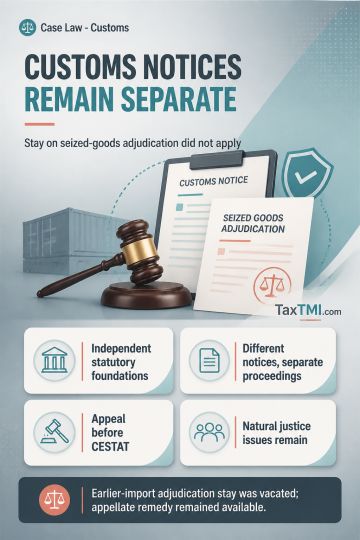
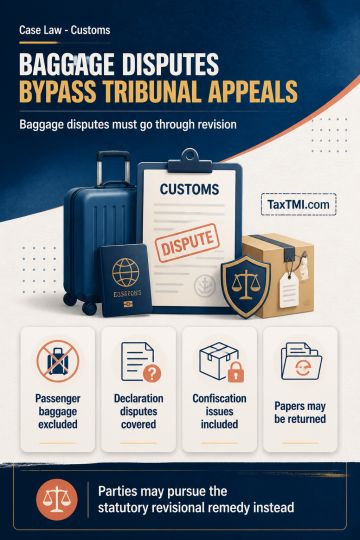
Independent show-cause notices remain separate proceedings, while customs adjudication challenges should ordinarily follow the statutory appellate rem...
Institutional incapacity in customs settlement proceedings excludes non-functional quorum periods from statutory disposal timelines, preventing automa...
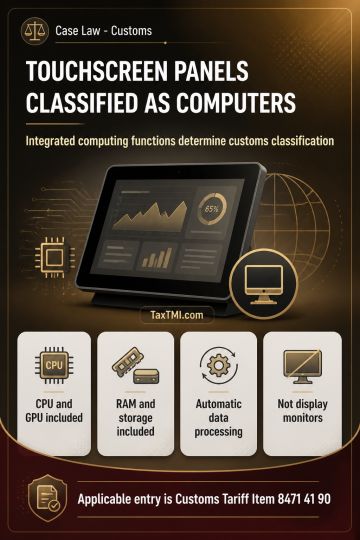
Interactive touchscreen panels with integrated computing functions fall under automatic data-processing machines rather than display monitors for cust...
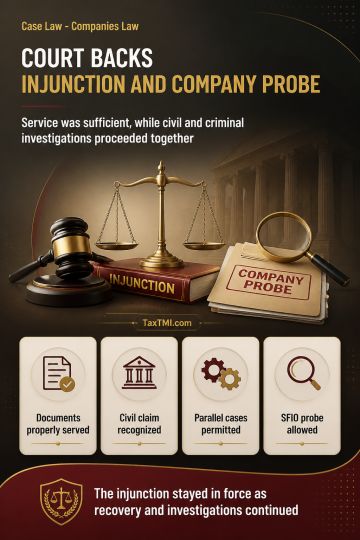
Ex parte injunction service requirements were substantially met, while civil recovery and SFIO investigation into provident fund defalcation continued...
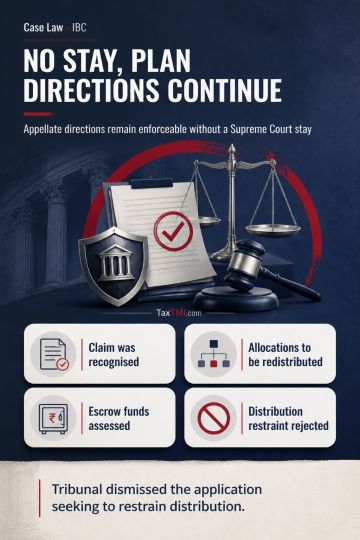
Enforcement of resolution-plan directions continues without a Supreme Court stay, preventing suspension of redistribution and escrowed-fund distributi...
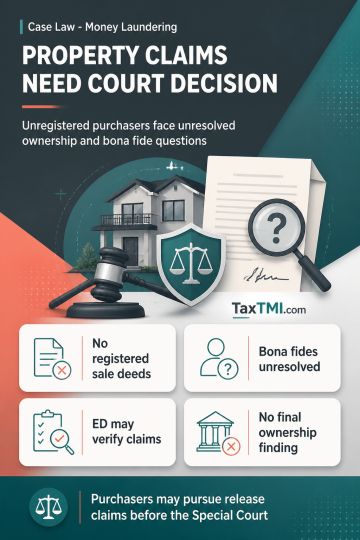
Third-party ownership claims over attached property require Special Court adjudication where purchasers lack registered sale deeds and bona fides rema...
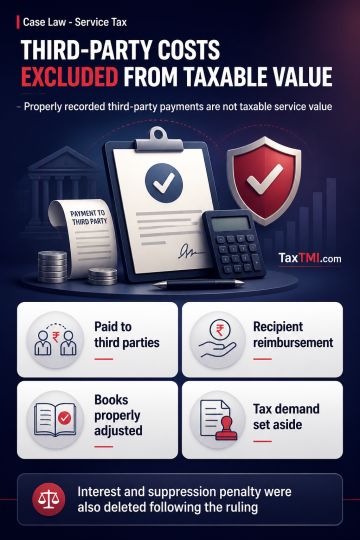
Pure-agent reimbursements in clearing and forwarding services are excluded from taxable value when qualifying third-party payments are properly record...
Food supplements cannot be classified as proprietary Ayurvedic...
Food supplement classification requires common parlance and authoritative tests, preventing treatment as proprietary Ayurvedic medicines without supporting evidence.
Contents
Summary
Note
Bookmark
Share
✓ Copied successfully !
Print
Print Options
For full text, please login
Login to TaxTMI
Verification Pending
The Email Id has not been verified. Click on the link we have sent on
Food supplements cannot be classified as proprietary Ayurvedic medicines solely by common parlance or a manufacturer's drug licence. Classification requires both common parlance and authoritative tests, including evidence that the products are intended for diagnosis, treatment or cure. Products purchased under CST registration and sold unchanged as food supplements, without the dealer holding a drug-sale licence, remain taxable under the residuary entry. Chapter IV-A of the Drugs and Cosmetics Act continues to regulate Ayurvedic, Siddha and Unani drugs; exclusion from Chapter IV does not remove sale-licensing requirements. The Tribunal may award costs in tax appeals, as compensatory costs for vexatious litigation are an inherent power not barred by the Act.
Food supplements cannot be classified as proprietary Ayurvedic medicines solely by common parlance or a manufacturer's drug licence. Classification requires both common parlance and authoritative tests, including evidence that the products are intended for diagnosis, treatment or cure. Products purchased under CST registration and sold unchanged as food supplements, without the dealer holding a drug-sale licence, remain taxable under the residuary entry. Chapter IV-A of the Drugs and Cosmetics Act continues to regulate Ayurvedic, Siddha and Unani drugs; exclusion from Chapter IV does not remove sale-licensing requirements. The Tribunal may award costs in tax appeals, as compensatory costs for vexatious litigation are an inherent power not barred by the Act.
Note: It is a system-generated summary and is for quick reference only.
 TaxTMI
 of 4782



 Join Channel



 TaxTMI
