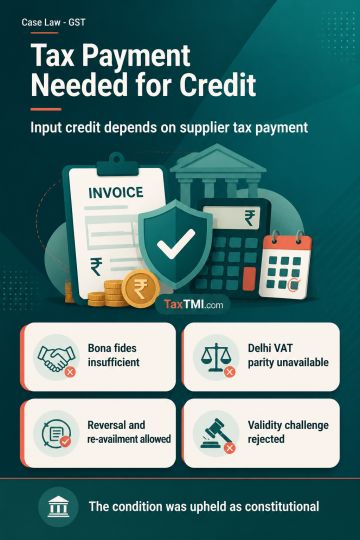
Input tax credit conditions remain constitutionally valid, with eligible recipient claims considered under GST circulars and retrospective filing dead...
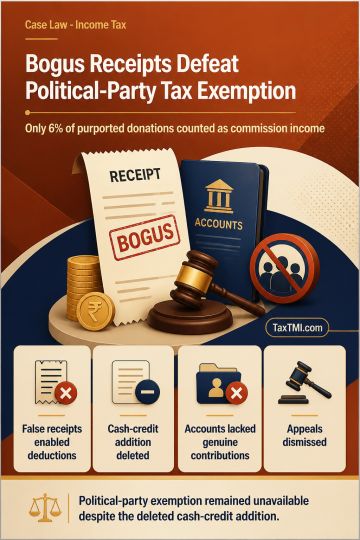
Bogus donation receipts justified commission income assessment and defeated political-party tax exemption for inaccurate accounts and reporting failur...
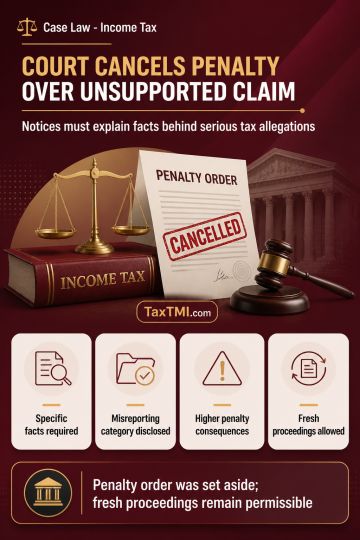
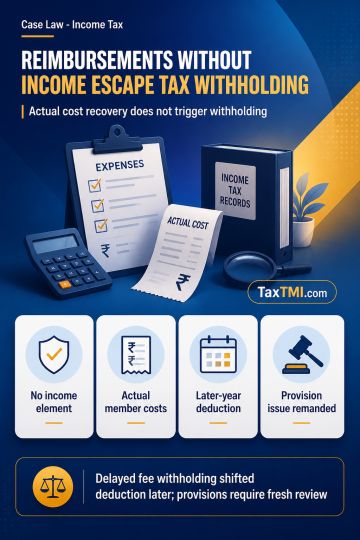
Pure reimbursement without income element escapes tax withholding, while delayed withholding and unsupported provisions face deferred or renewed scrut...
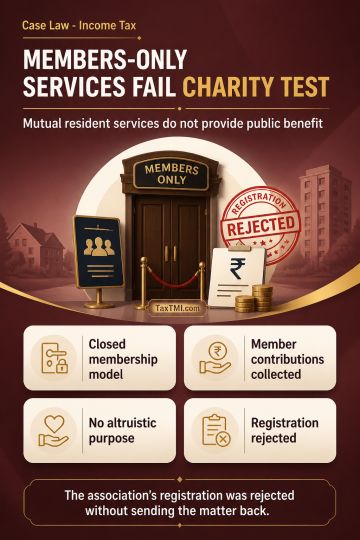
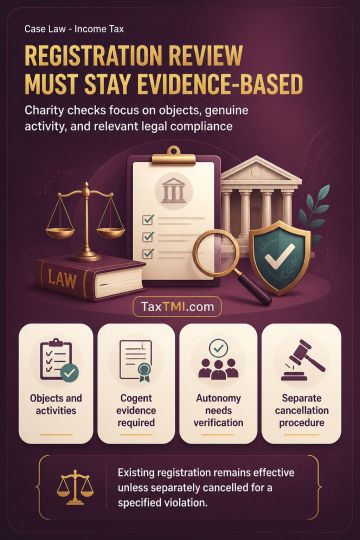
Public benefit requirement defeats charitable registration where residents' association services are reciprocal, member-only facilities governed by mu...
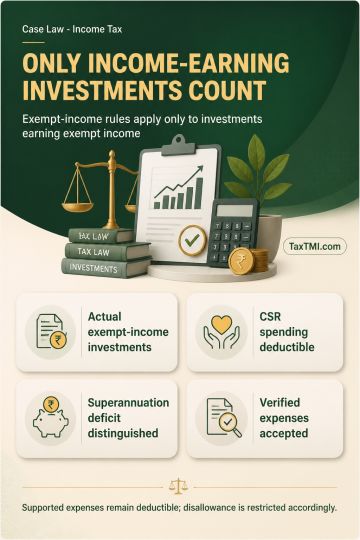
Exempt-income expenditure disallowance is confined to investments that actually generated exempt income, while supported business expenses remain dedu...
Food supplements cannot be classified as proprietary Ayurvedic...
Food supplement classification requires common parlance and authoritative tests, preventing treatment as proprietary Ayurvedic medicines without supporting evidence.
Contents
Summary
Note
Bookmark
Share
✓ Copied successfully !
Print
Print Options
For full text, please login
Login to TaxTMI
Verification Pending
The Email Id has not been verified. Click on the link we have sent on
Food supplements cannot be classified as proprietary Ayurvedic medicines solely by common parlance or a manufacturer's drug licence. Classification requires both common parlance and authoritative tests, including evidence that the products are intended for diagnosis, treatment or cure. Products purchased under CST registration and sold unchanged as food supplements, without the dealer holding a drug-sale licence, remain taxable under the residuary entry. Chapter IV-A of the Drugs and Cosmetics Act continues to regulate Ayurvedic, Siddha and Unani drugs; exclusion from Chapter IV does not remove sale-licensing requirements. The Tribunal may award costs in tax appeals, as compensatory costs for vexatious litigation are an inherent power not barred by the Act.
Food supplements cannot be classified as proprietary Ayurvedic medicines solely by common parlance or a manufacturer's drug licence. Classification requires both common parlance and authoritative tests, including evidence that the products are intended for diagnosis, treatment or cure. Products purchased under CST registration and sold unchanged as food supplements, without the dealer holding a drug-sale licence, remain taxable under the residuary entry. Chapter IV-A of the Drugs and Cosmetics Act continues to regulate Ayurvedic, Siddha and Unani drugs; exclusion from Chapter IV does not remove sale-licensing requirements. The Tribunal may award costs in tax appeals, as compensatory costs for vexatious litigation are an inherent power not barred by the Act.
Note: It is a system-generated summary and is for quick reference only.
 TaxTMI
 of 4780



 Join Channel



 TaxTMI