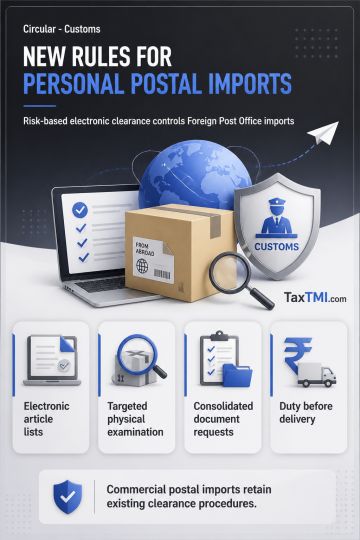
Risk-based postal import clearance standardises electronic assessment, document requests, duty realisation and delivery controls at Foreign Post Offic...
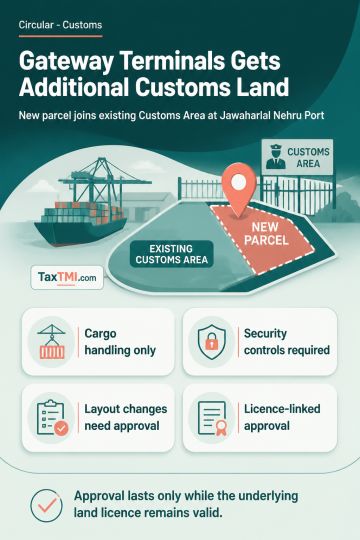
Customs Cargo Service Provider appointment extends custodianship to additional terminal land, subject to cargo-control, security and licence condition...
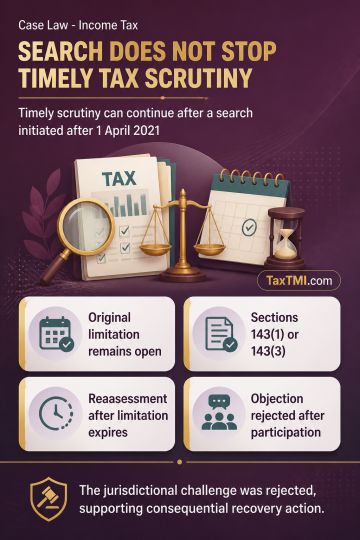
Post-search scrutiny assessment remains available where original assessment limitation is unexpired, permitting timely completion under regular assess...
Expenditure relating to exempt income is discussed as being...
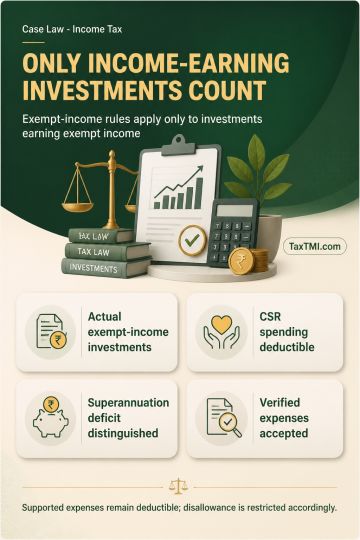
Exempt-income expenditure disallowance is confined to investments that actually generated exempt income, while supported business expenses remain deductible.
Contents
Summary
Note
Bookmark
Share
✓ Copied successfully !
Print
Print Options
For full text, please login
Login to TaxTMI
Verification Pending
The Email Id has not been verified. Click on the link we have sent on
Expenditure relating to exempt income is discussed as being disallowable under section 14A read with Rule 8D only by reference to investments that actually generated exempt income during the relevant year; the computation was restricted accordingly. Corporate social responsibility expenditure incurred by a statutory port authority under Ministry guidelines is treated as deductible where the Companies Act exclusion does not apply and earlier-year treatment was consistent. Payments to meet an actuarially certified superannuation-fund deficit are distinguished from ordinary annual contributions subject to Rule 87 limits. Software expenditure supported by invoices, banking payments and tax deduction evidence is treated as genuine despite the payee's non-compliance. Accrued expenses recorded under the prescribed accrual-accounting framework are treated as ascertained liabilities.
Expenditure relating to exempt income is discussed as being disallowable under section 14A read with Rule 8D only by reference to investments that actually generated exempt income during the relevant year; the computation was restricted accordingly. Corporate social responsibility expenditure incurred by a statutory port authority under Ministry guidelines is treated as deductible where the Companies Act exclusion does not apply and earlier-year treatment was consistent. Payments to meet an actuarially certified superannuation-fund deficit are distinguished from ordinary annual contributions subject to Rule 87 limits. Software expenditure supported by invoices, banking payments and tax deduction evidence is treated as genuine despite the payee's non-compliance. Accrued expenses recorded under the prescribed accrual-accounting framework are treated as ascertained liabilities.
Note: It is a system-generated summary and is for quick reference only.
 TaxTMI












 Join Channel


 TaxTMI

