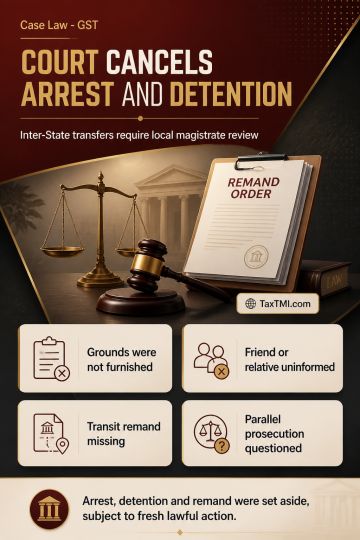
Arrest safeguards and transit remand requirements invalidated detention following inter-State transfer without communicated grounds or magistrate auth...
Arrest safeguards require disclosed grounds, relative intimation and transit remand, while duplicate prosecution under the CGST framework is unsustain...
Document Identification Number defects can invalidate GST assessments, with delayed challenges entertained conditionally where patent irregularities e...
Windmill commissioning evidence supported higher depreciation where grid connection and electricity generation proved operational use before the relev...
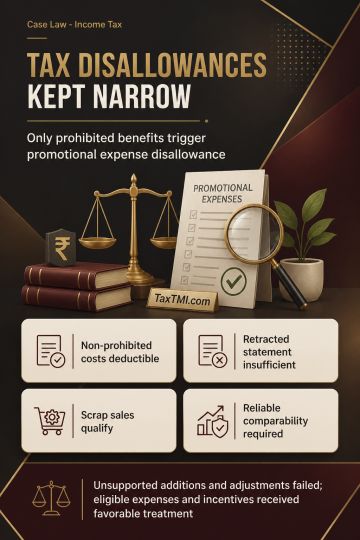
Pharmaceutical promotion and transfer-pricing comparability principles limited disallowances, while uncorroborated search allegations and unsupported ...
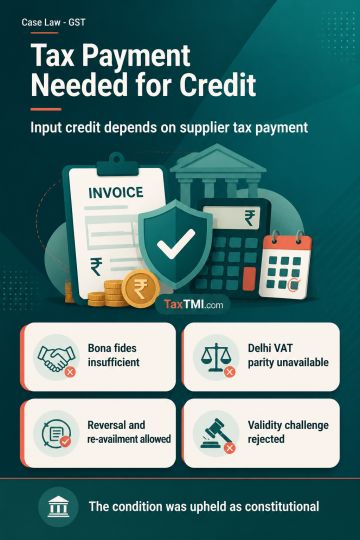
Input Tax Credit under Section 16(2)(c) of the CGST Act remains conditional on the supplier's payment of tax, even where the purchasing dealer asserts bona fides. The text distinguishes the CGST framework from the Delhi VAT regime because CGST provides for reversal and subsequent re-availment of credit after the supplier discharges the tax liability. A purchaser therefore cannot claim parity with a bona fide purchaser under Delhi VAT when its supplier defaults. The condition was upheld as constitutional and not liable to be read down, and the challenge to its validity was rejected.
Input Tax Credit under Section 16(2)(c) of the CGST Act remains conditional on the supplier's payment of tax, even where the purchasing dealer asserts bona fides. The text distinguishes the CGST framework from the Delhi VAT regime because CGST provides for reversal and subsequent re-availment of credit after the supplier discharges the tax liability. A purchaser therefore cannot claim parity with a bona fide purchaser under Delhi VAT when its supplier defaults. The condition was upheld as constitutional and not liable to be read down, and the challenge to its validity was rejected.
Note: It is a system-generated summary and is for quick reference only.
 TaxTMI
 of 4782













 Join Channel


 TaxTMI
