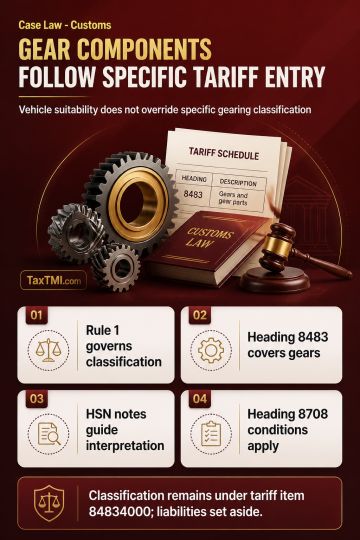
Tariff classification of vehicle gear components follows the specific gearing entry, displacing motor-vehicle parts classification and related liabili...
Necessary-party requirements limit impleadment of independent entities, while deferred consideration does not create an appealable adverse determinati...
Food supplement classification requires common parlance and authoritative tests, preventing treatment as proprietary Ayurvedic medicines without suppo...
Specified regulatory authority income receives conditional tax exemption, subject to non-commercial activity, unchanged income character, and return f...
Tax exemption for regulatory authority income applies retrospectively, subject to non-commercial activity, unchanged income sources, and return-filing...
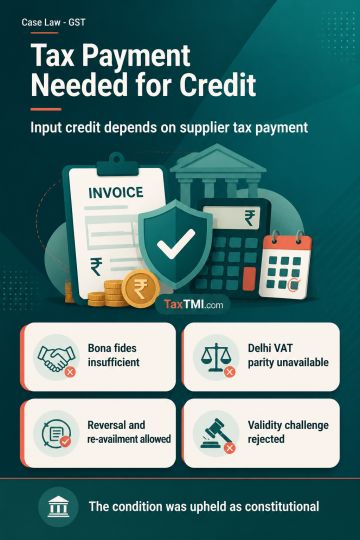
Input Tax Credit under Section 16(2)(c) of the CGST Act remains conditional on the supplier's payment of tax, even where the purchasing dealer asserts bona fides. The text distinguishes the CGST framework from the Delhi VAT regime because CGST provides for reversal and subsequent re-availment of credit after the supplier discharges the tax liability. A purchaser therefore cannot claim parity with a bona fide purchaser under Delhi VAT when its supplier defaults. The condition was upheld as constitutional and not liable to be read down, and the challenge to its validity was rejected.
Input Tax Credit under Section 16(2)(c) of the CGST Act remains conditional on the supplier's payment of tax, even where the purchasing dealer asserts bona fides. The text distinguishes the CGST framework from the Delhi VAT regime because CGST provides for reversal and subsequent re-availment of credit after the supplier discharges the tax liability. A purchaser therefore cannot claim parity with a bona fide purchaser under Delhi VAT when its supplier defaults. The condition was upheld as constitutional and not liable to be read down, and the challenge to its validity was rejected.
Note: It is a system-generated summary and is for quick reference only.
 TaxTMI
 of 4780



















 Join Channel


 TaxTMI
