Clean slate principle extinguishes uncrystallised operational claims and bars continuation of pending recovery and arbitral proceedings after plan app...
Works contract classification governs composite layout-development contracts where VAT-paid goods are transferred alongside construction and infrastru...
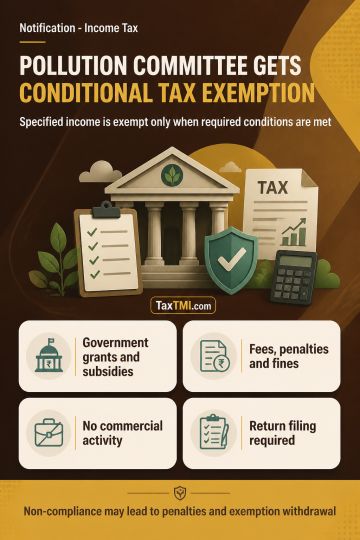
Specified income tax exemption for pollution control body remains conditional on non-commercial activity, unchanged income character, and return filin...
Jurisdictional facts in certificate-of-origin discrepancies can support customs show-cause proceedings, leaving factual explanations for departmental ...
Suspension of a bank account's administrative fraud...
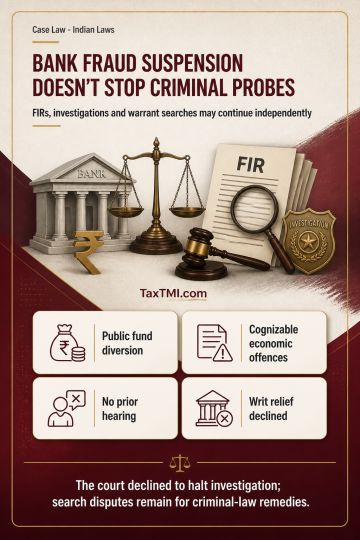
Administrative fraud classification suspension does not halt independent criminal investigation or warrant-based searches into alleged economic offences.
Contents
Summary
Note
Bookmark
Share
✓ Copied successfully !
Print
Print Options
For full text, please login
Login to TaxTMI
Verification Pending
The Email Id has not been verified. Click on the link we have sent on
Suspension of a bank account's administrative fraud classification under the RBI framework does not restrain registration of an FIR, criminal investigation, or searches authorised by judicial warrants. The High Court's analysis states that allegations of diversion and siphoning of public funds disclosed cognizable economic offences, giving the investigation an independent statutory character despite overlap with the regulatory classification. Economic offences involving public institutions should not ordinarily be quashed merely because of settlement, and proposed accused persons cannot demand prior hearing before investigation. As no express restraint, patent lack of jurisdiction, mala fides, or abuse of process was shown, writ intervention to halt the investigation was declined; search-related factual disputes were left to criminal-law remedies.
Suspension of a bank account's administrative fraud classification under the RBI framework does not restrain registration of an FIR, criminal investigation, or searches authorised by judicial warrants. The High Court's analysis states that allegations of diversion and siphoning of public funds disclosed cognizable economic offences, giving the investigation an independent statutory character despite overlap with the regulatory classification. Economic offences involving public institutions should not ordinarily be quashed merely because of settlement, and proposed accused persons cannot demand prior hearing before investigation. As no express restraint, patent lack of jurisdiction, mala fides, or abuse of process was shown, writ intervention to halt the investigation was declined; search-related factual disputes were left to criminal-law remedies.
Note: It is a system-generated summary and is for quick reference only.
 TaxTMI
 of 4784
















 Join Channel


 TaxTMI