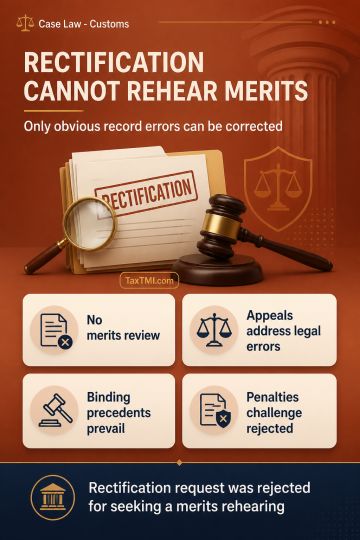
Rectification of mistake remains limited to self-evident record errors, preventing merits review through miscellaneous applications and preserving fin...
Tender creditworthiness conditions may extend to de facto Promoter Directors, with post-participation challenges generally barred absent arbitrariness...
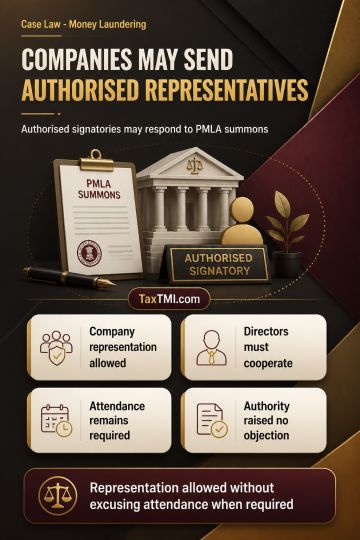
Corporate representation in PMLA summons proceedings permitted through an authorised signatory, subject to directors' continuing cooperation and atten...
Helicopter charter classification requires effective control analysis, while territorial performance, reasoned credit orders and wilful suppression de...
Suspension of a bank account's administrative fraud...
Administrative fraud classification suspension does not halt independent criminal investigation or warrant-based searches into alleged economic offences.
Contents
Summary
Note
Bookmark
Share
✓ Copied successfully !
Print
Print Options
For full text, please login
Login to TaxTMI
Verification Pending
The Email Id has not been verified. Click on the link we have sent on
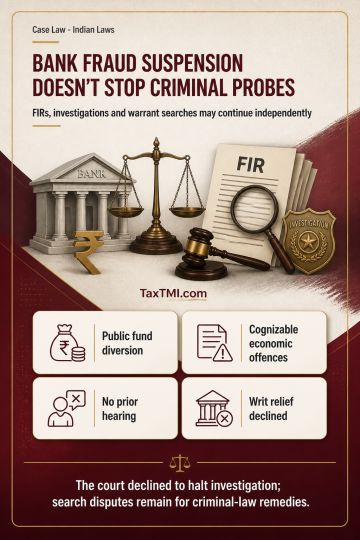
Suspension of a bank account's administrative fraud classification under the RBI framework does not restrain registration of an FIR, criminal investigation, or searches authorised by judicial warrants. The High Court's analysis states that allegations of diversion and siphoning of public funds disclosed cognizable economic offences, giving the investigation an independent statutory character despite overlap with the regulatory classification. Economic offences involving public institutions should not ordinarily be quashed merely because of settlement, and proposed accused persons cannot demand prior hearing before investigation. As no express restraint, patent lack of jurisdiction, mala fides, or abuse of process was shown, writ intervention to halt the investigation was declined; search-related factual disputes were left to criminal-law remedies.
Suspension of a bank account's administrative fraud classification under the RBI framework does not restrain registration of an FIR, criminal investigation, or searches authorised by judicial warrants. The High Court's analysis states that allegations of diversion and siphoning of public funds disclosed cognizable economic offences, giving the investigation an independent statutory character despite overlap with the regulatory classification. Economic offences involving public institutions should not ordinarily be quashed merely because of settlement, and proposed accused persons cannot demand prior hearing before investigation. As no express restraint, patent lack of jurisdiction, mala fides, or abuse of process was shown, writ intervention to halt the investigation was declined; search-related factual disputes were left to criminal-law remedies.
Note: It is a system-generated summary and is for quick reference only.
 TaxTMI
 of 4782














 Join Channel


 TaxTMI