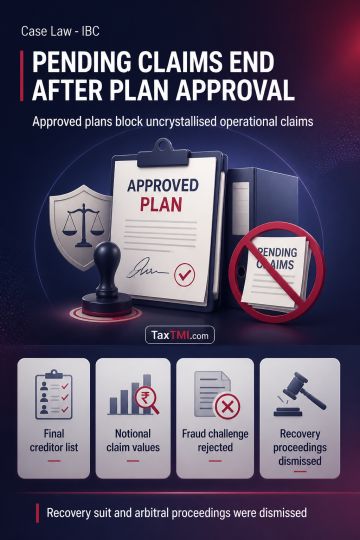
Clean slate principle extinguishes uncrystallised operational claims and bars continuation of pending recovery and arbitral proceedings after plan app...
Works contract classification governs composite layout-development contracts where VAT-paid goods are transferred alongside construction and infrastru...
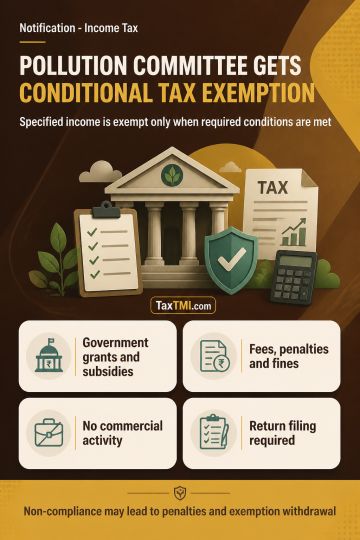
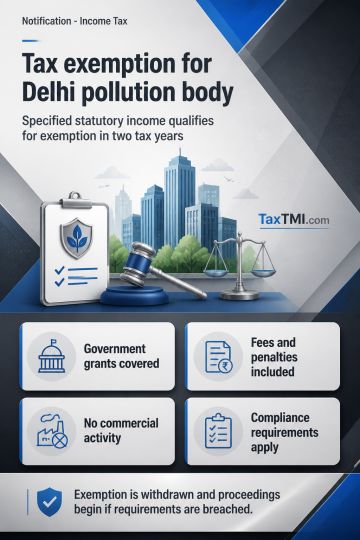
Specified income tax exemption for pollution control body remains conditional on non-commercial activity, unchanged income character, and return filin...
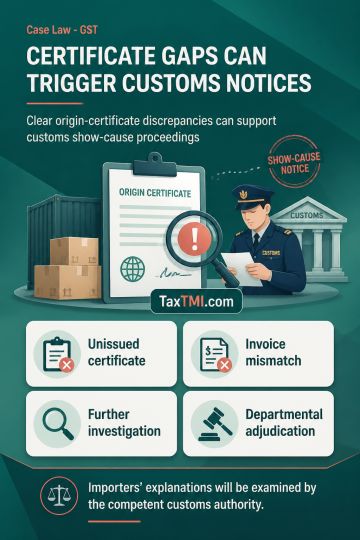
Jurisdictional facts in certificate-of-origin discrepancies can support customs show-cause proceedings, leaving factual explanations for departmental ...
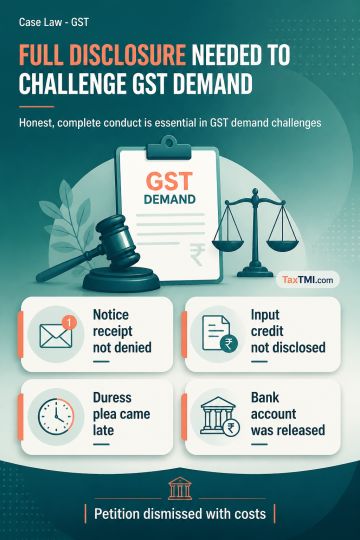
In GST demand proceedings, a writ challenge to an ex parte demand requires bona fide conduct and full disclosure. The petitioner did not specifically deny receiving notice at its registered email, failed to disclose available GSTR-2A input tax credit or address allegations of excess credit and suppressed turnover, and gave an undertaking and post-dated cheques after its bank account was attached. Having obtained release of the account without contemporaneously alleging duress, it could not later raise that plea. The HC treated the challenge as an afterthought lacking bona fides and declined discretionary writ relief, dismissing the petition with costs.
In GST demand proceedings, a writ challenge to an ex parte demand requires bona fide conduct and full disclosure. The petitioner did not specifically deny receiving notice at its registered email, failed to disclose available GSTR-2A input tax credit or address allegations of excess credit and suppressed turnover, and gave an undertaking and post-dated cheques after its bank account was attached. Having obtained release of the account without contemporaneously alleging duress, it could not later raise that plea. The HC treated the challenge as an afterthought lacking bona fides and declined discretionary writ relief, dismissing the petition with costs.
Note: It is a system-generated summary and is for quick reference only.
 TaxTMI
 of 4782





 Join Channel


 TaxTMI