Limitation in oppression and mismanagement proceedings: prior knowledge of removal and dilution barred the challenge, with valuation directions upheld...
Insolvency professional agency governance rules amended to add nominee directors, tighten independent director eligibility, and regulate managing dire...
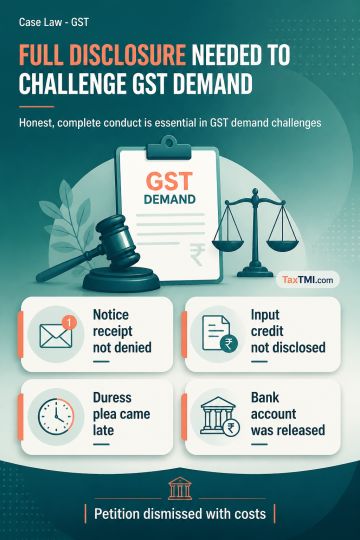
In GST demand proceedings, a writ challenge to an ex parte demand requires bona fide conduct and full disclosure. The petitioner did not specifically deny receiving notice at its registered email, failed to disclose available GSTR-2A input tax credit or address allegations of excess credit and suppressed turnover, and gave an undertaking and post-dated cheques after its bank account was attached. Having obtained release of the account without contemporaneously alleging duress, it could not later raise that plea. The HC treated the challenge as an afterthought lacking bona fides and declined discretionary writ relief, dismissing the petition with costs.
In GST demand proceedings, a writ challenge to an ex parte demand requires bona fide conduct and full disclosure. The petitioner did not specifically deny receiving notice at its registered email, failed to disclose available GSTR-2A input tax credit or address allegations of excess credit and suppressed turnover, and gave an undertaking and post-dated cheques after its bank account was attached. Having obtained release of the account without contemporaneously alleging duress, it could not later raise that plea. The HC treated the challenge as an afterthought lacking bona fides and declined discretionary writ relief, dismissing the petition with costs.
Note: It is a system-generated summary and is for quick reference only.
 TaxTMI
  TaxTMI
 of 4813


 Join Channel