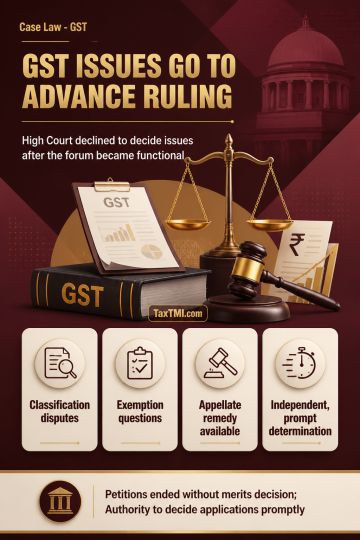
Advance-ruling mechanism governs pending GST classification, exemption and taxability disputes, limiting writ review once the specialised forum functi...
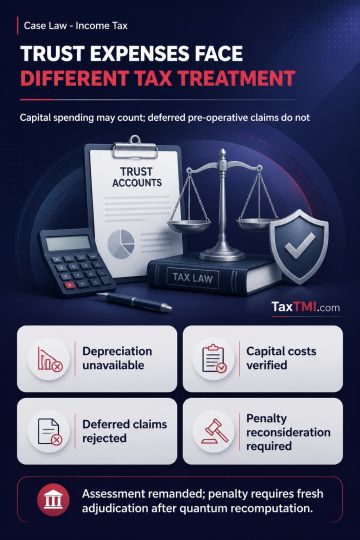
Charitable trust income application permits verified capital expenditure but rejects deferred pre-operative claims and requires reconsideration of con...
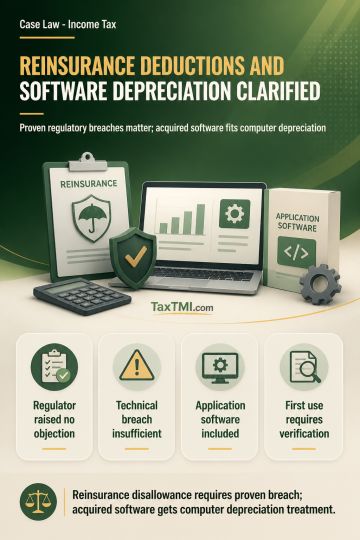
Reinsurance premium deductions require established regulatory breaches, while independently acquired software qualifies within the computer depreciati...
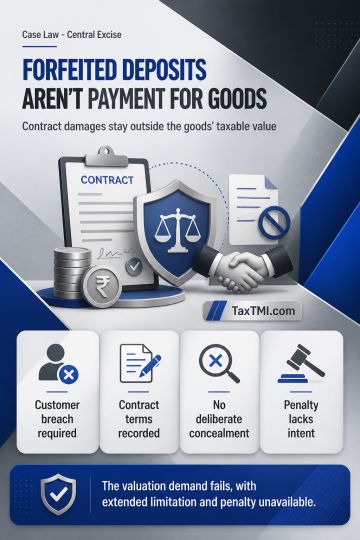
Forfeited refundable die-development deposits are characterised as liquidated damages where they are retained only on a customer's contractual breach, rather than consideration for the manufactured goods. Amounts enter transaction value only when directly and proximately connected with the sale and represent consideration; a valuation rule cannot convert contractual compensation into additional consideration. Consequently, including such deposits in assessable value is unsustainable. Extended limitation also does not apply merely because of an interpretational dispute or short-payment where contractual terms, deposits and accounting treatment were recorded and there is no evidence of deliberate concealment or intent to evade duty. Penalty cannot stand where the duty demand fails and the required intent-based misconduct is not established.
Forfeited refundable die-development deposits are characterised as liquidated damages where they are retained only on a customer's contractual breach, rather than consideration for the manufactured goods. Amounts enter transaction value only when directly and proximately connected with the sale and represent consideration; a valuation rule cannot convert contractual compensation into additional consideration. Consequently, including such deposits in assessable value is unsustainable. Extended limitation also does not apply merely because of an interpretational dispute or short-payment where contractual terms, deposits and accounting treatment were recorded and there is no evidence of deliberate concealment or intent to evade duty. Penalty cannot stand where the duty demand fails and the required intent-based misconduct is not established.
Note: It is a system-generated summary and is for quick reference only.
 TaxTMI
 of 4782









 Join Channel


 TaxTMI
