Functional comparability under TNMM requires highway contract benchmarks to reflect operation, maintenance and transfer activities, requiring fresh be...
Objective characteristics govern magnesium bis-glycinate chelate classification as an amino-acid coordination compound, not a food preparation or anti...
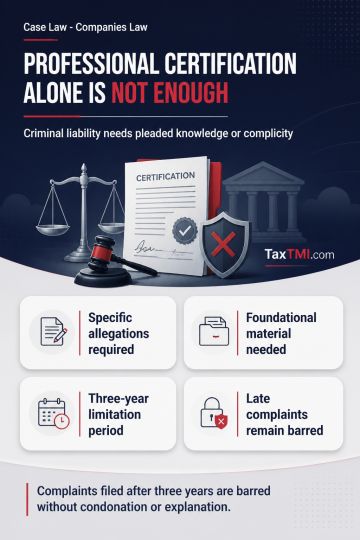
Independent professional certification requires pleaded knowledge or complicity for criminal liability; untimely complaints remain barred by limitatio...
Forfeited refundable die-development deposits are characterised as liquidated damages where they are retained only on a customer's contractual breach, rather than consideration for the manufactured goods. Amounts enter transaction value only when directly and proximately connected with the sale and represent consideration; a valuation rule cannot convert contractual compensation into additional consideration. Consequently, including such deposits in assessable value is unsustainable. Extended limitation also does not apply merely because of an interpretational dispute or short-payment where contractual terms, deposits and accounting treatment were recorded and there is no evidence of deliberate concealment or intent to evade duty. Penalty cannot stand where the duty demand fails and the required intent-based misconduct is not established.
Forfeited refundable die-development deposits are characterised as liquidated damages where they are retained only on a customer's contractual breach, rather than consideration for the manufactured goods. Amounts enter transaction value only when directly and proximately connected with the sale and represent consideration; a valuation rule cannot convert contractual compensation into additional consideration. Consequently, including such deposits in assessable value is unsustainable. Extended limitation also does not apply merely because of an interpretational dispute or short-payment where contractual terms, deposits and accounting treatment were recorded and there is no evidence of deliberate concealment or intent to evade duty. Penalty cannot stand where the duty demand fails and the required intent-based misconduct is not established.
Note: It is a system-generated summary and is for quick reference only.
 TaxTMI
 of 4782



















 Join Channel



 TaxTMI