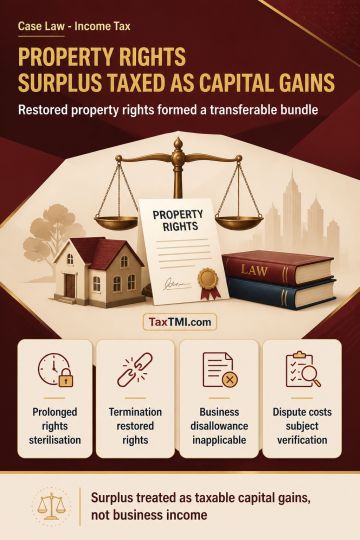
Prolonged sterilisation of development rights supports capital-gains treatment, while business-income disallowances cannot govern capital-gains comput...
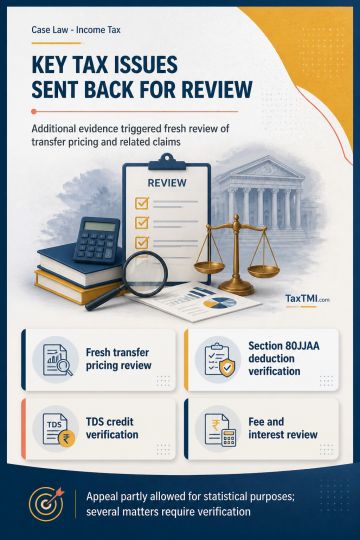
Additional evidence in transfer pricing dispute leads to fresh examination, while tax deductions, TDS credit, fee and refund interest require verifica...
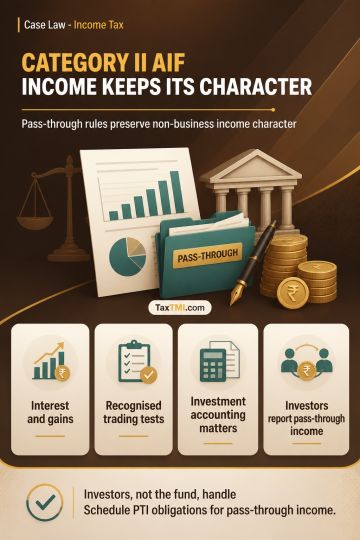
Category II AIF pass-through taxation preserves non-business income character; investment receipts cannot be reclassified without applying recognised ...
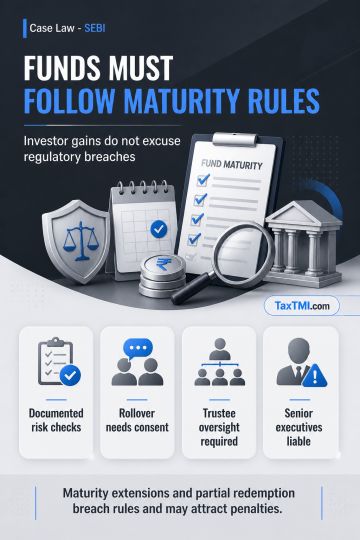
Mutual fund maturity rules require proper rollover, redemption, disclosure, and due diligence; investor gains cannot excuse regulatory breaches or pen...
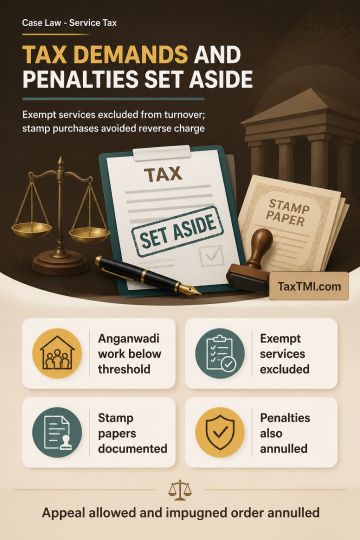
Threshold exemption excludes exempt services, while stamp-paper purchases avoid reverse charge; consequential service tax penalties were also set asid...
A personal hearing is required before adverse GST adjudication...
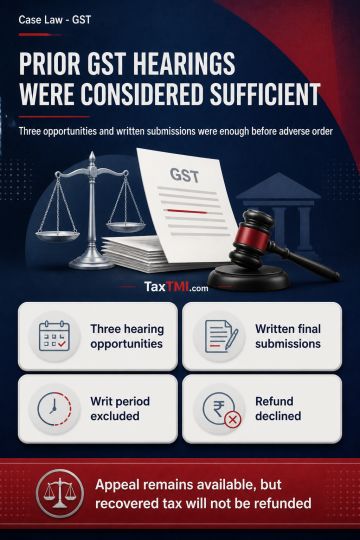
Personal hearing requirements in GST adjudication were satisfied by prior opportunities and written submissions; appellate limitation received writ-pendency exclusion.
Contents
Summary
Note
Bookmark
Share
✓ Copied successfully !
Print
Print Options
For full text, please login
Login to TaxTMI
Verification Pending
The Email Id has not been verified. Click on the link we have sent on
A personal hearing is required before adverse GST adjudication where the assessing authority contemplates an adverse decision after considering the taxpayer's representation. The notes state that three hearing opportunities, followed by written final submissions from the authorised representative, satisfied that requirement; no further hearing was necessary merely because the order was issued later. The challenge on that ground remained closed. Statutory appellate recourse was permitted, with the writ-pendency period excluded for computing limitation and the condonable period, while other issues remained open. Refund of tax recovered was declined because the writ was filed after the statutory appeal period had expired.
A personal hearing is required before adverse GST adjudication where the assessing authority contemplates an adverse decision after considering the taxpayer's representation. The notes state that three hearing opportunities, followed by written final submissions from the authorised representative, satisfied that requirement; no further hearing was necessary merely because the order was issued later. The challenge on that ground remained closed. Statutory appellate recourse was permitted, with the writ-pendency period excluded for computing limitation and the condonable period, while other issues remained open. Refund of tax recovered was declined because the writ was filed after the statutory appeal period had expired.
Note: It is a system-generated summary and is for quick reference only.
 TaxTMI
 of 4792








 Join Channel


 TaxTMI
