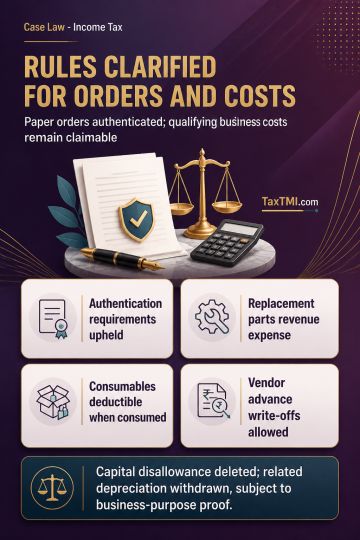
Authentication of paper assessment orders upheld, while qualifying repairs, consumables and vendor advance write-offs remain deductible business claim...
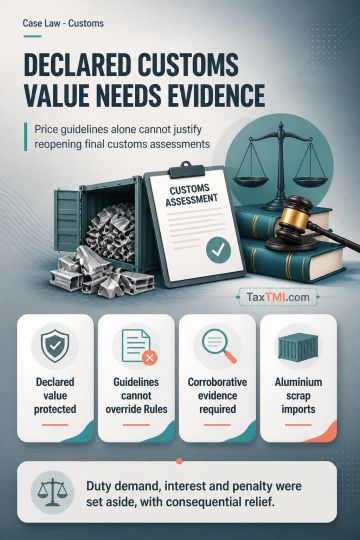
Transaction value cannot be rejected solely on non-statutory valuation guidelines without corroborative evidence supporting reassessment of final cust...
Cross-examination rights and corroborated evidence limit customs penalties for misdeclaration in genuine import transactions involving documented clea...
Page of 4782
Press 'Enter' after typing page number.
301 to 320 of 95636 Results
❮
❯
❯❯
0 / 200
Expand Note
Add to Folder
No Folders have been created
+
Are you sure you want to delete "My most important" ?
A personal hearing is required before adverse GST adjudication...
Personal hearing requirements in GST adjudication were satisfied by prior opportunities and written submissions; appellate limitation received writ-pendency exclusion.
Contents
Summary
Note
Bookmark
Share
✓ Copied successfully !
Print
Print Options
For full text, please login
Login to TaxTMI
Verification Pending
The Email Id has not been verified. Click on the link we have sent on
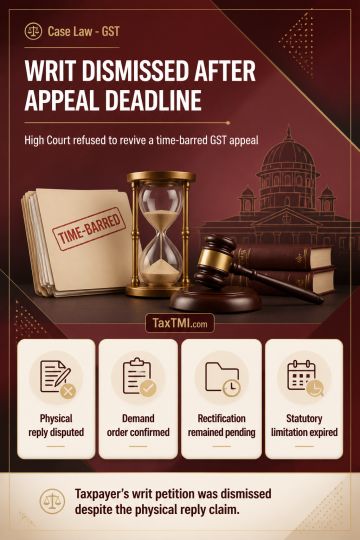
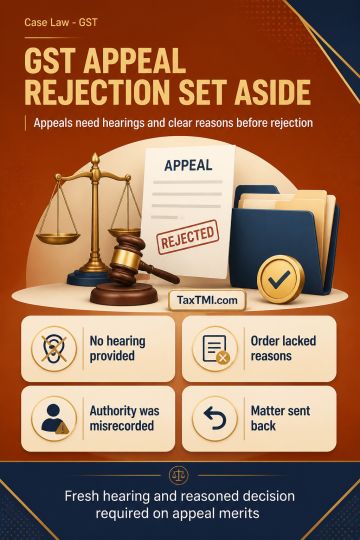
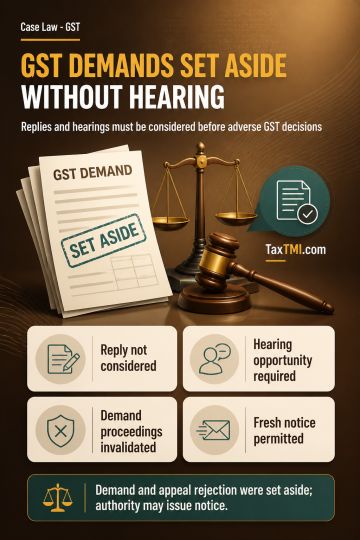
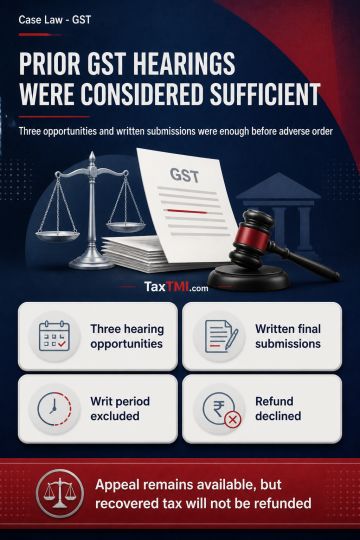
A personal hearing is required before adverse GST adjudication where the assessing authority contemplates an adverse decision after considering the taxpayer's representation. The notes state that three hearing opportunities, followed by written final submissions from the authorised representative, satisfied that requirement; no further hearing was necessary merely because the order was issued later. The challenge on that ground remained closed. Statutory appellate recourse was permitted, with the writ-pendency period excluded for computing limitation and the condonable period, while other issues remained open. Refund of tax recovered was declined because the writ was filed after the statutory appeal period had expired.
A personal hearing is required before adverse GST adjudication where the assessing authority contemplates an adverse decision after considering the taxpayer's representation. The notes state that three hearing opportunities, followed by written final submissions from the authorised representative, satisfied that requirement; no further hearing was necessary merely because the order was issued later. The challenge on that ground remained closed. Statutory appellate recourse was permitted, with the writ-pendency period excluded for computing limitation and the condonable period, while other issues remained open. Refund of tax recovered was declined because the writ was filed after the statutory appeal period had expired.
Note: It is a system-generated summary and is for quick reference only.
 TaxTMI
 of 4782








 Join Channel


 TaxTMI

