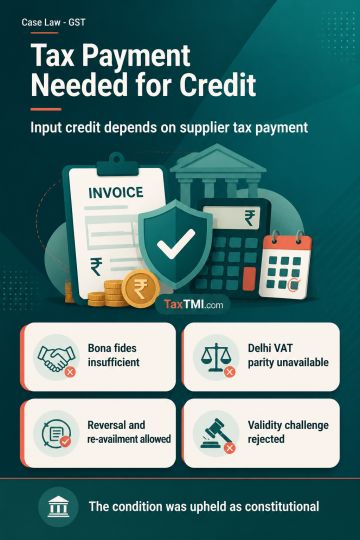
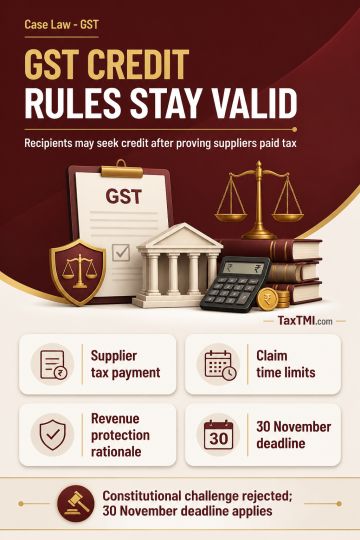
Input tax credit conditions remain constitutionally valid, with eligible recipient claims considered under GST circulars and retrospective filing dead...
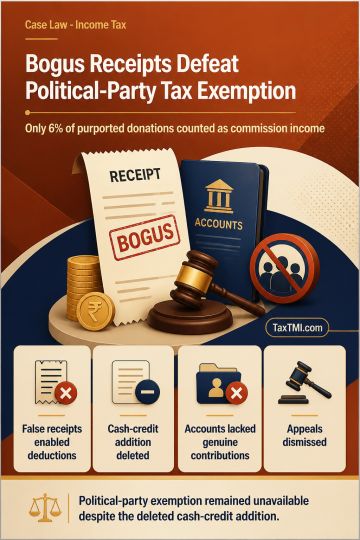
Bogus donation receipts justified commission income assessment and defeated political-party tax exemption for inaccurate accounts and reporting failur...
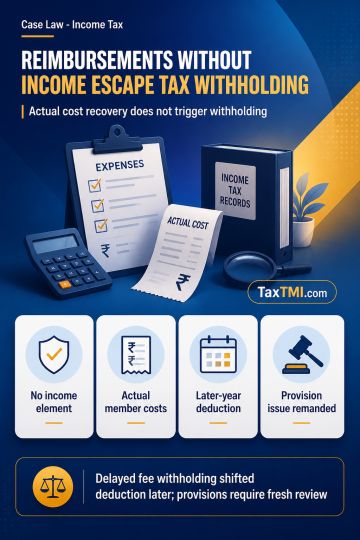
Pure reimbursement without income element escapes tax withholding, while delayed withholding and unsupported provisions face deferred or renewed scrut...
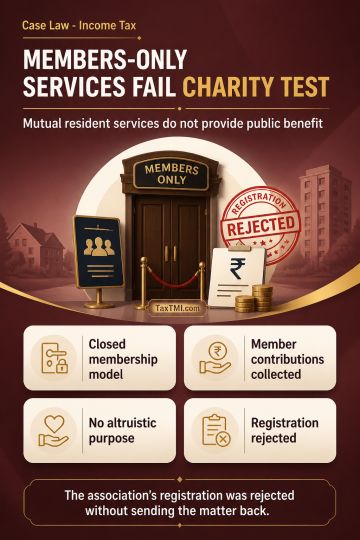
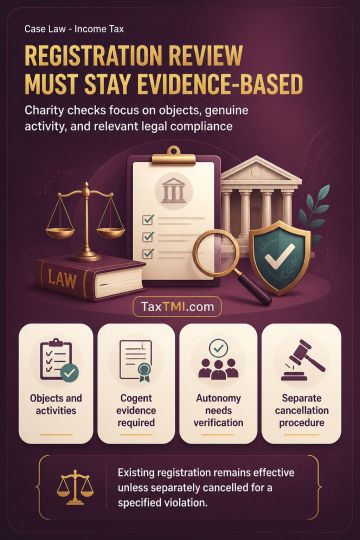
Public benefit requirement defeats charitable registration where residents' association services are reciprocal, member-only facilities governed by mu...
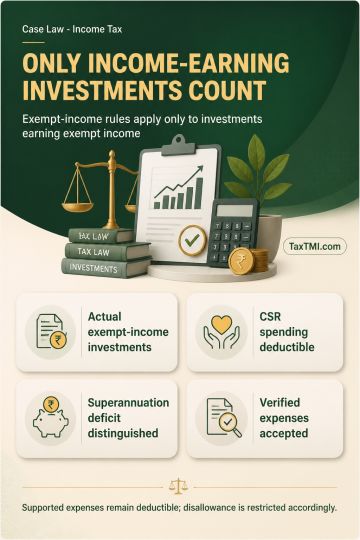
Exempt-income expenditure disallowance is confined to investments that actually generated exempt income, while supported business expenses remain dedu...
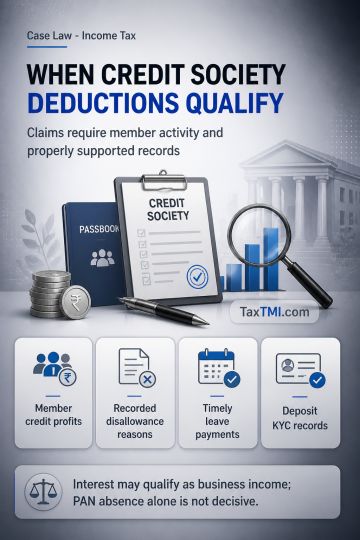
Section 80P deductions for a co-operative credit society are addressed in relation to profits from providing credit facilities to members, interest income attributable to that activity, and any residual deduction where income remains. The notes state that disallowances require recorded reasons and that interest characterised as business income may qualify under section 80P(2)(a)(i), while an alternative claim under section 80P(2)(d) may not arise. Audit-fee provisions require evidence of an accrued, non-contingent liability. Leave-encashment provisions require proof of payment within the prescribed return-filing period. Member deposits require KYC particulars mandated by applicable co-operative law and RBI guidelines; absence of PAN alone is not decisive.
Section 80P deductions for a co-operative credit society are addressed in relation to profits from providing credit facilities to members, interest income attributable to that activity, and any residual deduction where income remains. The notes state that disallowances require recorded reasons and that interest characterised as business income may qualify under section 80P(2)(a)(i), while an alternative claim under section 80P(2)(d) may not arise. Audit-fee provisions require evidence of an accrued, non-contingent liability. Leave-encashment provisions require proof of payment within the prescribed return-filing period. Member deposits require KYC particulars mandated by applicable co-operative law and RBI guidelines; absence of PAN alone is not decisive.
Note: It is a system-generated summary and is for quick reference only.
 TaxTMI
 of 4782



 Join Channel


 TaxTMI