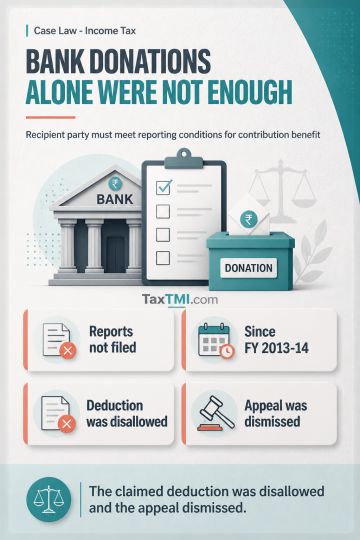
Political contribution deductions require recipient party compliance with contribution-reporting conditions; banking-channel donations alone do not qu...
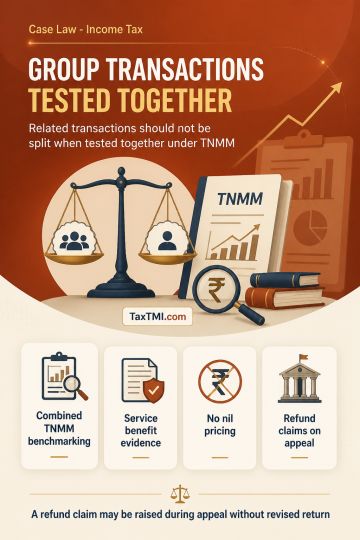
Aggregation under TNMM prevents selective testing of intra-group services without comparable uncontrolled transactions, while appellate additional cla...
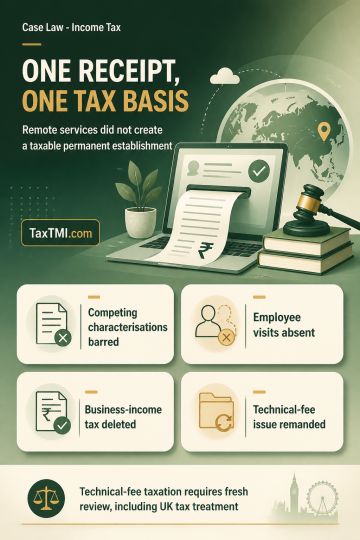
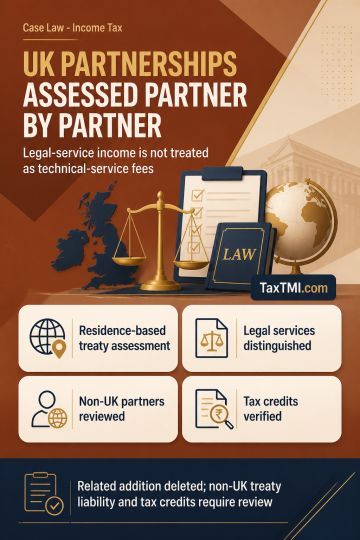
Protective assessment cannot duplicate identical receipts under competing characterisations; remote services did not establish a taxable permanent est...
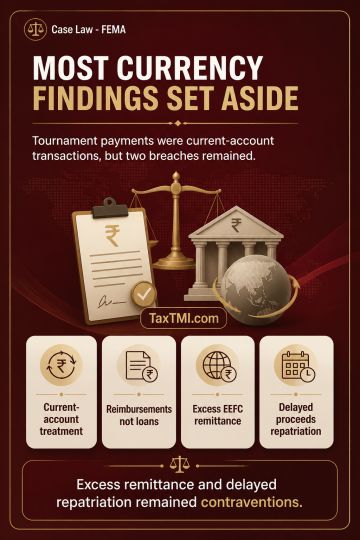
Current account treatment of overseas tournament services removed most FEMA findings, but excess EEFC remittance and delayed repatriation remained bre...
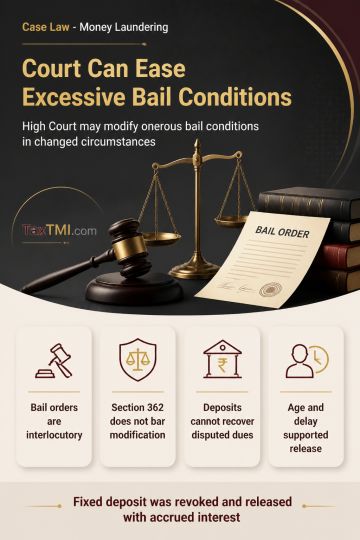
Modification of bail conditions remains available through inherent jurisdiction where onerous deposits undermine justice and cannot recover disputed d...
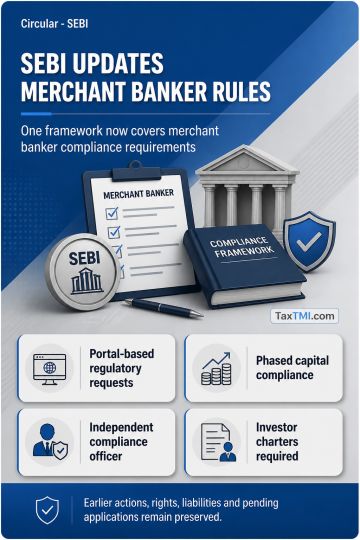
Merchant banker regulation consolidates registration, governance, capital, reporting, outsourcing and investor-protection requirements under an update...
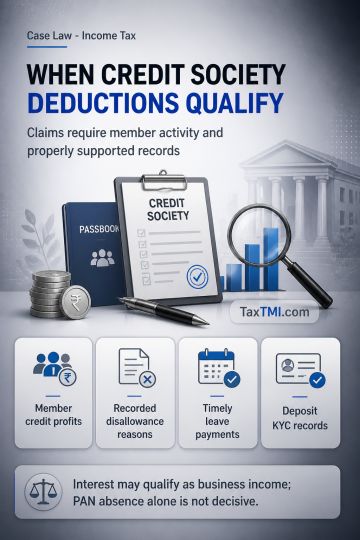
Section 80P deductions for a co-operative credit society are addressed in relation to profits from providing credit facilities to members, interest income attributable to that activity, and any residual deduction where income remains. The notes state that disallowances require recorded reasons and that interest characterised as business income may qualify under section 80P(2)(a)(i), while an alternative claim under section 80P(2)(d) may not arise. Audit-fee provisions require evidence of an accrued, non-contingent liability. Leave-encashment provisions require proof of payment within the prescribed return-filing period. Member deposits require KYC particulars mandated by applicable co-operative law and RBI guidelines; absence of PAN alone is not decisive.
Section 80P deductions for a co-operative credit society are addressed in relation to profits from providing credit facilities to members, interest income attributable to that activity, and any residual deduction where income remains. The notes state that disallowances require recorded reasons and that interest characterised as business income may qualify under section 80P(2)(a)(i), while an alternative claim under section 80P(2)(d) may not arise. Audit-fee provisions require evidence of an accrued, non-contingent liability. Leave-encashment provisions require proof of payment within the prescribed return-filing period. Member deposits require KYC particulars mandated by applicable co-operative law and RBI guidelines; absence of PAN alone is not decisive.
Note: It is a system-generated summary and is for quick reference only.
 TaxTMI
 of 4782







 Join Channel


 TaxTMI