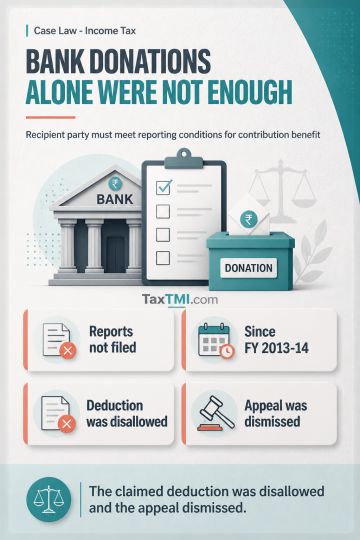
Political contribution deductions require recipient party compliance with contribution-reporting conditions; banking-channel donations alone do not qu...
Aggregation under TNMM prevents selective testing of intra-group services without comparable uncontrolled transactions, while appellate additional cla...
Protective assessment cannot duplicate identical receipts under competing characterisations; remote services did not establish a taxable permanent est...
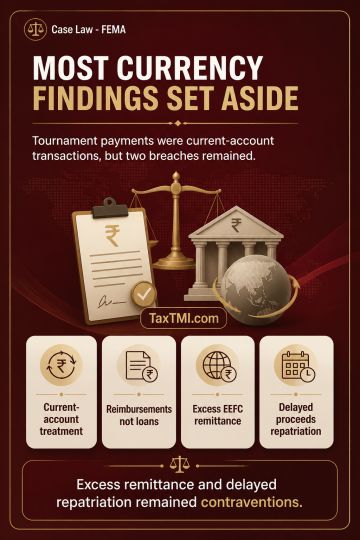
Current account treatment of overseas tournament services removed most FEMA findings, but excess EEFC remittance and delayed repatriation remained bre...
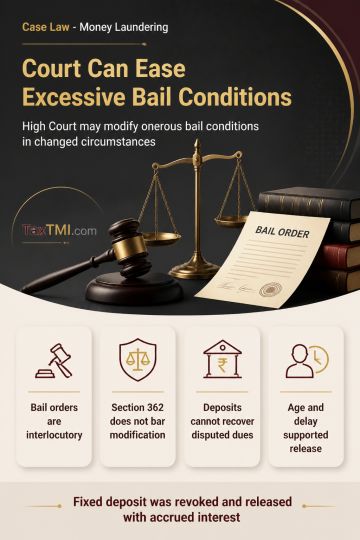
Modification of bail conditions remains available through inherent jurisdiction where onerous deposits undermine justice and cannot recover disputed d...
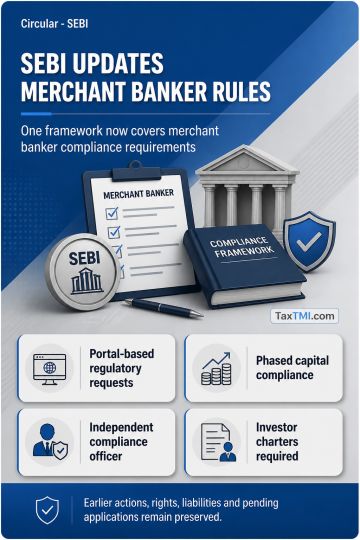
Merchant banker regulation consolidates registration, governance, capital, reporting, outsourcing and investor-protection requirements under an update...
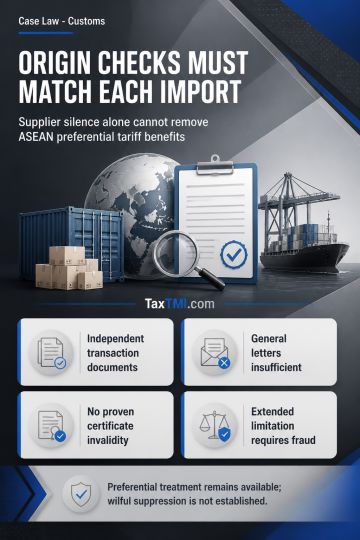
Preferential tariff benefit under the ASEAN-India Free Trade Area cannot be denied solely because an overseas supplier did not cooperate in a general origin-verification exercise. Each Certificate of Origin is an independent statutory document for a distinct import transaction and requires transaction-specific verification; departmental correspondence does not itself invalidate certificates issued by the exporting country's designated authority. In the absence of findings that the certificates were forged, cancelled, fraudulently obtained or otherwise invalid, the article states that preferential duty treatment remains available. It also explains that extended limitation requires Revenue to prove fraud, collusion, wilful misstatement or intentional suppression; an openly disclosed claim supported by certificates accepted at assessment does not establish wilful suppression.
Preferential tariff benefit under the ASEAN-India Free Trade Area cannot be denied solely because an overseas supplier did not cooperate in a general origin-verification exercise. Each Certificate of Origin is an independent statutory document for a distinct import transaction and requires transaction-specific verification; departmental correspondence does not itself invalidate certificates issued by the exporting country's designated authority. In the absence of findings that the certificates were forged, cancelled, fraudulently obtained or otherwise invalid, the article states that preferential duty treatment remains available. It also explains that extended limitation requires Revenue to prove fraud, collusion, wilful misstatement or intentional suppression; an openly disclosed claim supported by certificates accepted at assessment does not establish wilful suppression.
Note: It is a system-generated summary and is for quick reference only.
 TaxTMI
 of 4782














 Join Channel


 TaxTMI