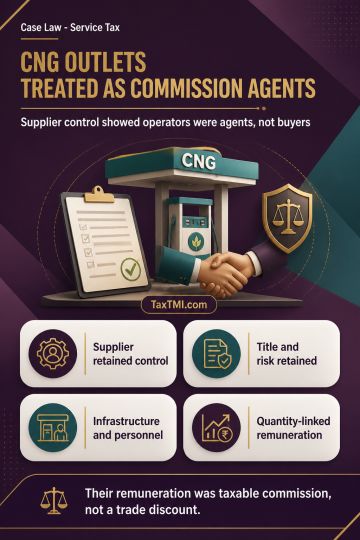
Agency in CNG distribution makes outlet operators commission agents, rendering taxable Business Auxiliary Service rather than purchasing goods for res...
Composite inpatient healthcare supply may retain exemption despite MRP medicine billing, while separate taxable sale characterisation remains disputed...
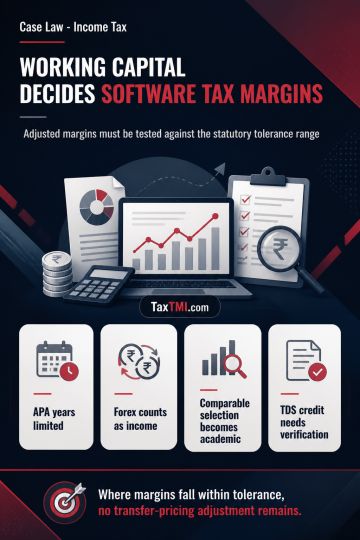
Working-capital adjustment determines whether software-services transfer-pricing margins fall within the statutory tolerance range, eliminating any ad...
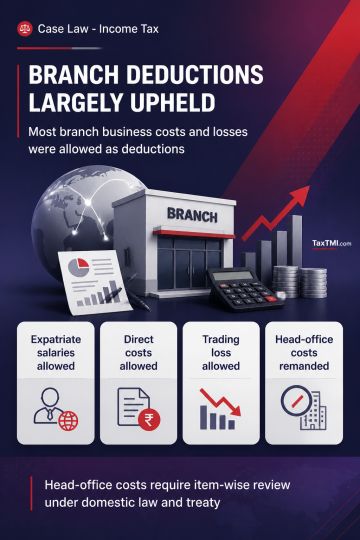
Permanent establishment deductions upheld for expatriate salaries, direct costs and trading losses, while head-office costs require fresh classificati...
Insolvency moratorium under the IBC protects the corporate...
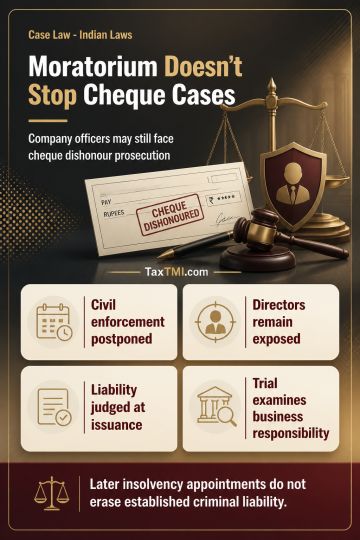
Insolvency moratorium does not shield company officers from cheque dishonour prosecution for liability arising before corporate insolvency proceedings.
Contents
Summary
Note
Bookmark
Share
✓ Copied successfully !
Print
Print Options
For full text, please login
Login to TaxTMI
Verification Pending
The Email Id has not been verified. Click on the link we have sent on
Insolvency moratorium under the IBC protects the corporate debtor and postpones civil debt enforcement, but does not halt cheque dishonour prosecution against directors or other natural persons subject to vicarious liability under the Negotiable Instruments Act. Liability is assessed by the accused's status when the cheques were issued and dishonoured; subsequent appointment of an insolvency professional or liquidator, and resulting loss of managerial control, does not erase criminal liability already crystallised. Whether an accused was in charge of and responsible for the company's business at the relevant time remains a matter for trial on evidence.
Insolvency moratorium under the IBC protects the corporate debtor and postpones civil debt enforcement, but does not halt cheque dishonour prosecution against directors or other natural persons subject to vicarious liability under the Negotiable Instruments Act. Liability is assessed by the accused's status when the cheques were issued and dishonoured; subsequent appointment of an insolvency professional or liquidator, and resulting loss of managerial control, does not erase criminal liability already crystallised. Whether an accused was in charge of and responsible for the company's business at the relevant time remains a matter for trial on evidence.
Note: It is a system-generated summary and is for quick reference only.
 TaxTMI
 of 4786








 Join Channel


 TaxTMI
