Transaction value rejection requires reliable corroboration; refundable VAT is excluded and temporary registration does not defeat new-vehicle exempti...
Appellate jurisdiction remains available where a wrist-worn gold ornament cannot conclusively be characterised as imported baggage at the preliminary ...
Written complaint requirement bars cognizance on police reports for securities offences, while unsupported breach of trust and cheating allegations fa...
Risk-based postal import clearance standardises electronic assessment, document requests, duty realisation and delivery controls at Foreign Post Offic...
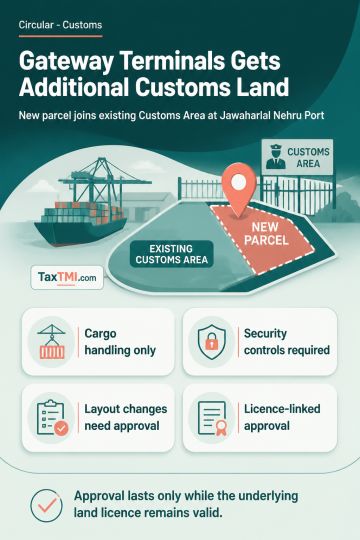
Customs Cargo Service Provider appointment extends custodianship to additional terminal land, subject to cargo-control, security and licence condition...
GST taxability, classification and exemption disputes should...
Advance-ruling mechanism governs pending GST classification, exemption and taxability disputes, limiting writ review once the specialised forum functions.
Contents
Summary
Note
Bookmark
Share
✓ Copied successfully !
Print
Print Options
For full text, please login
Login to TaxTMI
Verification Pending
The Email Id has not been verified. Click on the link we have sent on
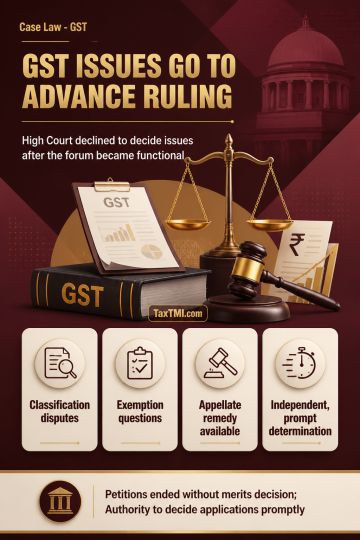
GST taxability, classification and exemption disputes should ordinarily be determined through the specialised advance-ruling mechanism where the taxpayer has already invoked it. The Authority for Advance Ruling is entrusted to examine the factual and legal issues, with an appellate remedy available against its ruling. Once the vacancy preventing the Authority from functioning was filled, the High Court declined to decide the same issues under Article 226. The challenge to the impugned communication was left open because its merits could affect the pending advance-ruling proceedings. The petitions were disposed of without merits adjudication, and the Authority was to determine the applications independently and expeditiously in accordance with law.
GST taxability, classification and exemption disputes should ordinarily be determined through the specialised advance-ruling mechanism where the taxpayer has already invoked it. The Authority for Advance Ruling is entrusted to examine the factual and legal issues, with an appellate remedy available against its ruling. Once the vacancy preventing the Authority from functioning was filled, the High Court declined to decide the same issues under Article 226. The challenge to the impugned communication was left open because its merits could affect the pending advance-ruling proceedings. The petitions were disposed of without merits adjudication, and the Authority was to determine the applications independently and expeditiously in accordance with law.
Note: It is a system-generated summary and is for quick reference only.
 TaxTMI
 of 4788











 Join Channel


 TaxTMI