Arrest safeguards and transit remand requirements invalidated detention following inter-State transfer without communicated grounds or magistrate auth...
Arrest safeguards require disclosed grounds, relative intimation and transit remand, while duplicate prosecution under the CGST framework is unsustain...
Document Identification Number defects can invalidate GST assessments, with delayed challenges entertained conditionally where patent irregularities e...
Windmill commissioning evidence supported higher depreciation where grid connection and electricity generation proved operational use before the relev...
Pharmaceutical promotion and transfer-pricing comparability principles limited disallowances, while uncorroborated search allegations and unsupported ...
GST taxability, classification and exemption disputes should...
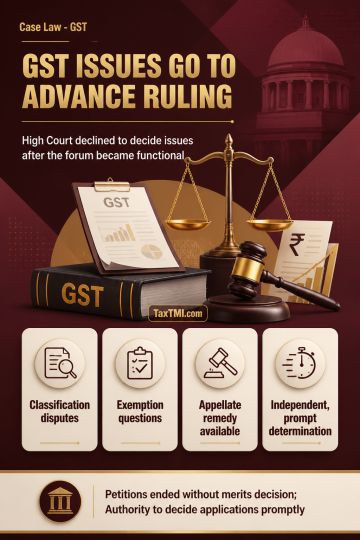
Advance-ruling mechanism governs pending GST classification, exemption and taxability disputes, limiting writ review once the specialised forum functions.
Contents
Summary
Note
Bookmark
Share
✓ Copied successfully !
Print
Print Options
For full text, please login
Login to TaxTMI
Verification Pending
The Email Id has not been verified. Click on the link we have sent on
GST taxability, classification and exemption disputes should ordinarily be determined through the specialised advance-ruling mechanism where the taxpayer has already invoked it. The Authority for Advance Ruling is entrusted to examine the factual and legal issues, with an appellate remedy available against its ruling. Once the vacancy preventing the Authority from functioning was filled, the High Court declined to decide the same issues under Article 226. The challenge to the impugned communication was left open because its merits could affect the pending advance-ruling proceedings. The petitions were disposed of without merits adjudication, and the Authority was to determine the applications independently and expeditiously in accordance with law.
GST taxability, classification and exemption disputes should ordinarily be determined through the specialised advance-ruling mechanism where the taxpayer has already invoked it. The Authority for Advance Ruling is entrusted to examine the factual and legal issues, with an appellate remedy available against its ruling. Once the vacancy preventing the Authority from functioning was filled, the High Court declined to decide the same issues under Article 226. The challenge to the impugned communication was left open because its merits could affect the pending advance-ruling proceedings. The petitions were disposed of without merits adjudication, and the Authority was to determine the applications independently and expeditiously in accordance with law.
Note: It is a system-generated summary and is for quick reference only.
 TaxTMI
 of 4782




















 Join Channel


 TaxTMI
