Commercial vehicle depreciation, scientifically determined warranty provisions and exempt-income disallowances were resolved in favour of the taxpayer...
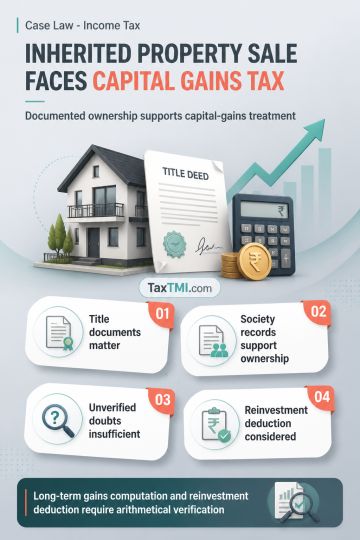
Inherited property sale proceeds require capital-gains treatment where ownership is supported by evidence, not suspicion or unverified signature doubt...
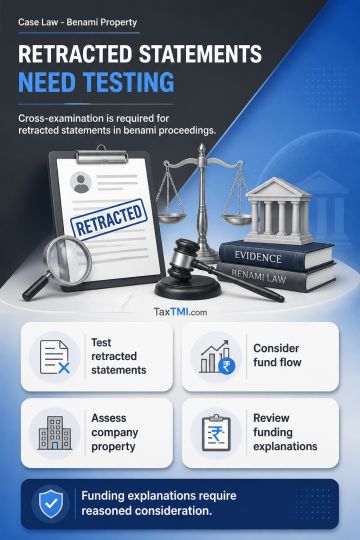
Cross-examination of retracted statements is essential where foundational evidence supports a benami allegation and documented funding explanations re...
Capital-goods exemption covers plant-modernisation accessories, while the import restriction applies only to earlier capital-goods components and spar...
Constitutional judicial review permits challenges to ECIRs and connected money-laundering proceedings where coercive action affects fundamental intere...
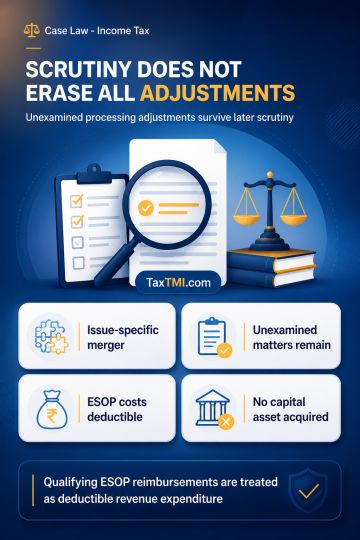
Section 143(1) processing may continue after issuance of a scrutiny notice under section 143(2) for returns from assessment years commencing on or after 1 April 2017. The note explains that merger is issue-specific: only matters actually examined and decided in subsequent scrutiny merge, so unexamined processing adjustments remain separate matters arising from the intimation. It also states that an Assessing Officer need not revisit CPC adjustments merely because scrutiny follows. Cross-charged ESOP costs reimbursed by an Indian subsidiary to its foreign parent are described as employee compensation incurred wholly and exclusively for business, rather than capital expenditure, where the subsidiary neither issues shares nor acquires a capital asset.
Section 143(1) processing may continue after issuance of a scrutiny notice under section 143(2) for returns from assessment years commencing on or after 1 April 2017. The note explains that merger is issue-specific: only matters actually examined and decided in subsequent scrutiny merge, so unexamined processing adjustments remain separate matters arising from the intimation. It also states that an Assessing Officer need not revisit CPC adjustments merely because scrutiny follows. Cross-charged ESOP costs reimbursed by an Indian subsidiary to its foreign parent are described as employee compensation incurred wholly and exclusively for business, rather than capital expenditure, where the subsidiary neither issues shares nor acquires a capital asset.
Note: It is a system-generated summary and is for quick reference only.
 TaxTMI
 of 4782












 Join Channel


 TaxTMI
