Just a moment...

Top
Help
×

By creating an account you can:

Logo TaxTMI
>
Call Us / Help / Feedback

Contact Us At :

E-mail: [email protected]

Call / WhatsApp at: +91 99117 96707

For more information, Check Contact Us

FAQs :

To know Frequently Asked Questions, Check FAQs

Most Asked Video Tutorials :

For more tutorials, Check Video Tutorials

Submit Feedback/Suggestion :

Email :
Please provide your email address so we can follow up on your feedback.
Category :
Description :
Min 15 characters0/2000
Add to...
You have not created any category. Kindly create one to bookmark this item!
Create New Category
Hide
Title :
Description :
❮❮ Hide
Default View
Expand ❯❯
Close ✕
🔎 Highlights - Adv. Search
TEXT SEARCH:

Press 'Enter' to add multiple search terms. Rules for Better Search

Search In:
Main Text + AI Text
  • Main Text
  • Main Text + AI Text
  • AI Text
Law:
---- All Laws----
  • ---- All Laws----
  • Income Tax
  • Direct Taxes
  • Benami Property
  • Central GST Laws
  • SGST - State GST Laws
  • Customs
  • FTP - Foreign Trade Policy
  • SEZ - Special Economic Zone
  • FEMA - Foreign Exchange Management
  • Companies Law
  • SEBI - Securities & Exchange Board of India
  • IBC - Insolvency and Bankruptcy
  • Law of Competition
  • PMLA - Money-Laundering
  • Indian Laws
  • Bill / Finance Bills
  • Wealth Tax
  • Service Tax
  • Central Excise
  • VAT / Sales Tax
Month:
---- All Months ----
  • ---- All Months ----
  • January
  • February
  • March
  • April
  • May
  • June
  • July
  • August
  • September
  • October
  • November
  • December
Year:
---- All Years ----
  • ---- All Years ----
  • 2026
  • 2025
  • 2024
  • 2023
  • 2022
  • 2021
  • 2020
  • 2019
  • 2018
  • 2017
  • 2016
  • 2015
  • 2014
  • 2013
  • 2012
  • 2011
Sort By: ?
In Sort By 'Default', exact matches for text search are shown at the top, followed by the remaining results in their regular order.
RelevanceDefaultDate
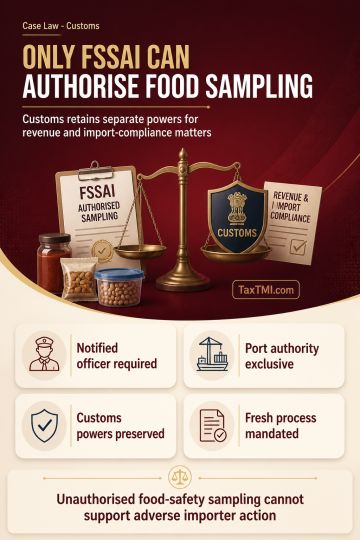
    Food-safety sampling requires FSSAI authorisation, while Customs retains separate powers for revenue, classification and import-compliance purposes.
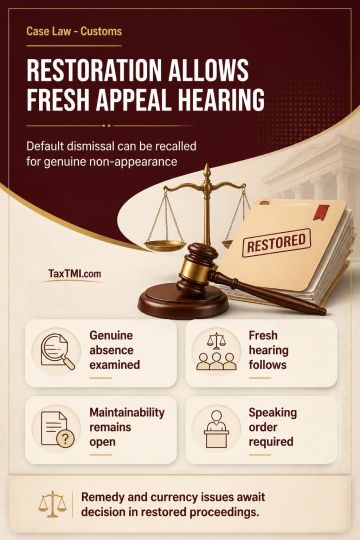
    Restoration jurisdiction permits rehearing after default but cannot decide maintainability or replace the earlier dismissal order.
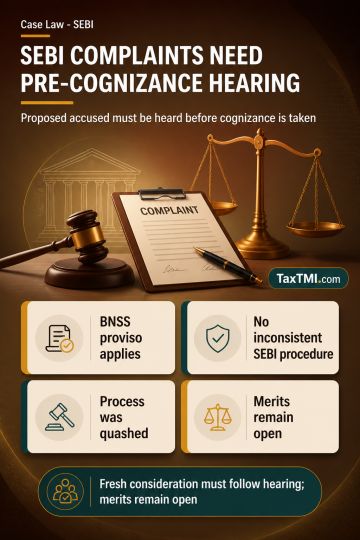
    Mandatory pre-cognizance hearing under BNSS applies to SEBI complaints where the special statute provides no inconsistent procedure.
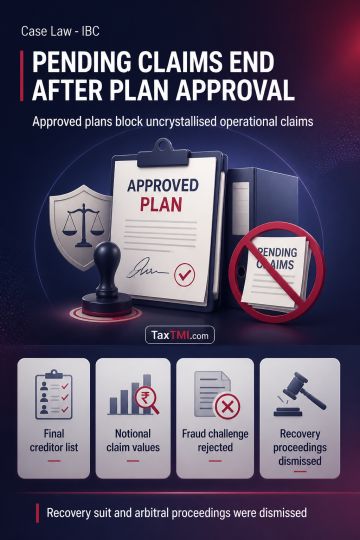
    Clean slate principle extinguishes uncrystallised operational claims and bars continuation of pending recovery and arbitral proceedings after plan app...
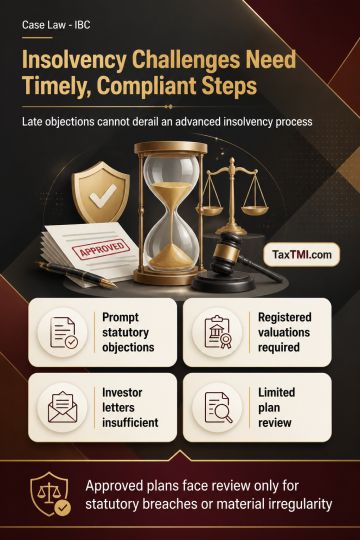
    CIRP challenges require timely statutory objections, compliant resolution plans, and cannot replace the CoC's commercial valuation assessment.
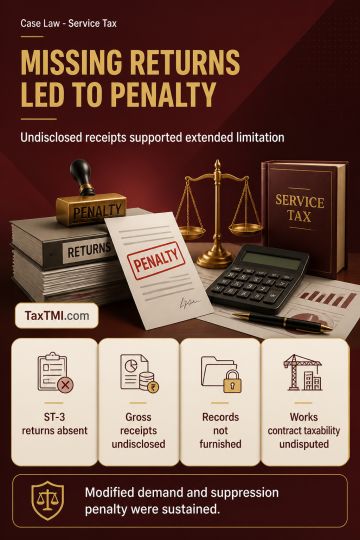
    Suppression of taxable service receipts justified extended limitation and penalty where mandatory returns and records were not furnished.
    Works contract classification governs composite layout-development contracts where VAT-paid goods are transferred alongside construction and infrastru...
    High-seas sale proof and conditional exemption compliance determined taxability of imported cars and restoration of tax liability.
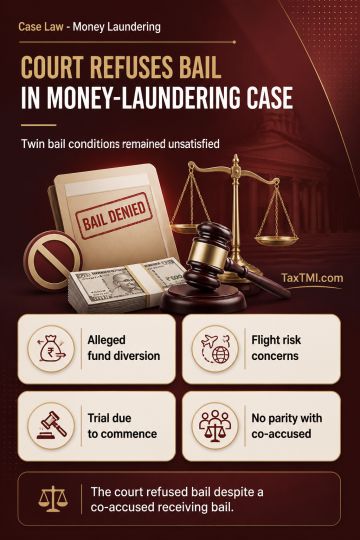
    PMLA twin bail conditions remained unsatisfied as alleged fund diversion, flight risk, and imminent trial defeated regular bail.
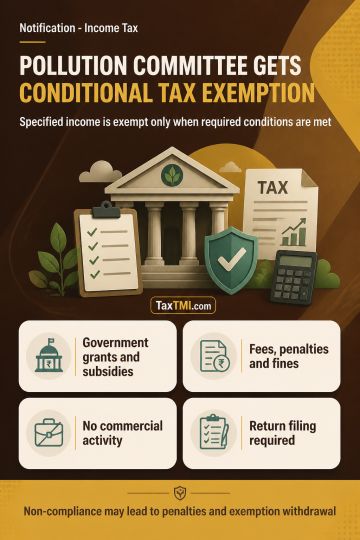
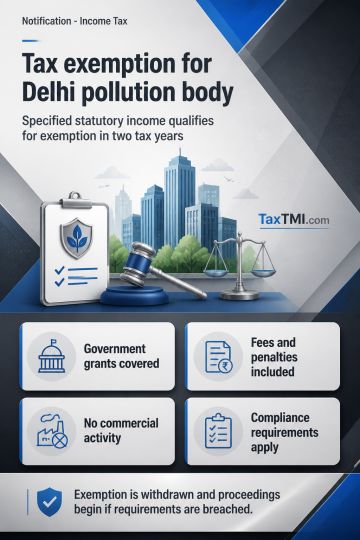
    Specified income tax exemption for pollution control body remains conditional on non-commercial activity, unchanged income character, and return filin...
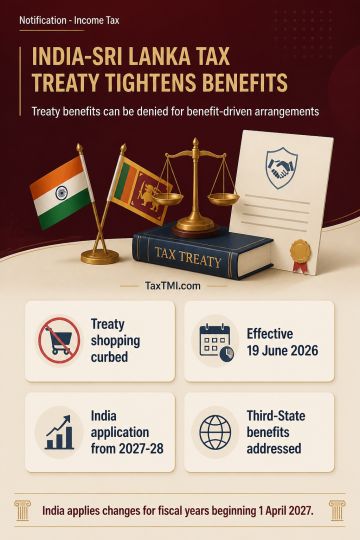
    Principal purpose test curbs treaty shopping under the amended India-Sri Lanka income tax treaty from fiscal year 2027-28.
    Tax exemption for statutory pollution-control income applies subject to non-commercial operations, filing, continuity, and compliance.
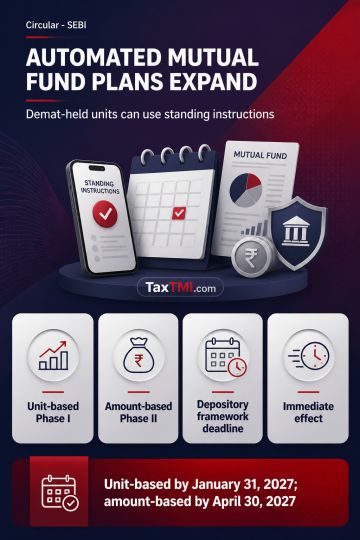
    Standing instructions for demat mutual fund SWP and STP will enable phased unit-based and amount-based automated transactions.
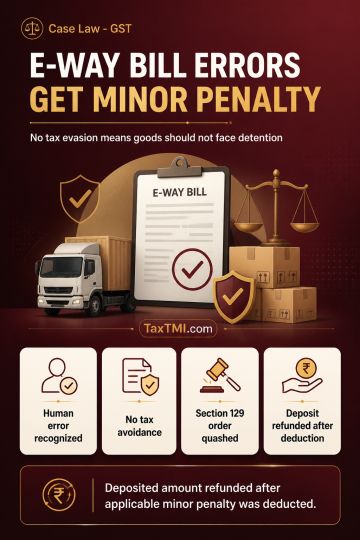
    Typographical e-way bill discrepancies without tax evasion warrant only minor penalty, not detention proceedings under Section 129.
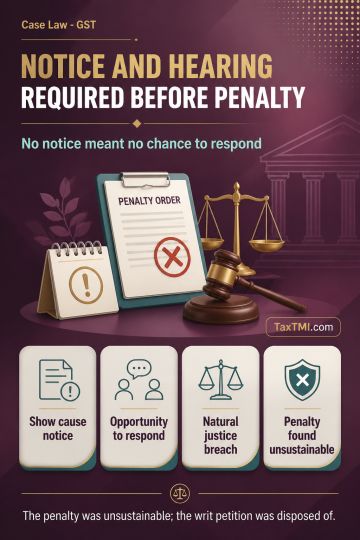
    Show cause notice and hearing are mandatory before penalty, making an unnotified penalty unsustainable for natural justice breach.
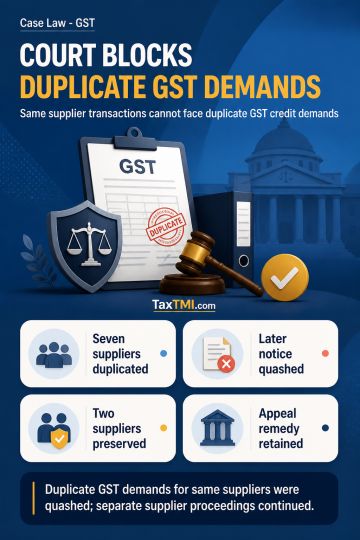
    Duplicate input tax credit demands cannot target identical supplier transactions, while proceedings concerning distinct suppliers remain available.
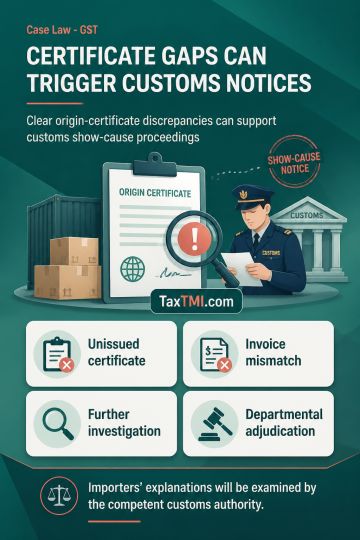
    Jurisdictional facts in certificate-of-origin discrepancies can support customs show-cause proceedings, leaving factual explanations for departmental ...
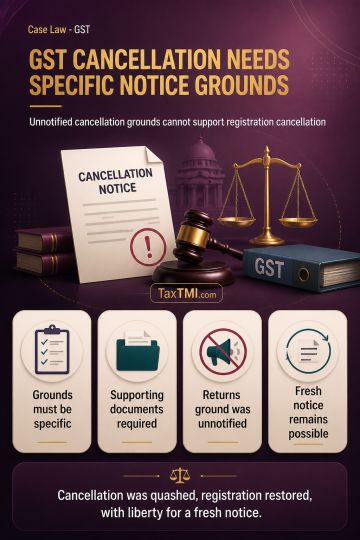
    Specific grounds in GST cancellation notices are essential; cancellation based on an unnotified ground was quashed and registration restored.
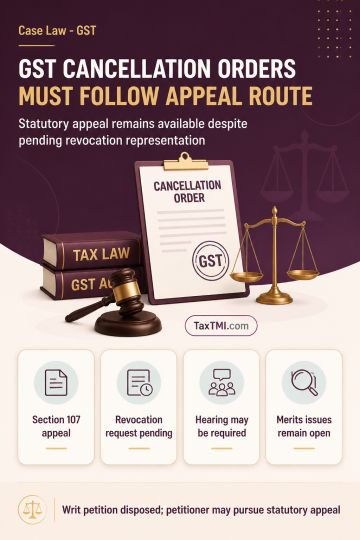
    Statutory appellate remedy for GST registration cancellation limits writ jurisdiction despite an unconsidered revocation representation.
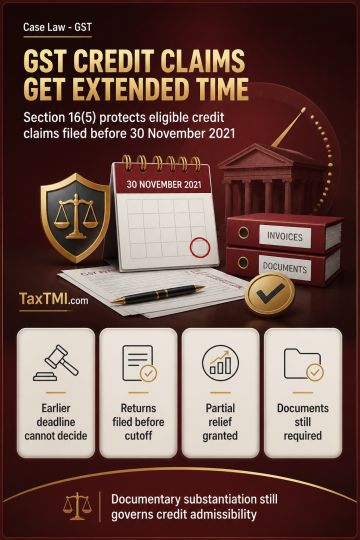
    Extended input tax credit timelines protect delayed returns filed before the statutory cut-off, subject to documentary eligibility.
❯❯
MaximizeMaximizeMaximize
0 / 200
Expand Note
Add to Folder

No Folders have been created

    +

    Are you sure you want to delete "My most important" ?

    NOTE:

    Highlights
    Showing Results for :
    Reset Filters
    Results Found:
    Show All SummariesHide All Summaries

    Highlights

    Back

    All Highlights

    Showing Results for :
    Reset Filters
      No Records Found

      Highlights

      Back

      All Highlights

      whatsappJoin Channel
      Showing Results for : Reset Filters

      Section 143(1) processing may continue after issuance of a...

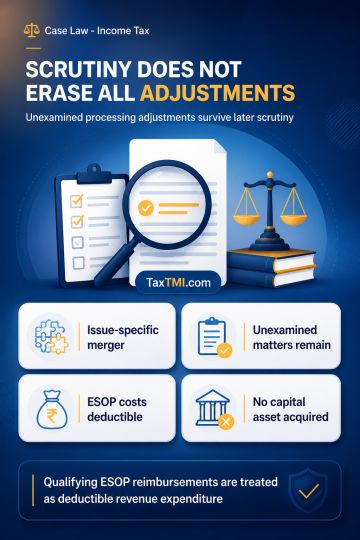
      Issue-specific merger preserves unexamined return-processing adjustments, while employee ESOP cross-charges qualify as deductible revenue expenditure.

      Contents
      Summary
      Note

      Note

      -

      Bookmark

      Print

      Print

      Income TaxJuly 24, 2026Case LawsAT
      Section 143(1) processing may continue after issuance of a scrutiny notice under section 143(2) for returns from assessment years commencing on or after 1 April 2017. The note explains that merger is issue-specific: only matters actually examined and decided in subsequent scrutiny merge, so unexamined processing adjustments remain separate matters arising from the intimation. It also states that an Assessing Officer need not revisit CPC adjustments merely because scrutiny follows. Cross-charged ESOP costs reimbursed by an Indian subsidiary to its foreign parent are described as employee compensation incurred wholly and exclusively for business, rather than capital expenditure, where the subsidiary neither issues shares nor acquires a capital asset.

      Topics

      ActsIncome Tax