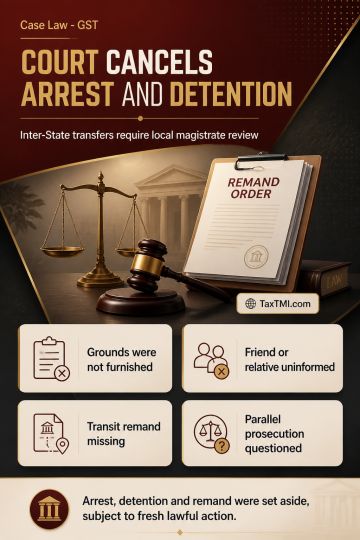
Arrest safeguards and transit remand requirements invalidated detention following inter-State transfer without communicated grounds or magistrate auth...
Arrest safeguards require disclosed grounds, relative intimation and transit remand, while duplicate prosecution under the CGST framework is unsustain...
Document Identification Number defects can invalidate GST assessments, with delayed challenges entertained conditionally where patent irregularities e...
Windmill commissioning evidence supported higher depreciation where grid connection and electricity generation proved operational use before the relev...
Pharmaceutical promotion and transfer-pricing comparability principles limited disallowances, while uncorroborated search allegations and unsupported ...
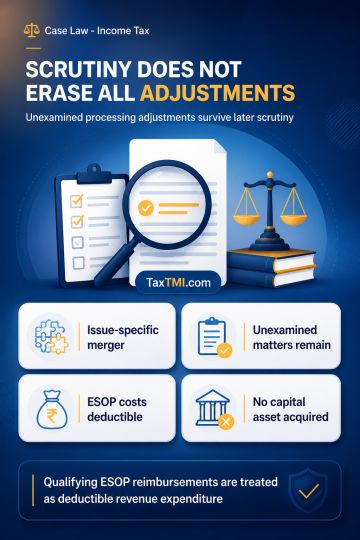
Section 143(1) processing may continue after issuance of a scrutiny notice under section 143(2) for returns from assessment years commencing on or after 1 April 2017. The note explains that merger is issue-specific: only matters actually examined and decided in subsequent scrutiny merge, so unexamined processing adjustments remain separate matters arising from the intimation. It also states that an Assessing Officer need not revisit CPC adjustments merely because scrutiny follows. Cross-charged ESOP costs reimbursed by an Indian subsidiary to its foreign parent are described as employee compensation incurred wholly and exclusively for business, rather than capital expenditure, where the subsidiary neither issues shares nor acquires a capital asset.
Section 143(1) processing may continue after issuance of a scrutiny notice under section 143(2) for returns from assessment years commencing on or after 1 April 2017. The note explains that merger is issue-specific: only matters actually examined and decided in subsequent scrutiny merge, so unexamined processing adjustments remain separate matters arising from the intimation. It also states that an Assessing Officer need not revisit CPC adjustments merely because scrutiny follows. Cross-charged ESOP costs reimbursed by an Indian subsidiary to its foreign parent are described as employee compensation incurred wholly and exclusively for business, rather than capital expenditure, where the subsidiary neither issues shares nor acquires a capital asset.
Note: It is a system-generated summary and is for quick reference only.
 TaxTMI
 of 4782


















 Join Channel


 TaxTMI
