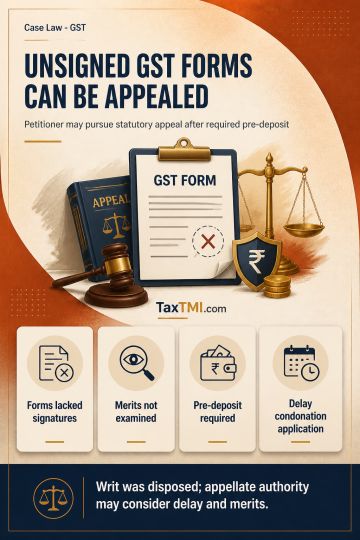
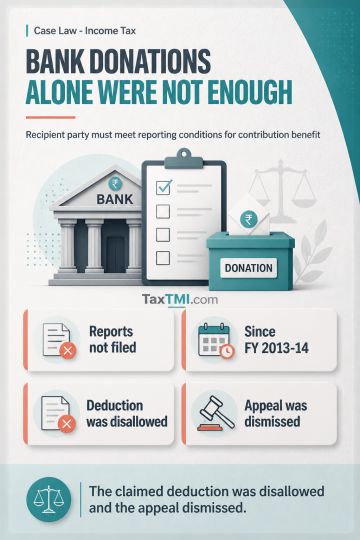
Political contribution deductions require recipient party compliance with contribution-reporting conditions; banking-channel donations alone do not qu...
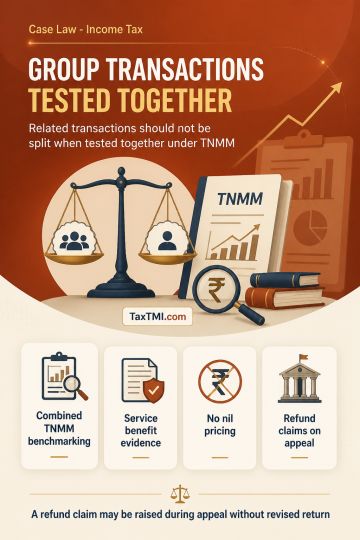
Aggregation under TNMM prevents selective testing of intra-group services without comparable uncontrolled transactions, while appellate additional cla...
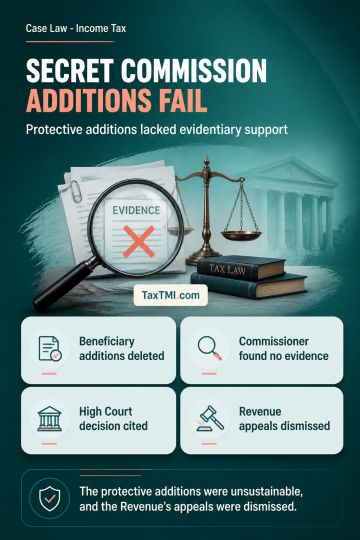
Protective assessment cannot duplicate identical receipts under competing characterisations; remote services did not establish a taxable permanent est...
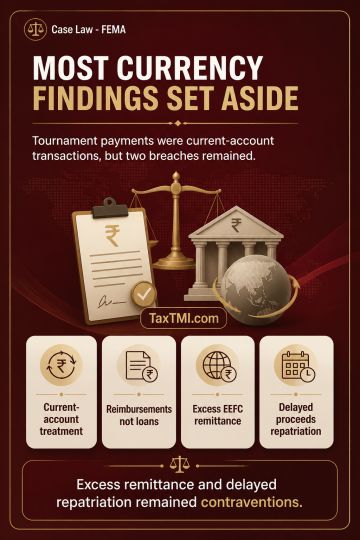
Current account treatment of overseas tournament services removed most FEMA findings, but excess EEFC remittance and delayed repatriation remained bre...
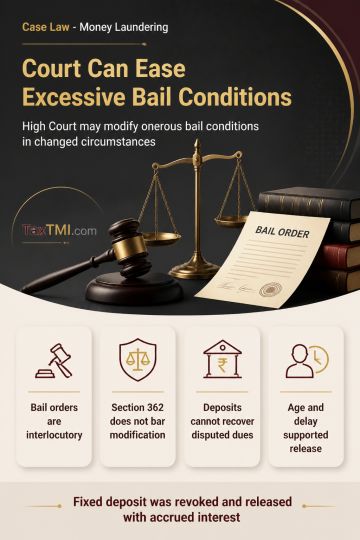
Modification of bail conditions remains available through inherent jurisdiction where onerous deposits undermine justice and cannot recover disputed d...
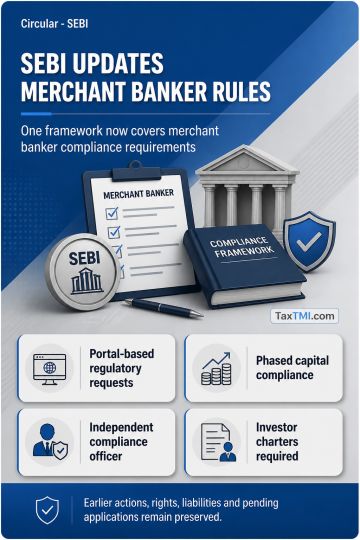
Merchant banker regulation consolidates registration, governance, capital, reporting, outsourcing and investor-protection requirements under an update...
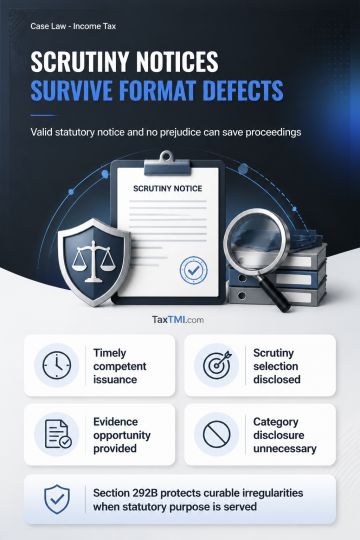
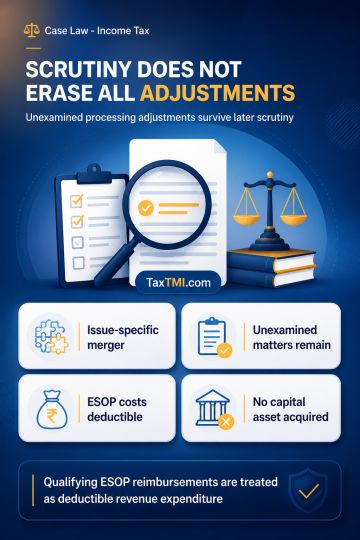
Section 143(1) processing may continue after issuance of a scrutiny notice under section 143(2) for returns from assessment years commencing on or after 1 April 2017. The note explains that merger is issue-specific: only matters actually examined and decided in subsequent scrutiny merge, so unexamined processing adjustments remain separate matters arising from the intimation. It also states that an Assessing Officer need not revisit CPC adjustments merely because scrutiny follows. Cross-charged ESOP costs reimbursed by an Indian subsidiary to its foreign parent are described as employee compensation incurred wholly and exclusively for business, rather than capital expenditure, where the subsidiary neither issues shares nor acquires a capital asset.
Section 143(1) processing may continue after issuance of a scrutiny notice under section 143(2) for returns from assessment years commencing on or after 1 April 2017. The note explains that merger is issue-specific: only matters actually examined and decided in subsequent scrutiny merge, so unexamined processing adjustments remain separate matters arising from the intimation. It also states that an Assessing Officer need not revisit CPC adjustments merely because scrutiny follows. Cross-charged ESOP costs reimbursed by an Indian subsidiary to its foreign parent are described as employee compensation incurred wholly and exclusively for business, rather than capital expenditure, where the subsidiary neither issues shares nor acquires a capital asset.
Note: It is a system-generated summary and is for quick reference only.
 TaxTMI
 of 4782










 Join Channel


 TaxTMI