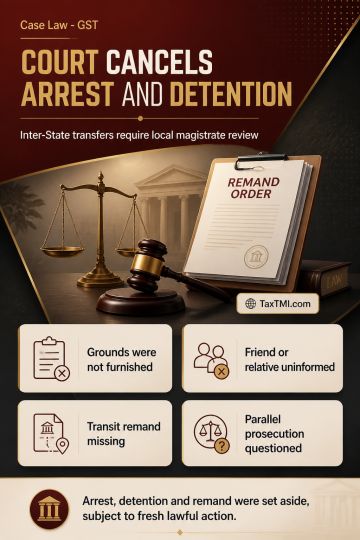
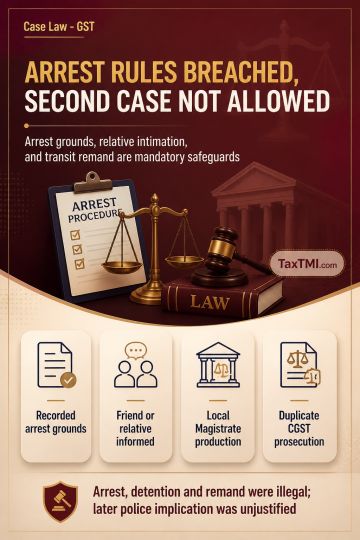
Arrest safeguards and transit remand requirements invalidated detention following inter-State transfer without communicated grounds or magistrate auth...
Arrest safeguards require disclosed grounds, relative intimation and transit remand, while duplicate prosecution under the CGST framework is unsustain...
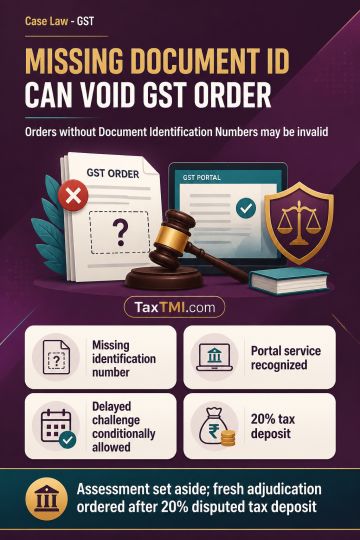
Document Identification Number defects can invalidate GST assessments, with delayed challenges entertained conditionally where patent irregularities e...
Windmill commissioning evidence supported higher depreciation where grid connection and electricity generation proved operational use before the relev...
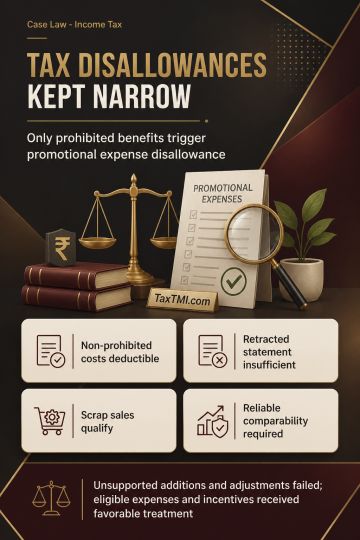
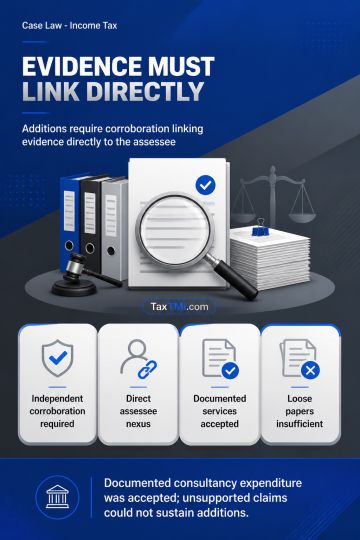
Pharmaceutical promotion and transfer-pricing comparability principles limited disallowances, while uncorroborated search allegations and unsupported ...
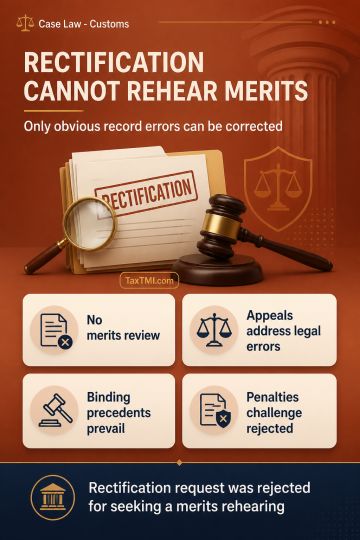
Rectification of mistake is confined to a manifest, self-evident...
Rectification of mistake remains limited to self-evident record errors, preventing merits review through miscellaneous applications and preserving finality.
Contents
Summary
Note
Bookmark
Share
✓ Copied successfully !
Print
Print Options
For full text, please login
Login to TaxTMI
Verification Pending
The Email Id has not been verified. Click on the link we have sent on
Rectification of mistake is confined to a manifest, self-evident error apparent from the record and cannot require elaborate reasoning, reappreciation of evidence, or reconsideration of legal findings. Errors in reasoning or application of law must be addressed through the prescribed appellate process; applications labelled as clarification, modification, recall, or miscellaneous applications cannot operate as review mechanisms. Binding Supreme Court and jurisdictional High Court precedent must be followed, and a contrary coordinate-bench view does not justify a Larger Bench reference where it disregards binding authority. The text notes that the rectification request concerning confiscation, reverse burden, and penalties was rejected because it sought a merits rehearing rather than correction of an apparent error.
Rectification of mistake is confined to a manifest, self-evident error apparent from the record and cannot require elaborate reasoning, reappreciation of evidence, or reconsideration of legal findings. Errors in reasoning or application of law must be addressed through the prescribed appellate process; applications labelled as clarification, modification, recall, or miscellaneous applications cannot operate as review mechanisms. Binding Supreme Court and jurisdictional High Court precedent must be followed, and a contrary coordinate-bench view does not justify a Larger Bench reference where it disregards binding authority. The text notes that the rectification request concerning confiscation, reverse burden, and penalties was rejected because it sought a merits rehearing rather than correction of an apparent error.
Note: It is a system-generated summary and is for quick reference only.
 TaxTMI
 of 4782












 Join Channel


 TaxTMI
