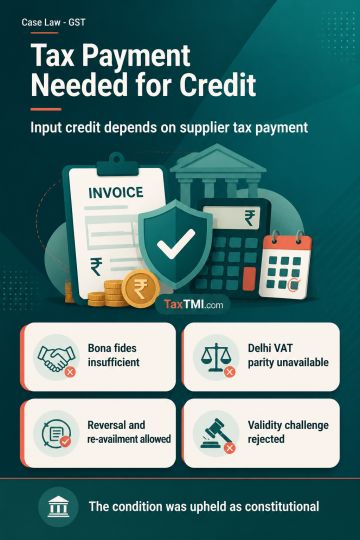
Input tax credit conditions remain constitutionally valid, with eligible recipient claims considered under GST circulars and retrospective filing dead...
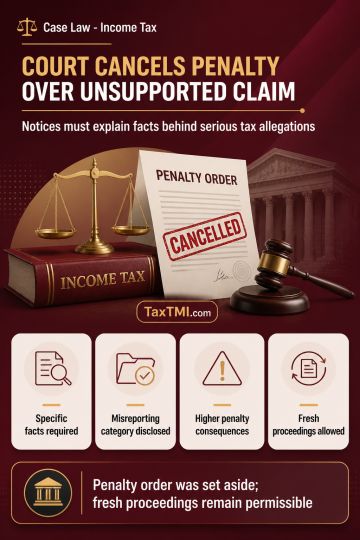
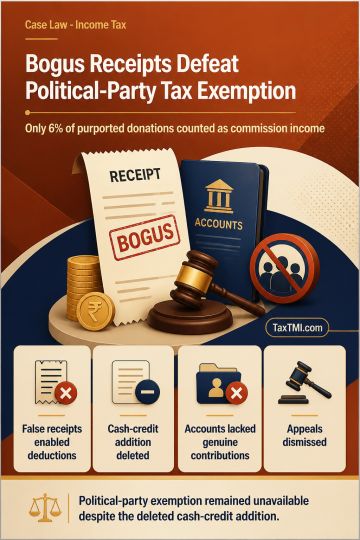
Bogus donation receipts justified commission income assessment and defeated political-party tax exemption for inaccurate accounts and reporting failur...
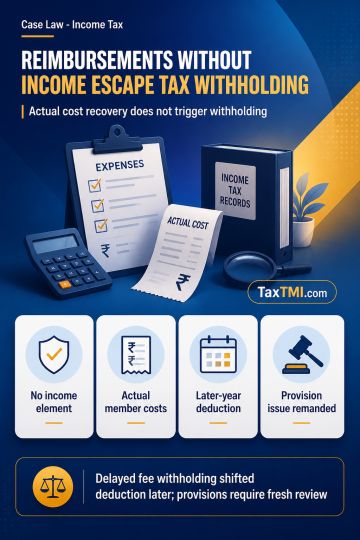
Pure reimbursement without income element escapes tax withholding, while delayed withholding and unsupported provisions face deferred or renewed scrut...
Public benefit requirement defeats charitable registration where residents' association services are reciprocal, member-only facilities governed by mu...
Exempt-income expenditure disallowance is confined to investments that actually generated exempt income, while supported business expenses remain dedu...
Rectification of mistake is confined to a manifest, self-evident...
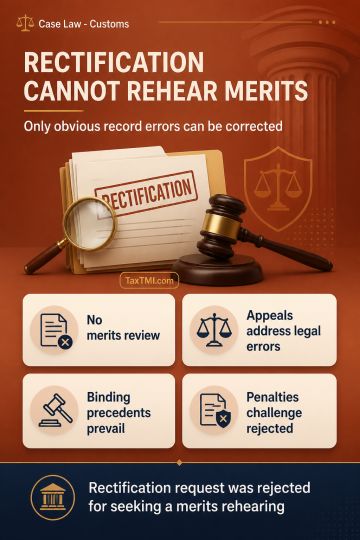
Rectification of mistake remains limited to self-evident record errors, preventing merits review through miscellaneous applications and preserving finality.
Contents
Summary
Note
Bookmark
Share
✓ Copied successfully !
Print
Print Options
For full text, please login
Login to TaxTMI
Verification Pending
The Email Id has not been verified. Click on the link we have sent on
Rectification of mistake is confined to a manifest, self-evident error apparent from the record and cannot require elaborate reasoning, reappreciation of evidence, or reconsideration of legal findings. Errors in reasoning or application of law must be addressed through the prescribed appellate process; applications labelled as clarification, modification, recall, or miscellaneous applications cannot operate as review mechanisms. Binding Supreme Court and jurisdictional High Court precedent must be followed, and a contrary coordinate-bench view does not justify a Larger Bench reference where it disregards binding authority. The text notes that the rectification request concerning confiscation, reverse burden, and penalties was rejected because it sought a merits rehearing rather than correction of an apparent error.
Rectification of mistake is confined to a manifest, self-evident error apparent from the record and cannot require elaborate reasoning, reappreciation of evidence, or reconsideration of legal findings. Errors in reasoning or application of law must be addressed through the prescribed appellate process; applications labelled as clarification, modification, recall, or miscellaneous applications cannot operate as review mechanisms. Binding Supreme Court and jurisdictional High Court precedent must be followed, and a contrary coordinate-bench view does not justify a Larger Bench reference where it disregards binding authority. The text notes that the rectification request concerning confiscation, reverse burden, and penalties was rejected because it sought a merits rehearing rather than correction of an apparent error.
Note: It is a system-generated summary and is for quick reference only.
 TaxTMI
 of 4782







 Join Channel


 TaxTMI