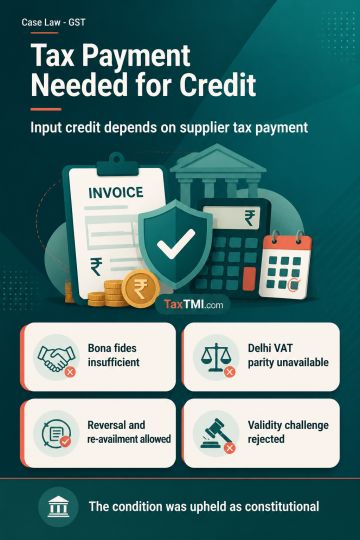
Input tax credit conditions remain constitutionally valid, with eligible recipient claims considered under GST circulars and retrospective filing dead...
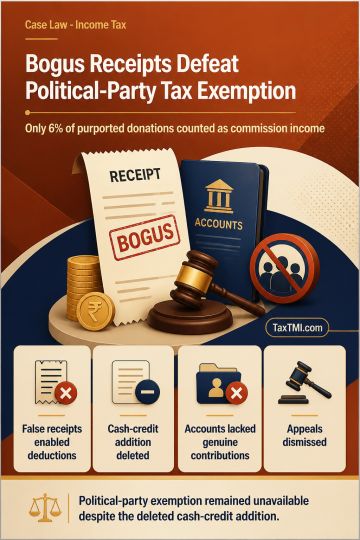
Bogus donation receipts justified commission income assessment and defeated political-party tax exemption for inaccurate accounts and reporting failur...
Pure reimbursement without income element escapes tax withholding, while delayed withholding and unsupported provisions face deferred or renewed scrut...
Public benefit requirement defeats charitable registration where residents' association services are reciprocal, member-only facilities governed by mu...
Exempt-income expenditure disallowance is confined to investments that actually generated exempt income, while supported business expenses remain dedu...
At the discharge stage, a strong suspicion based on material capable of being translated into evidence is sufficient, and the court should not conduct a detailed evaluation aimed at conviction. However, prosecution witnesses lacked personal knowledge, merely proved departmental materials, or did not specify the alleged method of excise-duty evasion; the underlying records were not produced, making record-derived evidence inadmissible. Departmental adjudication orders and penalties alone cannot establish criminal liability, as the criminal court must independently assess whether duty evasion occurred and constituted an offence. On the available material, no prima facie case was disclosed, so discharge was upheld and the revision dismissed.
At the discharge stage, a strong suspicion based on material capable of being translated into evidence is sufficient, and the court should not conduct a detailed evaluation aimed at conviction. However, prosecution witnesses lacked personal knowledge, merely proved departmental materials, or did not specify the alleged method of excise-duty evasion; the underlying records were not produced, making record-derived evidence inadmissible. Departmental adjudication orders and penalties alone cannot establish criminal liability, as the criminal court must independently assess whether duty evasion occurred and constituted an offence. On the available material, no prima facie case was disclosed, so discharge was upheld and the revision dismissed.
Note: It is a system-generated summary and is for quick reference only.
 TaxTMI
 of 4782




















 Join Channel



 TaxTMI