Tariff classification of vehicle gear components follows the specific gearing entry, displacing motor-vehicle parts classification and related liabili...
Necessary-party requirements limit impleadment of independent entities, while deferred consideration does not create an appealable adverse determinati...
Food supplement classification requires common parlance and authoritative tests, preventing treatment as proprietary Ayurvedic medicines without suppo...
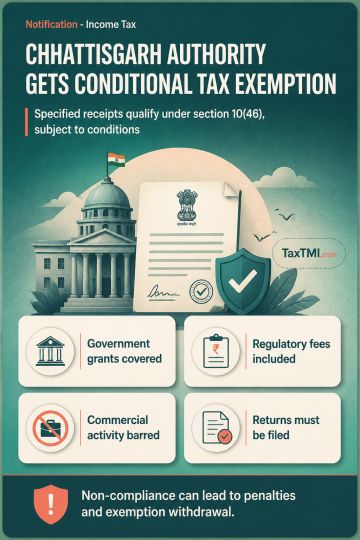
Specified regulatory authority income receives conditional tax exemption, subject to non-commercial activity, unchanged income character, and return f...
Tax exemption for regulatory authority income applies retrospectively, subject to non-commercial activity, unchanged income sources, and return-filing...
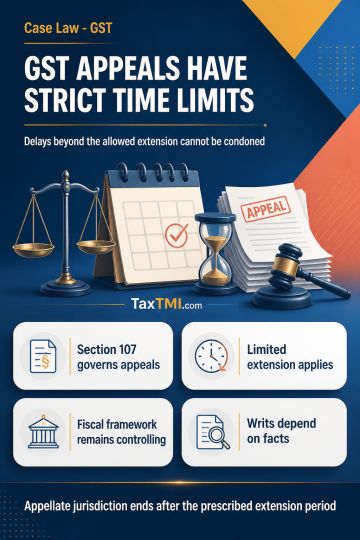
Statutory limitation for GST appeals under Section 107 of the CGST/UKGST Act is treated as an integral and exhaustive part of the appellate remedy. The prescribed appeal period and the limited condonable extension define the Appellate Authority's jurisdiction; therefore, delay beyond that extension cannot be condoned through Section 5 of the Limitation Act. The discussion distinguishes a Supreme Court ruling under beneficial land-acquisition legislation, whose remedial purpose differs from the self-contained fiscal framework of GST. It maintains that fiscal precedents on expressly limited appellate condonation continue to govern unless expressly overruled or distinguished. Individual writ petitions remain for consideration on their respective facts.
Statutory limitation for GST appeals under Section 107 of the CGST/UKGST Act is treated as an integral and exhaustive part of the appellate remedy. The prescribed appeal period and the limited condonable extension define the Appellate Authority's jurisdiction; therefore, delay beyond that extension cannot be condoned through Section 5 of the Limitation Act. The discussion distinguishes a Supreme Court ruling under beneficial land-acquisition legislation, whose remedial purpose differs from the self-contained fiscal framework of GST. It maintains that fiscal precedents on expressly limited appellate condonation continue to govern unless expressly overruled or distinguished. Individual writ petitions remain for consideration on their respective facts.
Note: It is a system-generated summary and is for quick reference only.
 TaxTMI
 of 4782




















 Join Channel


 TaxTMI
