Prolonged sterilisation of development rights supports capital-gains treatment, while business-income disallowances cannot govern capital-gains comput...
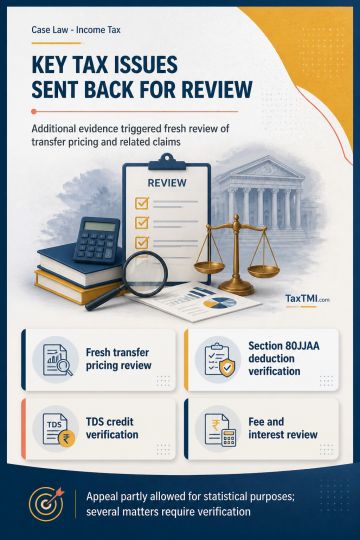
Additional evidence in transfer pricing dispute leads to fresh examination, while tax deductions, TDS credit, fee and refund interest require verifica...
Category II AIF pass-through taxation preserves non-business income character; investment receipts cannot be reclassified without applying recognised ...
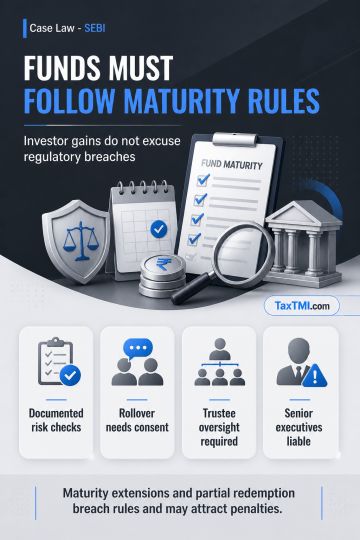
Mutual fund maturity rules require proper rollover, redemption, disclosure, and due diligence; investor gains cannot excuse regulatory breaches or pen...
Threshold exemption excludes exempt services, while stamp-paper purchases avoid reverse charge; consequential service tax penalties were also set asid...
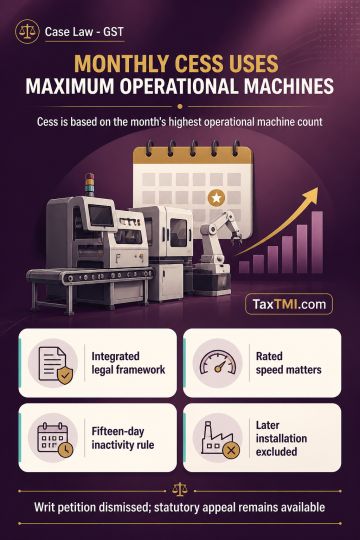
Rule 12(4) of the capacity-based cess scheme for pan masala packing machines is described as valid because the Cess Act, Rule 12 and Schedule II operate as an integrated framework. Monthly cess is computed by reference to the maximum number of installed operational machines during the month, with capacity determined by rated speed and packing weight rather than installation date. The rule was found consistent with the parent statute and constitutional guarantees under Articles 14 and 19(1)(g). Abatement applies only where a machine remains continuously inoperative for at least fifteen days; machines installed later and subsequently operated cannot be treated as inoperative before installation. The reported writ petition was dismissed, subject to the statutory appellate remedy for the abatement rejection.
Rule 12(4) of the capacity-based cess scheme for pan masala packing machines is described as valid because the Cess Act, Rule 12 and Schedule II operate as an integrated framework. Monthly cess is computed by reference to the maximum number of installed operational machines during the month, with capacity determined by rated speed and packing weight rather than installation date. The rule was found consistent with the parent statute and constitutional guarantees under Articles 14 and 19(1)(g). Abatement applies only where a machine remains continuously inoperative for at least fifteen days; machines installed later and subsequently operated cannot be treated as inoperative before installation. The reported writ petition was dismissed, subject to the statutory appellate remedy for the abatement rejection.
Note: It is a system-generated summary and is for quick reference only.
 TaxTMI
 of 4792












 Join Channel


 TaxTMI
