Statutory transfer formalities invalidated alleged share and property transfers, while retrospective record manipulation constituted oppression and mi...
Provisional attachment of laundered funds and equivalent-value property sustained, with statutory protection limited to pension, gratuity and providen...
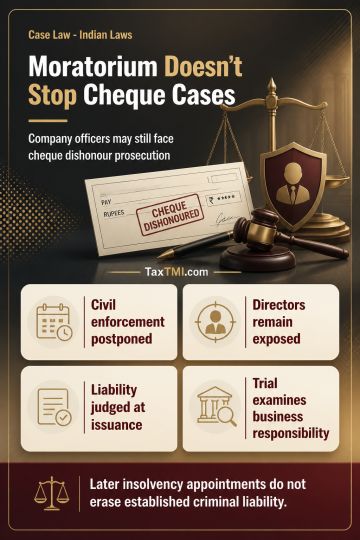
Insolvency moratorium does not shield company officers from cheque dishonour prosecution for liability arising before corporate insolvency proceedings...
Input tax credit should not be denied to a bona fide purchasing dealer solely because the registered selling dealer, despite receiving tax, failed to file returns. Where the purchaser has paid tax against a valid tax invoice, recovery of unpaid tax should be pursued against the defaulting seller. Action against the purchaser remains available where material establishes collusion. Applying this principle, the discussed High Court decision quashed the demand based on alleged excess input tax credit for the relevant financial year, while preserving the authorities' right to recover dues from the selling dealer in accordance with law.
Input tax credit should not be denied to a bona fide purchasing dealer solely because the registered selling dealer, despite receiving tax, failed to file returns. Where the purchaser has paid tax against a valid tax invoice, recovery of unpaid tax should be pursued against the defaulting seller. Action against the purchaser remains available where material establishes collusion. Applying this principle, the discussed High Court decision quashed the demand based on alleged excess input tax credit for the relevant financial year, while preserving the authorities' right to recover dues from the selling dealer in accordance with law.
Note: It is a system-generated summary and is for quick reference only.
 TaxTMI
 of 4782











 Join Channel



 TaxTMI