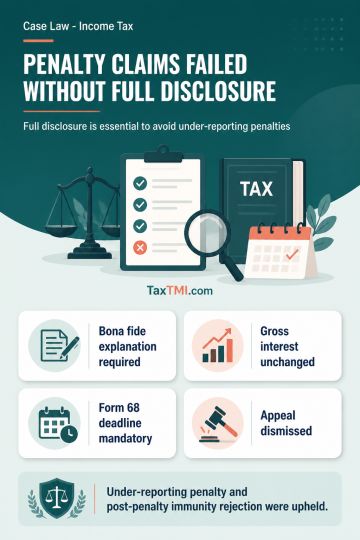
Bona fide disclosure requirements govern under-reporting penalties, and post-penalty immunity applications cannot secure available statutory protectio...
Certificate-of-origin verification procedure governs preferential customs benefits; denial without retroactive verification was set aside with consequ...
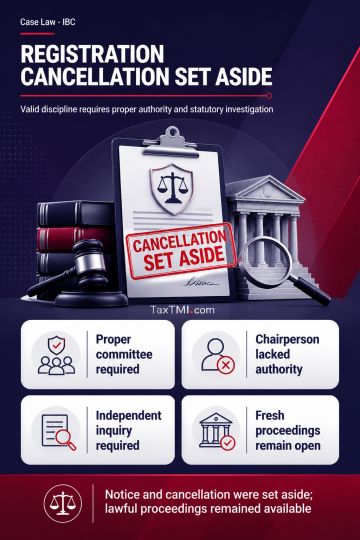
Disciplinary Committee jurisdiction and mandatory investigation requirements invalidated cancellation of an insolvency professional's registration and...
Retention of seized property survives where recorded reasons support proceeds of crime, while stayed investigation periods are excluded from limitatio...
Pre-existing disputes in operational debt are examined through...
Pre-existing operational debt disputes require genuine evidence, while undirected running-account payments may be appropriated on a first-in-first-out basis.
Contents
Summary
Note
Bookmark
Share
✓ Copied successfully !
Print
Print Options
For full text, please login
Login to TaxTMI
Verification Pending
The Email Id has not been verified. Click on the link we have sent on
Pre-existing disputes in operational debt are examined through the debtor's admissions, the running account, payment appropriation, and supporting evidence. The note states that where payments are not directed toward specific invoices, the operational creditor may appropriate them on a first-in-first-out basis. It further discusses that inconsistent positions on payment appropriation may engage the principle against approbating and reprobating, and that unsupported assertions of short supply, debit notes, deficiencies, or protected-period claims may not establish a genuine dispute. It also addresses the permissibility of placing additional documents, including communications and financier-related material, on record before a final insolvency order is passed.
Pre-existing disputes in operational debt are examined through the debtor's admissions, the running account, payment appropriation, and supporting evidence. The note states that where payments are not directed toward specific invoices, the operational creditor may appropriate them on a first-in-first-out basis. It further discusses that inconsistent positions on payment appropriation may engage the principle against approbating and reprobating, and that unsupported assertions of short supply, debit notes, deficiencies, or protected-period claims may not establish a genuine dispute. It also addresses the permissibility of placing additional documents, including communications and financier-related material, on record before a final insolvency order is passed.
Note: It is a system-generated summary and is for quick reference only.
 TaxTMI
 of 4782











 Join Channel



 TaxTMI