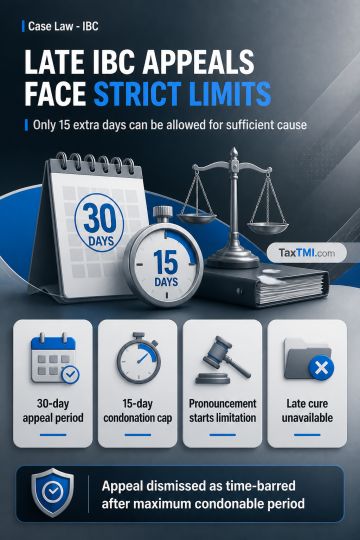
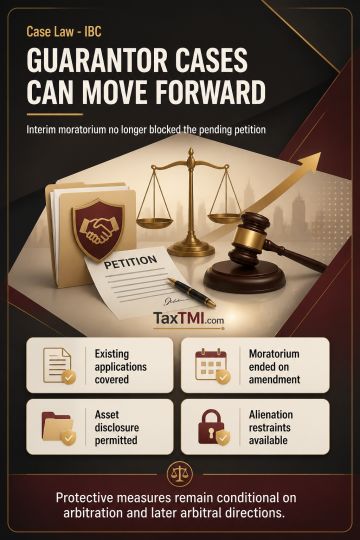
Retroactive interim-moratorium exclusion permits protective asset disclosure and preservation measures against personal guarantors pending arbitration...
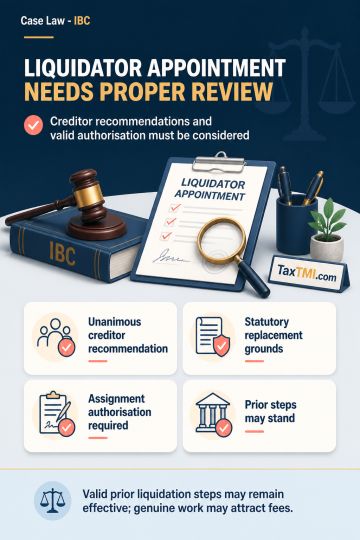
Liquidator appointment under Section 34 requires consideration of creditor recommendations, valid professional authorisation, and preservation of vali...
Pre-existing operational debt disputes require genuine evidence, while undirected running-account payments may be appropriated on a first-in-first-out...
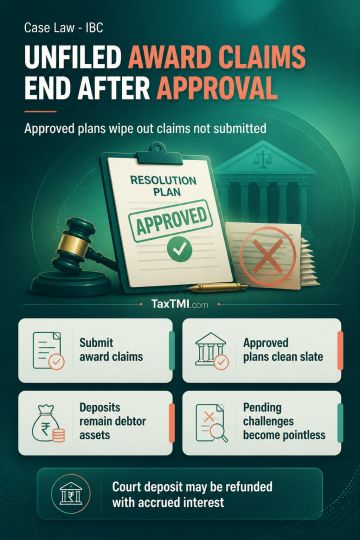
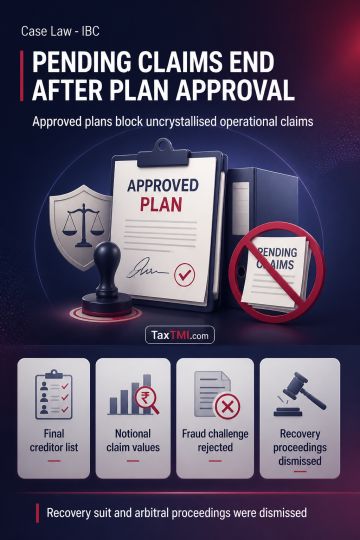
Clean slate principle extinguishes uncrystallised operational claims and bars continuation of pending recovery and arbitral proceedings after plan app...
Pre-existing disputes in operational debt are examined through...
Pre-existing operational debt disputes require genuine evidence, while undirected running-account payments may be appropriated on a first-in-first-out basis.
Contents
Summary
Note
Bookmark
Share
✓ Copied successfully !
Print
Print Options
For full text, please login
Login to TaxTMI
Verification Pending
The Email Id has not been verified. Click on the link we have sent on
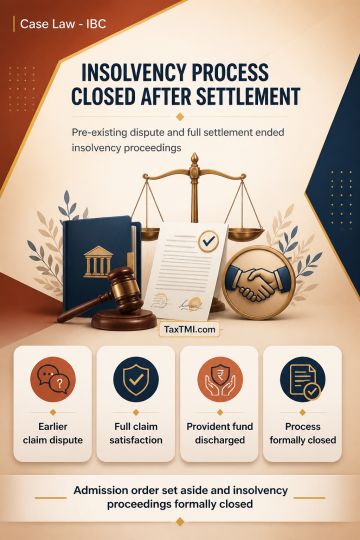
Pre-existing disputes in operational debt are examined through the debtor's admissions, the running account, payment appropriation, and supporting evidence. The note states that where payments are not directed toward specific invoices, the operational creditor may appropriate them on a first-in-first-out basis. It further discusses that inconsistent positions on payment appropriation may engage the principle against approbating and reprobating, and that unsupported assertions of short supply, debit notes, deficiencies, or protected-period claims may not establish a genuine dispute. It also addresses the permissibility of placing additional documents, including communications and financier-related material, on record before a final insolvency order is passed.
Pre-existing disputes in operational debt are examined through the debtor's admissions, the running account, payment appropriation, and supporting evidence. The note states that where payments are not directed toward specific invoices, the operational creditor may appropriate them on a first-in-first-out basis. It further discusses that inconsistent positions on payment appropriation may engage the principle against approbating and reprobating, and that unsupported assertions of short supply, debit notes, deficiencies, or protected-period claims may not establish a genuine dispute. It also addresses the permissibility of placing additional documents, including communications and financier-related material, on record before a final insolvency order is passed.
Note: It is a system-generated summary and is for quick reference only.
 TaxTMI









 Join Channel


 TaxTMI