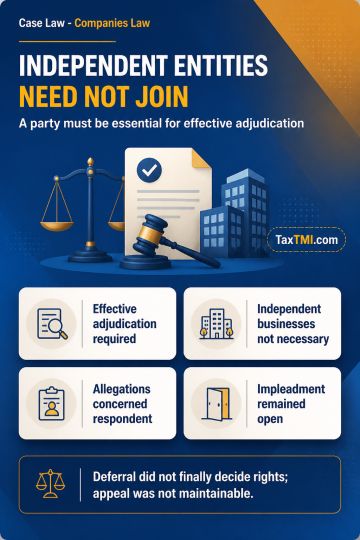
Necessary-party requirements limit impleadment of independent entities, while deferred consideration does not create an appealable adverse determinati...
Food supplement classification requires common parlance and authoritative tests, preventing treatment as proprietary Ayurvedic medicines without suppo...
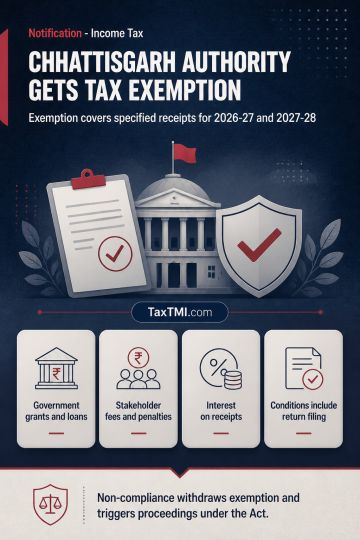
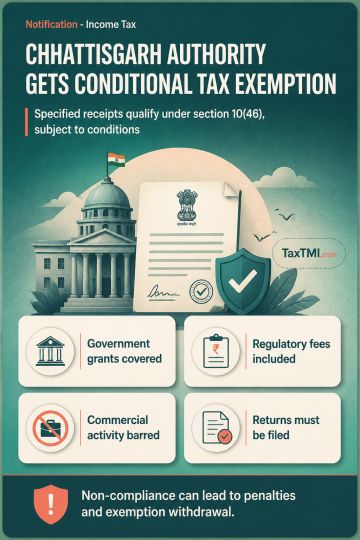
Specified regulatory authority income receives conditional tax exemption, subject to non-commercial activity, unchanged income character, and return f...
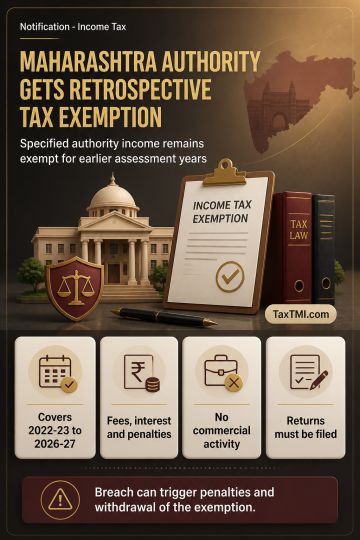
Tax exemption for regulatory authority income applies retrospectively, subject to non-commercial activity, unchanged income sources, and return-filing...
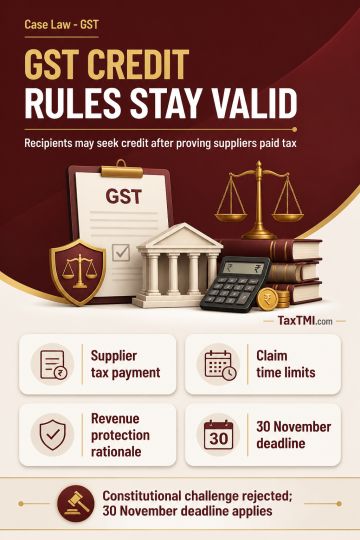
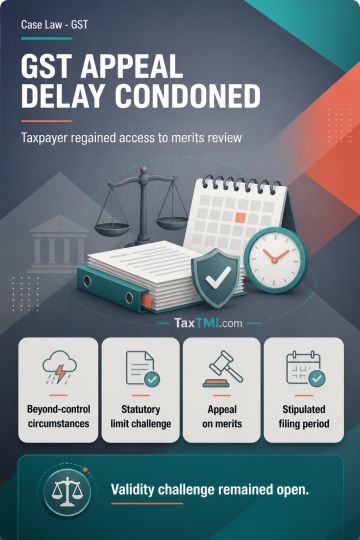
Input tax credit conditions remain constitutionally valid, with eligible recipient claims considered under GST circulars and retrospective filing dead...
Page of 4786
Press 'Enter' after typing page number.
401 to 420 of 95714 Results
❮
❯
❯❯
0 / 200
Expand Note
Add to Folder
No Folders have been created
+
Are you sure you want to delete "My most important" ?
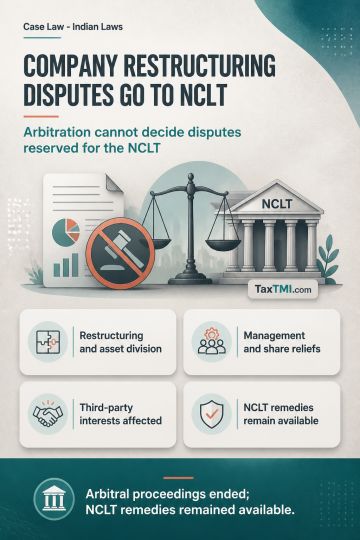
An Article 227 petition may be maintainable against an arbitral tribunal's rejection of a jurisdictional objection under Section 16 where the dispute is non-arbitrable or subject to an exclusive statutory mechanism, despite the absence of an appeal under Section 37. Company restructuring, asset division, management changes and share-related reliefs concerning companies not party to an MOU fall within the National Company Law Tribunal's exclusive jurisdiction under the Companies Act. Such intra-company disputes may affect minority shareholders and third parties, constitute actions in rem, and cannot be made arbitrable through a personal contract between individuals. Arbitral proceedings concerning the companies were terminated, while remedies before the NCLT remained available.
An Article 227 petition may be maintainable against an arbitral tribunal's rejection of a jurisdictional objection under Section 16 where the dispute is non-arbitrable or subject to an exclusive statutory mechanism, despite the absence of an appeal under Section 37. Company restructuring, asset division, management changes and share-related reliefs concerning companies not party to an MOU fall within the National Company Law Tribunal's exclusive jurisdiction under the Companies Act. Such intra-company disputes may affect minority shareholders and third parties, constitute actions in rem, and cannot be made arbitrable through a personal contract between individuals. Arbitral proceedings concerning the companies were terminated, while remedies before the NCLT remained available.
Note: It is a system-generated summary and is for quick reference only.
 TaxTMI
 of 4786






 Join Channel


 TaxTMI