Defined public benefit can retain charitable character; registration renewal requires examining genuine activities and legal compliance, not surplus a...
Capital reduction is distinct from share buy-back, preventing buy-back tax; restructuring interest and related business deductions also survive scruti...
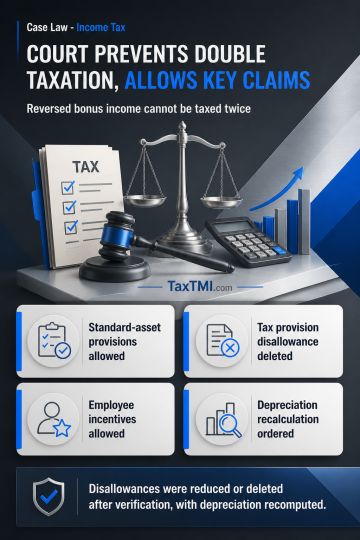
Transfer pricing and tax deductions upheld on established principles, while employee contributions and warranty provisions returned for fresh examinat...
Captive transfer pricing relies on industrial consumer tariffs, while genuine quotations can benchmark effluent treatment transfers under the Other Me...
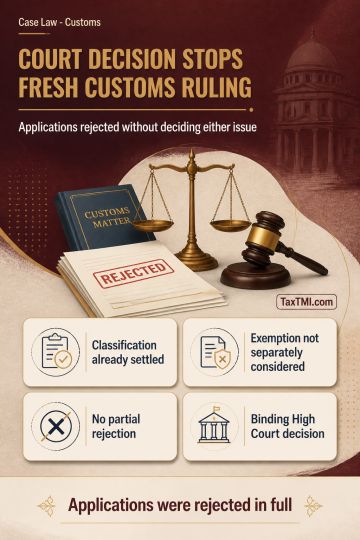
Specific tariff classification for ophthalmic instruments and extended limitation principles determine the treatment of duty demands, confiscation, an...
Integrated golf function determines classification, placing launch monitors and simulators under other golf equipment rather than measuring instrument...
The clean slate principle in corporate insolvency resolution...
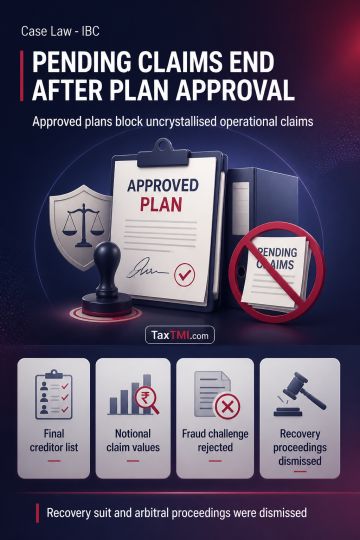
Clean slate principle extinguishes uncrystallised operational claims and bars continuation of pending recovery and arbitral proceedings after plan approval.
Contents
Summary
Note
Bookmark
Share
✓ Copied successfully !
Print
Print Options
For full text, please login
Login to TaxTMI
Verification Pending
The Email Id has not been verified. Click on the link we have sent on
The clean slate principle in corporate insolvency resolution treats an approved resolution plan as final and binding, preventing revival of uncrystallised operational claims. Where disputed civil and arbitral claims were recorded at a notional value and the plan limited payment to crystallised, approved claims, the claims did not survive plan approval. Plan provisions requiring pending proceedings and pre-effective-date operational liabilities to be withdrawn, abated, settled or extinguished operate according to their terms. A fraud-based challenge cannot reopen the plan where the final creditor list was unchallenged, an earlier challenge had attained finality, no recall proceedings were initiated, and the alleged fraud lacked basis. The recovery suit and arbitral proceedings concerning such claims were dismissed.
The clean slate principle in corporate insolvency resolution treats an approved resolution plan as final and binding, preventing revival of uncrystallised operational claims. Where disputed civil and arbitral claims were recorded at a notional value and the plan limited payment to crystallised, approved claims, the claims did not survive plan approval. Plan provisions requiring pending proceedings and pre-effective-date operational liabilities to be withdrawn, abated, settled or extinguished operate according to their terms. A fraud-based challenge cannot reopen the plan where the final creditor list was unchallenged, an earlier challenge had attained finality, no recall proceedings were initiated, and the alleged fraud lacked basis. The recovery suit and arbitral proceedings concerning such claims were dismissed.
Note: It is a system-generated summary and is for quick reference only.
 TaxTMI
 of 4782





















 Join Channel


 TaxTMI
