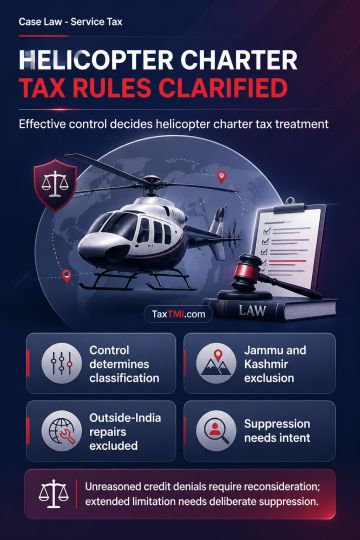
Helicopter charter classification requires effective control analysis, while territorial performance, reasoned credit orders and wilful suppression de...
Specified fund definition expands PAN exemption eligibility for registered alternative investment funds and qualifying International Financial Service...
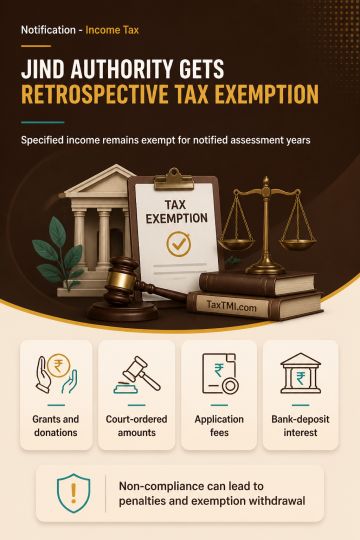
Tax exemption for specified legal-services authority income applies retrospectively, subject to non-commercial activity, unchanged income sources, and...
Approved resolution plans extinguish unsubmitted pre-approval tax claims, preventing later recovery outside the insolvency process and preserving a cl...
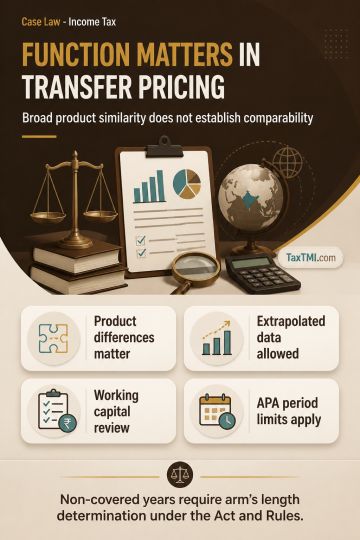
Transfer pricing comparability requires functional alignment and permits working capital adjustment, while APA margins cannot govern non-covered years...
Page of 4782
Press 'Enter' after typing page number.
521 to 540 of 95636 Results
❮
❯
❯❯
0 / 200
Expand Note
Add to Folder
No Folders have been created
+
Are you sure you want to delete "My most important" ?
The clean slate principle in corporate insolvency resolution...
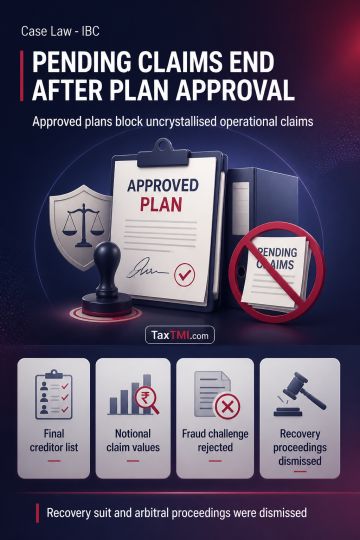
Clean slate principle extinguishes uncrystallised operational claims and bars continuation of pending recovery and arbitral proceedings after plan approval.
Contents
Summary
Note
Bookmark
Share
✓ Copied successfully !
Print
Print Options
For full text, please login
Login to TaxTMI
Verification Pending
The Email Id has not been verified. Click on the link we have sent on
The clean slate principle in corporate insolvency resolution treats an approved resolution plan as final and binding, preventing revival of uncrystallised operational claims. Where disputed civil and arbitral claims were recorded at a notional value and the plan limited payment to crystallised, approved claims, the claims did not survive plan approval. Plan provisions requiring pending proceedings and pre-effective-date operational liabilities to be withdrawn, abated, settled or extinguished operate according to their terms. A fraud-based challenge cannot reopen the plan where the final creditor list was unchallenged, an earlier challenge had attained finality, no recall proceedings were initiated, and the alleged fraud lacked basis. The recovery suit and arbitral proceedings concerning such claims were dismissed.
The clean slate principle in corporate insolvency resolution treats an approved resolution plan as final and binding, preventing revival of uncrystallised operational claims. Where disputed civil and arbitral claims were recorded at a notional value and the plan limited payment to crystallised, approved claims, the claims did not survive plan approval. Plan provisions requiring pending proceedings and pre-effective-date operational liabilities to be withdrawn, abated, settled or extinguished operate according to their terms. A fraud-based challenge cannot reopen the plan where the final creditor list was unchallenged, an earlier challenge had attained finality, no recall proceedings were initiated, and the alleged fraud lacked basis. The recovery suit and arbitral proceedings concerning such claims were dismissed.
Note: It is a system-generated summary and is for quick reference only.
 TaxTMI
 of 4782















 Join Channel


 TaxTMI